

Anchoring bias is a cognitive bias in which a person relies too heavily on the first piece of information they receive — the anchor — when making subsequent judgements or decisions. Even when the anchor is arbitrary or irrelevant, it pulls estimates and decisions toward it. This happens because the brain tends to use that first number or idea as a starting point and adjusts insufficiently from it.
Anchoring operates primarily through System 1 thinking — the fast, intuitive mode of thought described by Kahneman and Tversky's Dual Processing Theory. When people lack time, motivation, or information to think carefully, they default to their initial reference point. As a result, their final judgement often stays too close to that anchor.
Amos Tversky and Daniel Kahneman conducted a landmark experiment demonstrating anchoring bias in action. High school students were asked to estimate the value of a multiplication sequence. Group 1 was given 1 x 2 x 3 x 4 x 5 x 6 x 7 x 8, while Group 2 was given 8 x 7 x 6 x 5 x 4 x 3 x 2 x 1. Both sequences contain the same numbers, so both should yield the same answer — 40,320. However, because participants only had five seconds, they had to estimate. Group 1, who started with the small number 1 as their anchor, produced a median estimate of 512. Group 2, starting with 8, produced a median of 2,250. Neither group came close to the actual answer, and the direction of the error was clearly influenced by the anchor.
Strack and Mussweiler (1997) extended this work using an implausible anchoring scenario. Participants were asked whether Mahatma Gandhi died before or after age 9 (low anchor) or before or after age 140 (high anchor). The high anchor group estimated Gandhi's actual age of death at 66.7 years, compared to 50.1 years from the low anchor group. The actual answer is 78. These results confirmed that even clearly absurd anchors influence final estimates.
Anchoring in Everyday Life: Anchoring bias shapes decisions across many domains. In legal settings, Englich and Mussweiler (2001) found that judges were influenced by sentencing recommendations from prosecutors. In consumer behaviour, original prices displayed as crossed-out figures anchor shoppers to a higher reference point. In salary negotiations, the first number mentioned becomes the anchor around which all further discussion revolves.
Evaluation: Anchoring bias is well-supported across multiple methodologies, and its effects are robust. However, most studies use lab settings with university students, which limits generalisability. Individual differences such as numeracy, expertise, and motivation affect susceptibility to anchoring. Additionally, increasing awareness of anchoring does not necessarily eliminate it, suggesting that the bias operates at an automatic, pre-conscious level.
Confirmation bias is the tendency to search for, favour, interpret, and remember information in a way that confirms one's existing beliefs or hypotheses. Rather than evaluating evidence objectively, people unconsciously filter it through the lens of what they already believe. This process makes people resistant to changing their minds even when contradictory evidence is available.
Confirmation bias is closely linked to Schema Theory, as people use their existing schemas to interpret new information. Schemas act as filters — information that fits an existing schema is absorbed easily and remembered well, while information that contradicts it is often dismissed, reinterpreted, or simply ignored. This makes confirmation bias a natural outcome of how schemas function in everyday cognition.
Peter Wason designed the Wason Selection Task to study logical reasoning and uncovered strong evidence for confirmation bias. Participants were shown four cards showing D, K, 3, and 7, and told a rule: if a card shows a vowel on one side, it must show an even number on the other. They were asked which cards to turn over to test the rule. The logically correct answer is to turn over D (to check if the other side has an even number) and 7 (to check if there is a vowel on the other side). However, most participants chose D and 3 — they sought to confirm the rule rather than falsify it. Turning over 3 is irrelevant because finding a consonant on the other side neither confirms nor disconfirms the rule. This reveals confirmation bias in logical reasoning.
Confirmation Bias and Stereotypes: Confirmation bias has particularly important social consequences. It strengthens stereotypes by causing people to notice and remember information that fits their existing beliefs about a group, while overlooking contradictory examples. This self-reinforcing cycle makes stereotypes resistant to change even in the face of clear counter-evidence.
Evaluation: Confirmation bias research demonstrates consistent results across a wide range of tasks, including real-world decision-making. However, context matters — people show less confirmation bias when the stakes of a decision are high, when they are held accountable for their reasoning, or when they are experts in a domain. This suggests that confirmation bias is not inevitable but can be reduced with deliberate, motivated effort. The Wason task specifically tests formal logical reasoning, which may differ from everyday belief formation and updating, so its direct applicability to real-world confirmation bias should be treated cautiously.
Classical conditioning is a form of learning in which a neutral stimulus comes to produce a reflexive response after repeated pairing with a stimulus that naturally produces that response. The process was first described by Ivan Pavlov (1897) through his experiments with dogs. Pavlov observed that dogs salivated at the sight of the technician who fed them, not just when food was presented. He proceeded to pair a bell (neutral stimulus) with the presentation of food (unconditioned stimulus). After repeated pairings, the bell alone (now the conditioned stimulus) produced salivation (conditioned response).
Core elements: Unconditioned Stimulus (UCS) naturally triggers a response (e.g., food causes salivation); Unconditioned Response (UCR) is the natural, unlearned response (e.g., salivation to food); Conditioned Stimulus (CS) is a previously neutral stimulus that now triggers the response after learning (e.g., bell); Conditioned Response (CR) is the learned response to the CS (e.g., salivation to bell)
The Little Albert Study: Watson and Rayner (1920): John Watson and Rosalie Rayner demonstrated classical conditioning of fear in humans in their controversial study with an infant known as Little Albert. Albert was first shown a white rat; he showed no fear. A loud noise (UCS) was then struck behind his head whenever he reached for the rat (CS). After repeated pairings, Albert began to cry and attempt to move away from the rat even without the noise. This conditioned fear also generalised to other similar stimuli including a rabbit, dog, and a Santa Claus mask, demonstrating stimulus generalisation. This study showed that emotional responses could be conditioned, which has implications for understanding how phobias develop. However, it raises serious ethical concerns -- the infant could not give informed consent, was not debriefed, and the conditioned fear may not have been extinguished.
Operant conditioning, developed by B.F. Skinner building on Edward Thorndike's Law of Effect (1898), explains how voluntary behaviours are shaped by their consequences. Unlike classical conditioning, which involves reflexive responses, operant conditioning involves the organism actively operating on its environment. Behaviours followed by satisfying consequences are more likely to be repeated; behaviours followed by unpleasant consequences are less likely to be repeated.
Skinner identidied four core mechanisms: Positive reinforcement (adding pleasant stimulus increases behaviour); Negative reinforcement (removing unpleasant stimulus increases behaviour); Positive punishment (adding unpleasant stimulus decreases behaviour); Negative punishment (removing pleasant stimulus decreases behaviour).
Skinner tested these principles using his famous Skinner Box -- a chamber in which rats or pigeons could press levers or peck at discs to receive food pellets. By controlling the schedule of reinforcement, Skinner discovered that different reinforcement schedules produce different patterns of behaviour. Variable ratio schedules (reward given after an unpredictable number of responses) produce the highest and most persistent rates of response, a finding that explains the compulsive nature of gambling.
Evaluation: Both forms of conditioning are well-supported by controlled laboratory evidence and have practical applications in behaviour therapy, addiction treatment, education, and parenting. However, both theories adopt a reductionist approach that ignores mental processes. Conditioning also cannot easily account for behaviours that require insight, creativity, or moral reasoning. Pavlov's and Skinner's experiments used animals, raising questions about whether findings transfer fully to human behaviour. Additionally, ethical concerns attach to both the Little Albert study and to animal experiments using aversive stimuli.
Animal research in psychology involves studying non-human species to understand biological and psychological processes that may also occur in humans. Animal models use data from animal studies to make inferences about human behaviour, especially when direct human research is not ethically or practically possible. Much of what we know about the biological basis of addiction, stress responses, phobias, and neuroplasticity came initially from animal studies.
Ethical Considerations: Animals cannot give consent, and laboratory conditions often cause stress, pain, or deprivation. The three Rs framework — Replacement, Reduction, Refinement — guides ethical animal research. The question of whether the benefits justify costs to animal welfare remains genuinely contested.
Limitations: The degree of biological similarity varies considerably. Animal models have failed to translate to humans in some cases — notably in drug trials where compounds that work in animals have shown different effects or serious side effects in human trials.
Cognitive Load Theory (CLT) was developed by John Sweller in the 1980s and is based on the architecture of human memory. It proposes that working memory -- the mental space where active thinking happens -- has a strictly limited capacity. When the amount of information that needs to be processed exceeds this capacity, cognitive overload occurs and learning breaks down. The theory has had a major impact on educational psychology and instructional design.
Cognitive Load Theory draws on Baddeley and Hitch's (1974) model of working memory, which proposes that working memory has a capacity of approximately 7 items (Miller, 1956), though more recent estimates suggest 4 items when complexity is controlled. Long-term memory, by contrast, has effectively unlimited capacity and stores information in organised schemas. Once information is successfully encoded into long-term memory as a schema, it can be retrieved and used without consuming much working memory. This is why an expert chess player can evaluate a complex board position without effort -- they have stored thousands of chess configurations as schemas and can recognise patterns instantly.
Applications and Research Support: CLT has generated practical recommendations for educational design. Worked examples where students study fully solved problems before attempting problems independently reduce extraneous load. The split-attention effect (Sweller and Chandler, 1994) showed that integrating text directly into diagrams, rather than placing text separately alongside diagrams, significantly improves learning. The modality effect demonstrated that presenting information using both visual and auditory channels (dual coding) is more effective than using visual only, because it distributes information across two working memory subsystems. Mayer and Moreno (2003) confirmed these effects across multiple multimedia learning studies
Evaluation: Cognitive Load Theory is well-supported by experimental research and has genuine practical utility. However, it has been criticised for difficulties in measuring the three types of load independently -- intrinsic, extraneous, and germane load interact and overlap. The theory is also more descriptive than mechanistic; it describes when learning goes well or poorly but does not always explain precisely why. Critics such as Plass and colleagues have noted that motivation, prior knowledge, and emotional state can all affect cognitive load in ways the theory does not fully address.
Cognitive models are theoretical frameworks that explain how mental processes operate. In psychology, a cognitive model typically represents how information is received, stored, transformed, and retrieved. Two of the most widely studied cognitive models are the Multi-Store Model of memory and the Working Memory Model, both of which explain memory as a system with distinct, interacting components.
Richard Atkinson and Richard Shiffrin proposed the Multi-Store Model (MSM), which describes memory as a series of three stores through which information passes sequentially.
Sensory memory: information from the environment first enters sensory stores (iconic for visual input, echoic for auditory input). This store has a very large capacity but an extremely short duration -- approximately 0.5 to 1 second. Most information decays here without further processing.
Short-term memory (STM): information that receives attention passes into STM, which has a limited capacity of approximately 7 plus or minus 2 items (Miller, 1956) and a duration of around 15 to 30 seconds without rehearsal. Information in STM is primarily encoded acoustically.
Long-term memory (LTM): through rehearsal, information is transferred from STM to LTM, which has unlimited capacity and duration. Information in LTM is primarily encoded semantically.
Supporting evidence comes from studies of the serial position effect -- the tendency to recall items from the beginning (primacy effect) and end (recency effect) of a list better than middle items. The primacy effect reflects transfer to LTM through rehearsal; the recency effect reflects information still in STM. Studies of patients with anterograde amnesia -- such as patient HM, who could not form new long-term memories following hippocampal surgery while retaining his existing LTM and intact STM -- provide strong biological support for the distinction between stores.
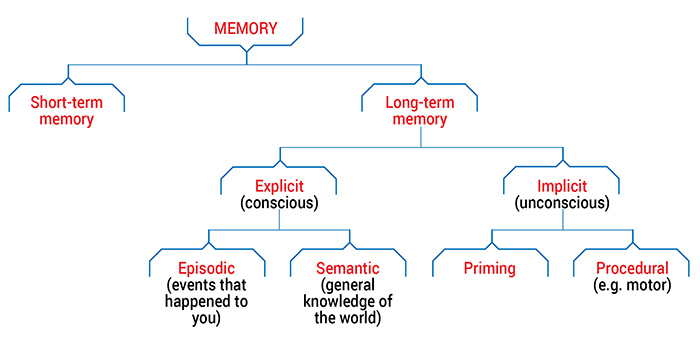
Baddeley and Hitch argued that STM was not a single, passive store but an active system with multiple components they called working memory.
The Central Executive: a flexible, limited-capacity attention system that coordinates the other subsystems, allocates resources, and manages complex tasks.
The Phonological Loop: handles verbal and acoustic information through an inner ear (phonological store) and inner voice (articulatory rehearsal process). It is the system used when silently repeating a phone number.
The Visuospatial Sketchpad: processes and stores visual and spatial information, such as mental maps or the imagined layout of a room.
The Episodic Buffer (added in 2000): integrates information from the phonological loop, visuospatial sketchpad, and long-term memory into coherent episodes that have both temporal and spatial dimensions.
Evaluation: Both models are supported by experimental evidence and neuropsychological case studies. The working memory model is more comprehensive and flexible than the MSM because it acknowledges that STM is not passive but actively manipulates information. However, both models focus primarily on information processing and give limited attention to the role of emotion, motivation, and social context in memory. They are also primarily derived from laboratory tasks that may not fully capture how memory functions in real-life situations.
Dual Processing Theory, most closely associated with Daniel Kahneman's Thinking, Fast and Slow (2011), proposes that human thinking operates through two fundamentally different systems. Understanding these two systems helps explain why people make systematic errors in judgement and decision-making, including cognitive biases such as anchoring and confirmation bias.
operates automatically, quickly, and without conscious effort. It draws on heuristics -- mental shortcuts built from past experience -- and produces rapid, intuitive responses. System 1 does not require deliberate attention and runs continuously in the background. It is responsible for immediately recognising a friend's face, driving on a familiar road, or completing the phrase 'bread and...' System 1 is efficient but prone to error because its shortcuts can misfire, especially in novel or complex situations.
operates slowly, deliberately, and requires conscious effort and attention. It handles complex reasoning, mathematical calculations, logical analysis, and careful judgement. System 2 can override System 1 outputs when it identifies an error, but doing so requires motivation and cognitive resources. People often experience System 2 thinking as effortful -- they may physically stop other activities, such as slowing their walking pace, when engaging in difficult mental tasks.
Heuristics and Biases: When System 1 operates under time pressure or uncertainty, it uses heuristics that are usually good enough but can produce systematic biases. The availability heuristic leads people to judge the frequency of an event by how easily examples come to mind -- which is why people overestimate risks of vivid, emotionally salient events like plane crashes relative to less memorable but statistically more common risks. The representativeness heuristic leads people to judge likelihood based on how closely something matches a prototype -- which can override base rate information. Anchoring, confirmation bias, and the framing effect are all products of System 1 processing.
Research Support: Tversky and Kahneman's (1974) work on heuristics and biases provided the empirical foundation for Dual Processing Theory. In one demonstration of framing effects, participants were told that a disease would kill 600 people. One group was offered a programme that would save 200 lives (positively framed). Another was offered one in which 400 people would die (negatively framed). Logically these options are identical, but the first was chosen overwhelmingly when framed in terms of lives saved. This demonstrates that System 1 responds to emotional framing, not objective calculation.
Evaluation: Dual Processing Theory is influential and well-supported across a wide range of decision-making research. However, some researchers argue that the two-system distinction is an oversimplification. Evans and Stanovich (2013) note that System 2 is not a unified system and that its outputs are not always more accurate than System 1. The theory also provides a post-hoc framework for labelling findings but has limited predictive power about when System 1 or System 2 will dominate in a given situation. Nonetheless, it remains the dominant framework for understanding cognitive biases.
Schema theory proposes that humans organise knowledge in structured mental frameworks called schemas. Schemas are built through experience and stored in long-term memory. They guide how we interpret new information, fill gaps in memory, make inferences, and predict what will happen next. Rather than passively recording reality, the brain actively constructs its understanding of the world based on existing schemas.
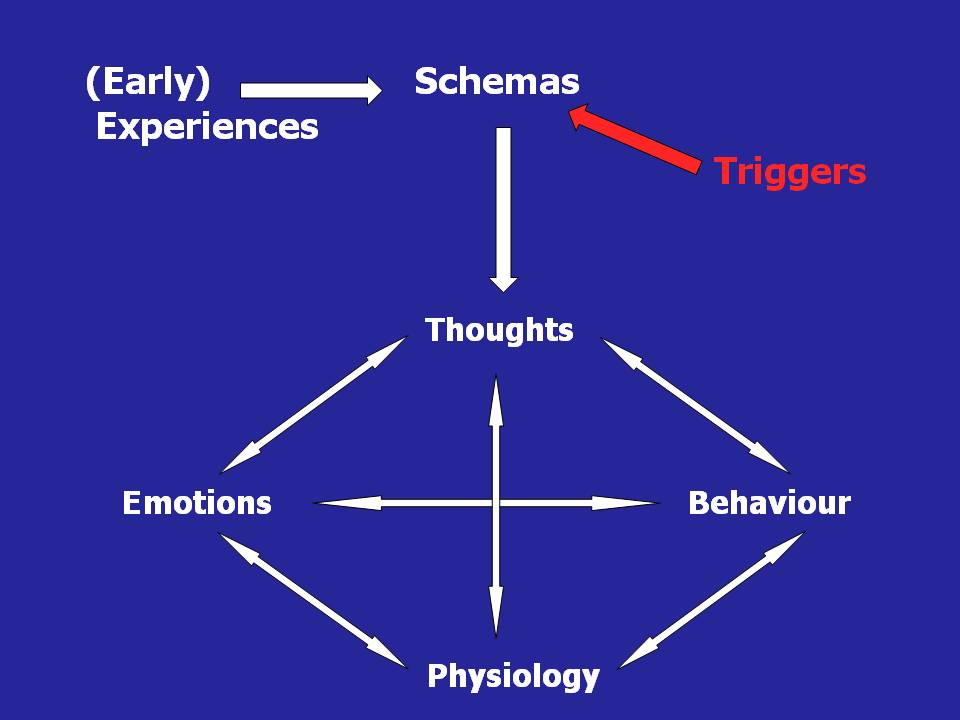
The concept of schemas was introduced by Frederic Bartlett in his 1932 book Remembering. Bartlett argued against the prevailing view that memory was a passive recording system. He proposed instead that memory is reconstructive -- people do not simply replay stored recordings but rather rebuild memories at the point of retrieval, often filling gaps using their existing schemas. Jean Piaget later used the concept in his theory of cognitive development, proposing that children build schemas through processes of assimilation (fitting new information into existing schemas) and accommodation (modifying schemas when new information cannot be fitted in).
Bartlett asked English participants to read a Native American folk tale called 'The War of the Ghosts,' which contained culturally unfamiliar elements. Participants' recall was systematically distorted: they omitted details that did not fit their cultural schemas, changed unfamiliar elements to familiar ones, and rationalised culturally specific elements. For instance, canoes were often recalled as boats. These distortions became more pronounced over time. Bartlett concluded that memory is not reproductive but reconstructive, shaped by existing schemas.
Schemas in Real-World Behaviour: Social schemas (stereotypes) are cognitive frameworks about social groups that lead people to expect and remember schema-consistent information. Scripts are schemas about sequences of events in familiar situations (e.g., visiting a restaurant).
Evaluation: Schema theory is well-supported by both laboratory and real-world evidence and successfully accounts for the reconstructive nature of memory. However, the concept of a schema is broad and somewhat vague, making it difficult to operationalise and test precisely.
According to Baddeley and Hitch's Working Memory Model, which component is responsible for coordinating the other subsystems and allocating cognitive resources?
Answer: C. The Central Executive
Using one research study, explain how Schema Theory accounts for the reconstructive nature of memory.
Command term — "Explain": Give a detailed account including reasons or causes. Name the study, outline its procedure and key findings, and connect these to the reconstructive memory claim.
"Lucas is a university student who consistently argues that climate change is a hoax, despite being shown scientific reports that contradict this. When he reads news articles, he gravitates toward sources that support his existing view and dismisses opposing data as 'biased'. His professor notes that Lucas seems unaware of how selectively he is processing information."
(a) Identify the cognitive bias most clearly illustrated in this scenario and justify your choice.
(b) Using Dual Processing Theory, explain why Lucas might find it difficult to change his beliefs even when presented with contradictory evidence.
(c) Suggest one strategy, grounded in psychological theory, that Lucas's professor could use to help him think more critically. Justify your suggestion.
SL: Discuss how Social Learning Theory explains the acquisition of aggressive behaviour. Refer to relevant research in your answer.
HL: "Social Learning Theory provides a more complete account of human learning than classical or operant conditioning alone." Evaluate this claim with reference to relevant theories and research.
1.9 Social Learning Theory
Social Learning Theory (SLT), developed by Albert Bandura, proposes that people learn new behaviours by observing and imitating others, particularly role models they identify with. Unlike conditioning, SLT argues that learning can occur vicariously — by watching someone else's behaviour and its outcome.
Bandura's Bobo Doll Studies (1961, 1963)
Children watched an adult either behave aggressively toward a Bobo doll or play non-aggressively. Those who observed the aggressive model showed significantly more aggressive behaviour, often replicating specific acts witnessed. In the 1963 study, children who saw the model rewarded showed the highest rates of imitation. However, even children in the punishment condition reproduced the aggressive behaviour when offered a reward — demonstrating the distinction between learning and performance.
Key Processes in Social Learning
Self-Efficacy
Bandura introduced self-efficacy — the belief in one's own capability to execute a behaviour successfully. High self-efficacy leads to greater persistence and better performance. Built through mastery experiences, vicarious learning, social persuasion, and physiological states.
Evaluation: SLT makes a major advance on purely behavioural accounts by including cognition. The Bobo Doll studies are well-controlled but have limitations: the Bobo Doll is designed to be hit, so ecological validity is questionable. The studies raised ethical concerns about exposing children to aggressive models. SLT gives limited attention to biological factors such as temperament and genetic predispositions.