

On this page:
Introduction What Makes It Simple Harmonic? The Language of Oscillations Displacement: The Sinusoidal Pattern Velocity in SHM Acceleration in SHM Energy: The Constant Exchange The Mass-Spring System The Simple Pendulum Comparing SHM Systems Damping: Real-World Complications Forced Oscillations and Resonance Why SHM Matters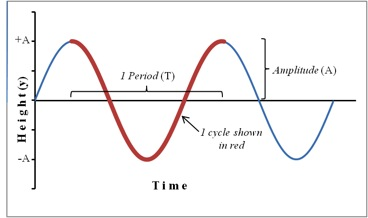
Look at a child on a swing. Back and forth, back and forth. The motion repeats over and over again. Now look at a guitar string vibrating after you pluck it. It's moving back and forth so fast you can barely see individual movements, but the pattern is the same—repetitive motion around a central position.
These are both examples of oscillations. And when you start analyzing them mathematically, you discover something remarkable: despite looking so different, they follow the same underlying pattern. A massive pendulum swinging in a cathedral and a tiny electron oscillating in an atom obey the same fundamental rules.
This pattern is called simple harmonic motion, or SHM for short. Master this concept, and you've unlocked the key to understanding pendulums, springs, sound waves, light waves, molecular vibrations, alternating current, and even quantum mechanics.
Let's dig into what makes motion "simple harmonic" and why it shows up everywhere in physics.
Not every back-and-forth motion qualifies as simple harmonic motion. There's a specific requirement that sets SHM apart from other types of oscillation.
Simple harmonic motion occurs when the restoring force on an object is directly proportional to its displacement from equilibrium and always acts toward the equilibrium position.
F = -kx (Hooke's Law)
The negative sign is crucial—it tells you the force always points back toward equilibrium, opposing the displacement. Pull a spring down, and it pulls back up. Push it up, and it pulls back down.
The proportionality constant k determines how strong the restoring force is. A stiff spring has a large k. A loose, floppy spring has a small k.
Any system where the restoring force follows this linear relationship will undergo simple harmonic motion. That's why SHM appears in so many different contexts—lots of systems, when disturbed slightly from equilibrium, exert restoring forces proportional to displacement.
Equilibrium position: The central position where the net force is zero. If you place the object here and release it with no initial velocity, it stays put. For a mass on a spring, it's where the spring is neither stretched nor compressed.
Displacement (x): How far the object is from equilibrium at any given moment. It's a vector—it can be positive or negative depending on which side of the equilibrium you're on.
Amplitude (A): The maximum displacement from equilibrium. If you pull a mass on a spring down 5 cm and release it, the amplitude is 5 cm. Amplitude is always positive and tells you how "big" the oscillation is.
Period (T): The time for one complete cycle, one full back-and-forth motion. If a pendulum swings out and back to where it started in 2 seconds, the period is 2 seconds. SI unit: second (s)
Frequency (f): How many complete oscillations happen per unit time. It's the reciprocal of the period.
f = 1/T
SI unit: hertz (Hz), where 1 Hz = 1 oscillation per second = 1 s⁻¹
Angular frequency (ω): This one's less intuitive but incredibly useful. It's related to frequency by:
ω = 2πf = 2π/T
SI unit: rad/s (radians per second)
Why "angular"? Because it treats the oscillation like circular motion projected onto a line. Angular frequency shows up constantly in SHM equations, so get comfortable with it.
If you plot the position of an object in SHM over time, you get a perfect sine or cosine wave. The equation looks like:
x = A cos(ωt + φ) or x = A sin(ωt + φ)
A = amplitude, ω = angular frequency, t = time, φ = phase constant
Which function you use (sine or cosine) depends on your starting conditions. If you release the object from maximum displacement, cosine works nicely. If you give it an initial push through equilibrium, sine is more convenient.
Example: A mass on a spring oscillates with amplitude 0.05 m (5 cm) and frequency 2 Hz.
ω = 2πf = 2π(2) = 4π rad/s ≈ 12.57 rad/s
If released from maximum displacement: x = 0.05 cos(4πt) meters
At t = 0: x = 0.05 m
At t = 0.125 s: x = 0 (through equilibrium)
At t = 0.25 s: x = -0.05 m
At t = 0.5 s: x = 0.05 m (back to start — one complete cycle)
v = dx/dt = -Aω sin(ωt + φ)
v = ±ω√(A² - x²) (position-dependent form)
At x = 0 (equilibrium): v_max = ωA
At x = ±A (turning points): v = 0
Example: Using earlier example (A = 0.05 m, ω = 4π rad/s):
v_max = (4π)(0.05) = 0.628 m/s
The fastest speed occurs as the mass passes through equilibrium.
Notice that displacement and velocity are 90° out of phase. When displacement is maximum, velocity is zero. When displacement is zero, velocity is maximum.
a = dv/dt = -Aω² cos(ωt + φ) = -ω²x
This last form is crucial: a = -ω²x
This is the defining equation of simple harmonic motion. Acceleration is proportional to displacement but opposite in direction (that negative sign).
Maximum acceleration occurs at maximum displacement: a_max = ω²A
Connecting to Newton's second law: F = ma and F = -kx, so:
ω = √(k/m)
Stiffer spring (larger k) means faster oscillation. More massive object means slower oscillation.
E_total = KE + PE = ½kA² = ½mω²A²
Example: A 0.5 kg mass oscillates with amplitude 0.10 m on a spring with k = 100 N/m.
E = ½kA² = ½(100)(0.10)² = 0.5 J
At equilibrium: all 0.5 J is kinetic. At maximum displacement: all 0.5 J is potential.
T = 2π√(m/k)
f = (1/2π)√(k/m)
Example: A 0.2 kg mass on a spring oscillates with a period of 0.4 s. Find the spring constant.
T = 2π√(m/k) → 0.4 = 2π√(0.2/k) → k = 49.3 N/m
T = 2π√(L/g)
L = length, g = gravitational field strength (9.81 m/s² on Earth)
Notice what's NOT in this equation: mass and amplitude (for small angles). A 1 kg bob and a 10 kg bob on the same length pendulum have the same period.
Example: A grandfather clock has a 1.0 m pendulum. Find its period on Earth and on the Moon.
Earth: T = 2π√(1.0/9.81) = 2.0 s
Moon (g = 1.6 m/s²): T = 2π√(1.0/1.6) = 5.0 s
| System | Period Formula | What Affects Period | What Doesn't Affect Period |
|---|---|---|---|
| Mass-Spring | T = 2π√(m/k) | Mass, spring constant | Amplitude, gravity |
| Simple Pendulum | T = 2π√(L/g) | Length, gravity | Mass, amplitude (small angles) |
Damping is the gradual loss of amplitude due to dissipative forces like friction or air resistance. Energy converts to heat, and oscillations eventually die out.
Amplitude in light damping: A(t) = A₀e^(-γt)
Forced oscillation: A periodic external force drives the system.
Resonance: When the driving frequency matches the system's natural frequency, the amplitude becomes very large. Energy transfers extremely efficiently.
Examples: pushing a child on a swing in rhythm, singing to shatter a glass, the Tacoma Narrows Bridge collapse (1940).
Engineers must carefully design structures to avoid resonance with expected vibration sources.
SHM is fundamental to understanding:
Understanding SHM means understanding oscillations throughout nature. It's a pattern that repeats across scales from atoms to galaxies, making it one of the most important concepts in physics.
Master simple harmonic motion, and you've built a foundation for advanced topics in mechanics, waves, and even quantum physics.