

On this page:
Introduction WHAT IS ELECTRIC CHARGE? Proton, Electron, Neutron SI Unit of Electric charge How Objects Become Charged Charging by Friction Charging by Conduction Charging by Induction What Is an Electric Field? Strength of Electric Field Electric Field Strength Formula Electric Field Lines Properties of Electric Field Lines The Arrangement of Charges Uniform Electric Fields Electric Fields in Practice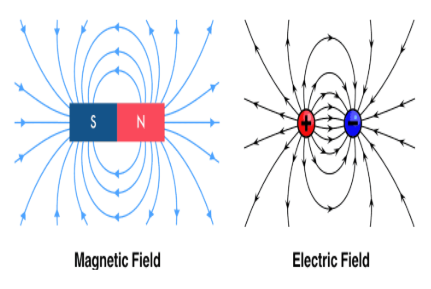
Have you ever noticed how simple it is to get some little pieces of paper to stick to a plastic pen after you rub it on your hair? Or maybe you've gotten a tiny shock when you touch a metal doorknob after walking on a rug? Or you've probably noticed your own hair standing after taking off a wool sweater. These experiences are all examples of static electricity.
What is going on in these examples?
All these examples are a manifestation of static electricity, a different type of electricity that flows in our homes. When a hair and a plastic pen get close to each other, a powerful and invisible force (the electric field) is created.
The most important thing when trying to understand electromagnetism is electric fields. In the MYP IB curriculum, understanding electric fields is one of the most important things in studying the physics of other essential fields of study. In simple Empirical studies, electric fields are responsible for everything, from lightning to the touch screens of phones.
In order to understand electric fields, we must first understand the concept of electric charge.
The electric charge is fundamental to the concept of matter, just like mass. Everything around us is made of atoms, and in an atom, there are three types of particles: protons, neutrons, and electrons.
Proton: Every proton has a mass of one and is found in the nucleus of the atom. Protons have a positive charge.
Electron: The nucleus is orbited by negatively charged electrons.
Neutrons: Neutrons, on the other hand, are neutral and have no charge.
When looking at normal atoms, there is an equal number of protons and electrons. This means that the atom is neutral. The positive and negative charges balance.
In other cases, atoms can gain or lose electrons, which can lead to the atom being charged.
Electric charge has an SI unit, and that is the coulomb (C).
The SI unit is named after Charles-Augustin de Coulomb, a French physicist. The symbol used to reference charge is q or Q.
The charge of a single electron is -1.6 × 10⁻¹⁹ C. This number is incredibly small, and everyday objects contain enormous numbers of electrons.
Electric charge has many rules when it comes to charges and how they operate.
The conservation of charge means that charge can neither be created nor destroyed; it can only be moved around to different objects. Because of this, the charge in an isolated system can never change.
There are three primary ways in which objects can become charged.
When two materials are rubbed against each other, electrons can be transferred from one to the other. The one that loses electrons becomes positively charged, whereas the one that gains electrons becomes negatively charged.
Examples:
When a charged object comes in contact with a neutral object, the two are able to exchange charge, and this is referred to as conduction.
Touching a charged metal sphere means that some of the charge from the sphere also transfers to the body. Both you and the sphere end up in charge of the same amount.
This requires contact and is most effective with electrical conductors, materials that allow charge to easily move, such as metals.
Of all the methods, induction is by far the most interesting. Induction does not need contact.
When a charged object comes close to a neutral conductor, the object does not touch it, but the conductor's internal charges rearrange. The internal charges are separate. The charges that are the same as the charged object move to the far side of the conductor. The opposite charge moves to the near side.
If you then ground the far side, the charges that are repelled can escape. Disconnecting the ground and removing the charged object leaves the conductor with a net charge that is opposite to the charged object.
This is true for many of the uses of this method, such as electrostatic precipitators that are used to filter smoke from factories.
Now we arrive at the most important point of this lesson.
An electric field is the space around a charged object. This space causes an electric force on another charged object.
Look at it this way: a charged object can't just sit. It creates an invisible influence around itself. Any charged object that enters this area feels a force.
You cannot see an electric field, but its effects are real. A charged object creates an electric field that exerts force on other charged objects just as the Earth creates a gravitational field that pulls objects down.
An electric field exists as a space property created by the source charge.
Physics defines the strength of an electric field at any given point precisely.
The electric field strength (E) at that point is the force per unit charge that a small positive test charge, placed at that point, experiences.
Where:
This can also be rearranged to:
This tells us that the force experienced by any charge in an electric field equals the charge times the field strength.
Electric field strength is a vector quantity, which means it has both magnitude and a direction. The direction of the electric field at any point is defined as the direction the charge would move.
Scientists created a way to visualize electric fields by using field lines. These lines are artificial and help us understand the invisible field.
Electric field lines show a pattern that is determined by the configuration of charge.
One of the more unique cases involves the concept of a uniform electric field.
A uniform electric field is one where the field strength is the same at every point, and the field direction is the same at all points in a region.
Between two charged plates (one positively, the other negatively) are uniform electric fields. The field lines are straight and parallel and are equally spaced in the direction from the positive plate to the negative plate.
Often, uniform electric fields are used in capacitors and particle accelerators in research physics, as they are more convenient to describe mathematically.
Almost all aspects of technology, including practical applications of electric fields.
Learning about electric fields helps you see the invisible interactions impacting both the world around you and the technology that you use every day. From the small chips that are inside your smartphone to the large bolts of lightning during a thunderstorm, electric fields are present, and they are operating under the same principles that you have learned.