Uses of Salts
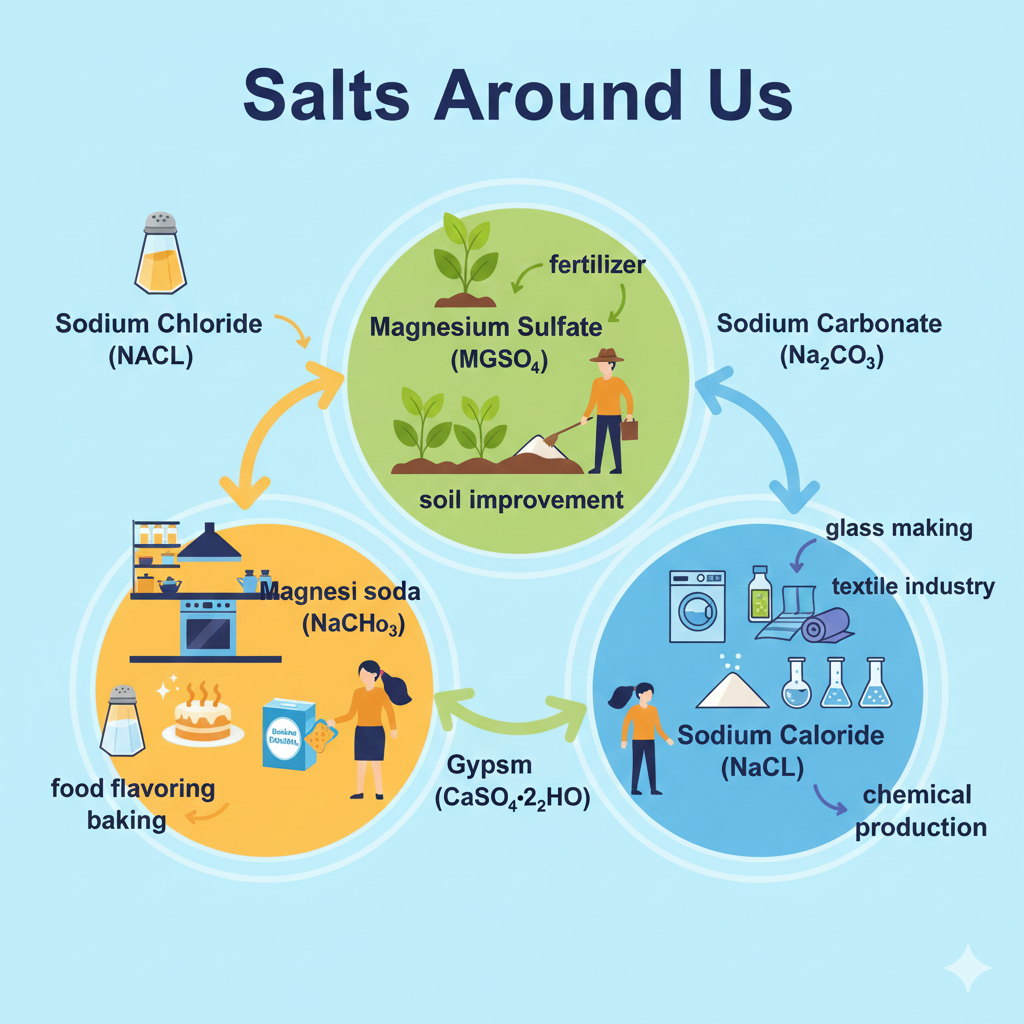
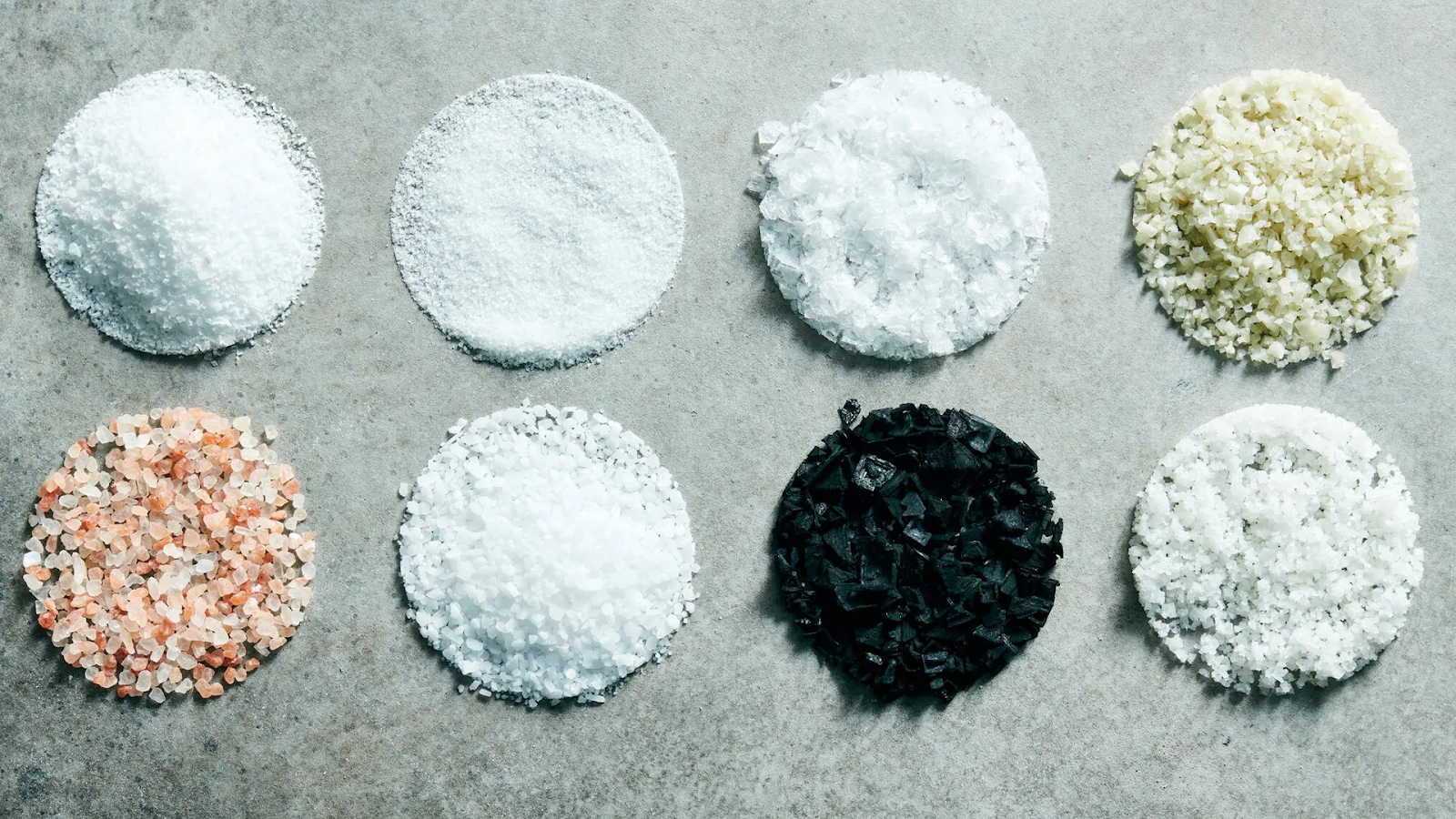
The salts on your kitchen table are not just used to season your food. They are used to help farmers grow stronger and healthier crops, to help make your bath more relaxing, to help assist in the treatments of doctors, and to help cleanse the water you drink from your taps.
Salts are found from your kitchen to your laboratories and to your factories, and they help make your life and the world around you much safer.
Let's explore the applications of Salts.
What Are Salts?
A salt is an example of a chemical compound that is created when an acid reacts with a base. This occurs in a process known as neutralization. The neutralization process results in the creation of an ionic compound that consists of positive ions (cations) from the base and negative ions (anions) from the acid.
Salts typically exist as solids at room temperature, can melt in water, and have numerous applications in everyday life, the workforce, healthcare, and farming.
Example:
Hydrochloric acid (HCl) + Sodium hydroxide (NaOH) → Sodium chloride (NaCl) + Water (H₂O)
- Salts are a result of neutralization reactions: an acid reacts with a base, generating a salt and water.
- Example: Hydrochloric acid + Sodium hydroxide → Sodium chloride + Water.
- They are ionic compounds, which means that they are made up of cations (positively charged) and anions (negatively charged).
- Salts can either be soluble or insoluble in water, depending on the type of ions that are present.
- They are not restricted to Sodium Chloride (Table Salt); hundreds of other salts exist that have varied properties and functions.
Why Are Salts Important?
- Salts assist in preserving the chemical equilibrium within the human body.
- They are instrumental in the extraction of other chemical compounds in industries.
- Salts are critical in the process of nurturing plants, preserving food, and treating water.
Types of Salts and Their Common Uses
Salts can be categorized based on the type of acids and bases they originated from, and each type has distinct uses.
Table Salt
Sodium Chloride – NaCl
This is the most common salt and can be found in kitchens all over the globe.
Uses:
- Adds flavor to and conserves the freshness of food.
- Chemical manufacturing of chlorine and sodium hydroxide.
- Road safety: used in the winter to sand and salt the roads.
- Water softening: used to remove calcium and magnesium ions.
Epsom Salt
Magnesium Sulfate – MgSO₄
It is mainly used in the medical field and in gardening.
Uses:
- Medicine is used to relieve sore muscles, and it is also a laxative.
- Fertilizers: Magnesium is essential for plant growth.
- Bath salts: assist in the relaxation of muscles and improve the health of the skin.
Baking Soda
Sodium Bicarbonate – NaHCO₃
It is commonly found in kitchens and laboratories.
Uses:
- Baking: used to bake as it releases carbon dioxide gas from the acids in the mixture, thus making the cake rise.
- Cleaning: used to dissolve any greases and to neutralize bad odors.
- Fire extinguisher: used to react with the heat to release carbon dioxide gas, thus smothering the fire.
Washing Soda
Sodium Carbonate – Na₂CO₃
It is a strong industrial chemical and cleaning agent.
Uses:
- Laundry: used to soften the water and to remove the stains.
- Glass manufacturing: used to lower the melting point of silica.
- Paper and textile industries: used in chemical processing.
Gypsum
Calcium Sulfate – CaSO₄·2H₂O
It is a naturally occurring salt with many industrial applications.
Uses:
- Construction: used to make plaster and cement.
- Agriculture: used to improve the quality of soil.
- Medicine: used in making molds for casts and dental impressions.
Salts in Daily Life
Salts are everywhere, from the food we eat to the products we use.
Food Preservation:
Sodium chloride is used to prevent the growth of bacteria in pickles, meat, and fish.
Food Preservation
Salt food and bacteria, which prolong the shelf life of food.
Cooking and Flavor
Salt adds flavor and balances the taste of food
Baking powder and baking soda cause the food to rise and become light and fluffy.
Medicine
Epsom salts relax muscles.
Sodium Chloride (salt) solutions are used for hydration in hospitals.
Household Cleaning
Washing soda removes stains from clothing and dishes.
Sodium bicarbonate (baking soda) is used to eliminate odors in the fridge and kitchen.
Water Treatment
Salts (specifically, aluminum sulfate) are used to purify drinking water by removing the impurities.
Salts in Agriculture
Plants need a variety of minerals for growth, many of which they get from salts.
Fertilizers
- Ammonium nitrate (NH₄NO₃) is a source of nitrogen.
- Potassium chloride (KCl) is a source of potassium.
- Calcium phosphate (Ca₃(PO₄)₂) is a source of phosphorus.
These salts encourage quicker growth, higher yields, and better quality food.
Industrial Uses of Salts
Chemical Production
Sodium chloride → Chlorine + Sodium hydroxide → Then used to make plastics, paper, and soap.
Calcium carbonate is used in cement and construction materials.
Metal Extraction
Some salts are used in the electrolytic extraction of metals, such as aluminum and sodium.
Glass Manufacturing
Sodium carbonate and calcium carbonate are used to lower the melting point of silica, allowing glass to be made more efficiently.
Textiles
Salts help in dyeing fabrics in a uniform manner.
Salts and Environmental Use
Soil Treatment:
Some salts are useful in improving the texture and fertility of the soil.
Water Softening:
Hard water consists of Ca²⁺ and Mg²⁺ ions.
Sodium salts are used to replace these ions to soften water for domestic and industrial cleaning purposes.
De-Icing:
The salts that are used for de-icing roads also lower the freeze point of water so that water does not freeze and form ice during the winter months.
Chemical Properties and Their Use
Salts have unique properties that make them useful for various purposes.
- Solubility: Many of them are soluble in water and can be used in the form of solutions.
- Ionic Nature: Their ions are able to react with acids, bases, and metals. This quality is used for many industrial purposes.
- Thermal Stability: Some of the salts decompose when heated, and this quality is used for laboratory and industrial purposes.
- Conductivity: Salt solutions can conduct an electric current. This quality is used for electrolysis in various industries.
Salt can even help preserve history! When archaeologists examine ancient artifacts, they often find perfectly preserved food. This is because salt prevents decay by drawing out water. Not only does salt help preserve food, but it also acts as a time capsule.
Summary
- Salts are ionic compounds formed by the reaction of acids and bases. Salts may appear simple, but they have a vast and diverse role in our daily lives and in chemistry. They are used in food, medicine, cleaning agents, farming, and many industries.
- Common salts are sodium chloride, magnesium sulfate, sodium bicarbonate, sodium carbonate, and gypsum.
- Such salts are chemically and physically useful because of their properties, such as solubility, ionic nature, and thermal stability.
- The worth of salts extends to:
- Preservation of food
- Enhancing the growth of plants
- Supporting industrial processes
- Aid in cleaning
- Treating water and roads
Next time you sprinkle salt on your food, remember that this tiny crystal has a giant role in chemistry and life, including yours.