

On this page:
Introduction What Is an Element? Physical properties of metals Chemical properties of metals Compounds Chemical properties of compounds Structure and Bonding: Why Properties Differ Comparing Elements and Compounds Why Properties Matter in Real Life MYP Journey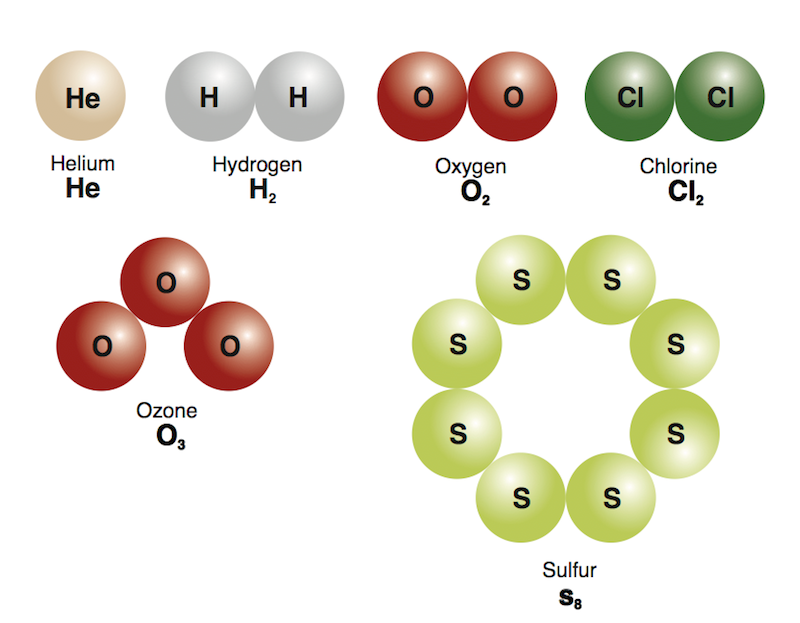
Everything around you is made of substances. The spoon you use to eat, the water you drink, and even the air you breathe. Some of these substances may be simple, while others may be complex. Yet, each of these has properties that determine how they look, behave, and react. In chemistry, the aim is to remove the guesswork. We take time to study these properties to determine the composition of each of these substances and the possible changes that can take place.
Chemistry is the bridge between "this looks shiny" and "this is a metal with high electrical conductivity". There is a significant difference between the two statements. This degree of knowledge is what allows scientists to make material selections, predict and design reactions and products.
An element is a substance that has only one type of atom. Elements can be classified using their properties. For example, the Periodic Table classifies all of the known elements based on their properties.
Properties make it easier for us to analyze and distinguish each metal. These properties allow us to distinguish metals from non-metals, and metals from metalloids. The distinct properties of metals and metalloids are as follows:
Physical properties are the properties that can be observed for a material without changing the material itself. This also involves the safe use of materials.
Some of the common physical properties are the following:
Some metals have high conductivity. This makes them very useful for wires. Other materials have a low density and can be useful for structures that require lightweight materials.
Chemical properties of metals are the properties that show how a material will behave in relation to other materials and change to form other new materials. It's possible to evaluate a substance by determining its components and assessing its components for their unique reactivity, flammability, and their probabilities to interact with acids, rust, and water, as well as their newfound rust and corrosion properties, all of which are determined by its elemental breakdown and geographical combinations as presented periodically.
A compound, as a result of a determined, geographical interaction, creates a unique result dominated by different elemental characteristics and influences. They can contain as diverse a composition as hydrogen and oxygen, which in the compound of water would give a new property different from the individual, gaseous properties.
A compound can now be defined as:
A compound exhibits its physical and chemical properties as a result of and dependent on its unique elemental breakdown, with its sub-division as a result of elemental breakdown.
The physical properties of a compound may depend on its determination:
The compound may additionally exhibit its unique characteristics as a result of elemental breakdown, and its determined chemical properties upon interacting, or when combined with acids, bases, or oxygen. The simplicity, or the breakdown of a substance, may determine its elemental conductivity and result in different properties.
Ionic compounds are usually difficult to break apart and have high melting points. Covalent compounds can break apart and usually have lower melting points and can exist as gases, liquids, or solids.
The arrangement of the atoms determines the physical and chemical properties of the compound or the element. This is why an element or compound can exist as a solid, liquid, or gas.
The key ideas include:
Understanding why certain structures exist helps us understand why salt can dissolve in water, and sand can't. Or why some materials can only conduct electricity when dissolved in water.
Elements and compounds can be compared based on their properties and what they are made of:
| Elements | Compounds |
|---|---|
| Consists of only one kind of atom | Consists of two or more elements in chemical combination |
| Cannot be separated into simpler substances by chemical means | Are separable into simpler substances by chemical means |
| Possess a distinct set of physical and chemical properties | Possess new properties that are different from those of their constituent elements |
The importance of knowing the properties of materials helps us in choosing the right materials in everyday life and in technology.
Properties help in the following in everyday life and in industry:
In electronics, for example, depending on the stability and conductivity, certain materials are used. While in construction, depending on the strength and weather resistance, certain materials are used. Due to the ability to link properties to the structure and composition, chemistry is a practical means of tackling problems in everyday life.
The MYP journey encompasses several fields such as reactions, materials, and environmental chemistry. Building a strong foundation in studying the properties of elements and compounds helps in building a strong foundation in studying these areas.