

On this page:
Introduction Metals: what are they and where are they found? Why is extraction of metals necessary? Processes Involved In Extraction Of Metals Reactivity Series of Metals Varied METHODS OF EXTRACTING Metals Energy Consumption in Metal Extraction Environmental Effects of Metal Extraction Recycling of Metals The Economic and Social Importance Why is Extracting Metals Important in MYP Chemistry? Key Concepts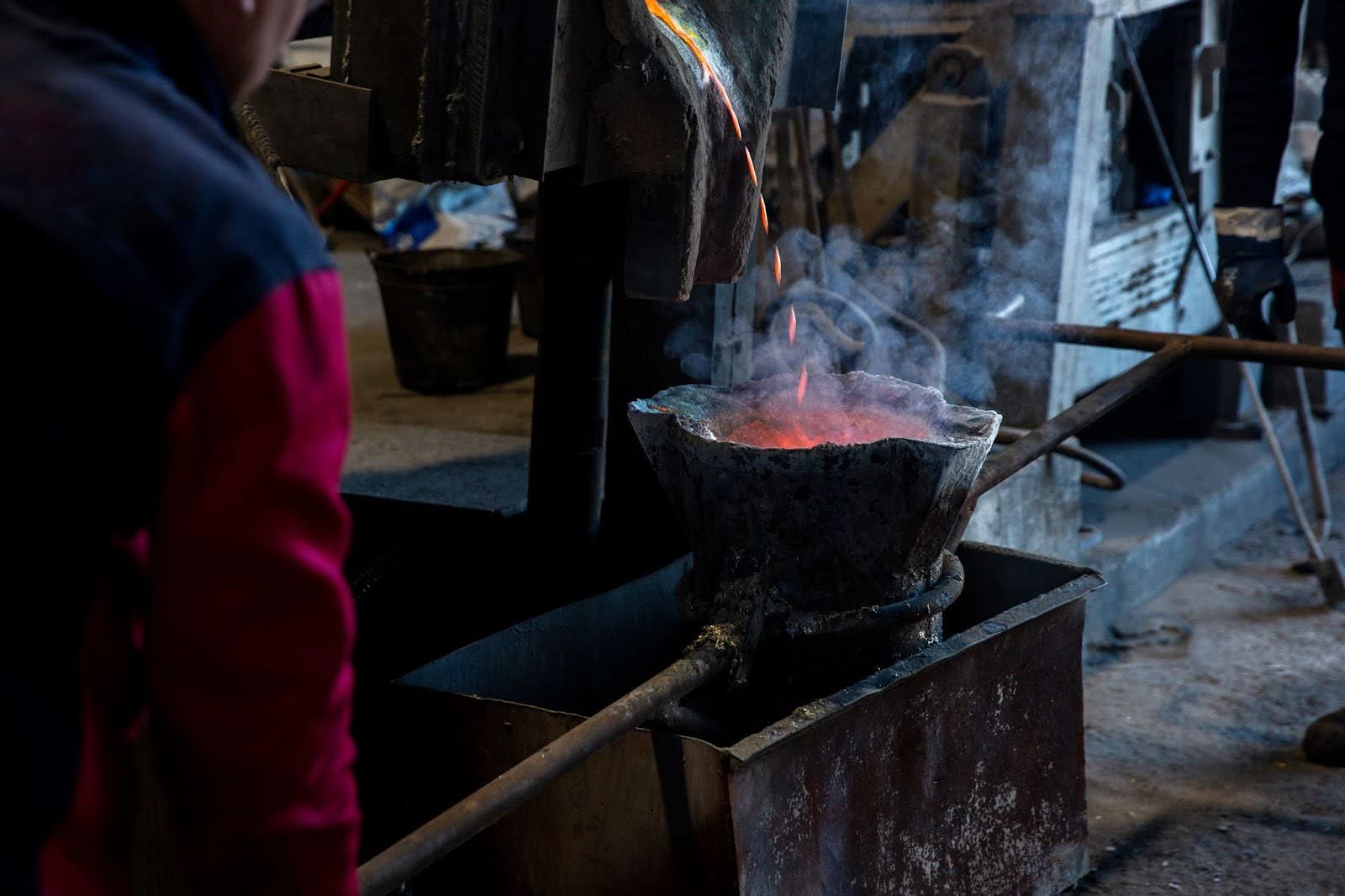
Look around you, everything from your mobile phone to keys and wires, cooking pans, bicycles, and buildings has metals in them. But how do we get metals from the Earth? The answer is we don't, because metals are buried deep in the Earth's crust, and are not found lying around in shiny and attractive forms.
So, how do we get metals to use in our everyday lives? The answer is, it has to be pulled from rocks and then refined into pure and useful metals. The entire process of changing rocks into metals is called the extraction of metals.
In chemistry, the extraction of metals also shows how the modern world is able to use natural resources, and it demonstrates how chemistry, energy, and the environment are interrelated.
Metals are elements that:
Most metals are found in nature as compounds, meaning they are mixed with other substances, like oxygen, sulfur, or carbonates. Such natural mixtures of metal compounds and rock are called ores.
An ore is a rock that contains enough metal compounds to make extraction worthwhile and economical.
For example:
Metal compounds found in rocks that contain insufficient metal are not considered ores, and such rocks are left out.
Without metal extraction, modern technology and infrastructure would not be possible. Metal extraction uses energy and affects the environment so it must be done carefully.
There are a number of processes which have to be done to obtain metal from its ores.
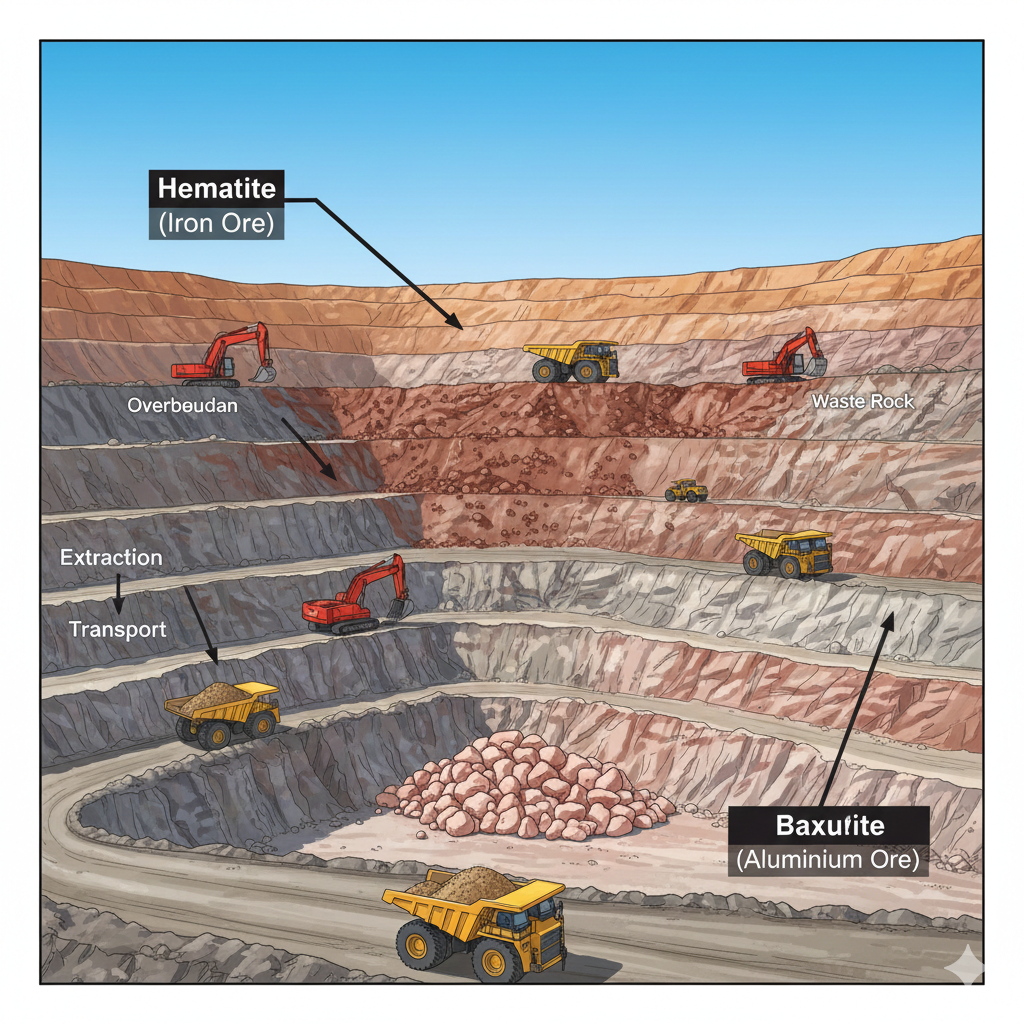
Mining is the removal of rock which contains the ores of metal from the ground (by both open-pit and underground mining).
Crushing the ore and separating the metal-rich part from the waste rock increases the grade of the ore.
Chemical processes are done to obtain the (pure) metal from its compounds.
Cleaning the metal is done by removing the impurities.
Each of the processes consumed energy, and, thus, ores have to be mined, and the entire processes must be controlled in a careful manner to ensure that energy is saved and the processes are safe.
Not all metals are the same. Some are quickly, and some are slowly. So, to describe their behavior, chemists have created their own series.
This series described the elements according to their ease of losing electrons and forming a compound.
The following is a list of importance of the series:
Very reactive metals such as aluminium, sodium and potassium, cannot be extracted with carbon because their bond with oxygen is stronger than the carbon-oxygen bond.
What is electrolysis?
Consider this: Electrolysis is used to extract aluminium from its oxide, which is very costly because of the enormous required power.
Metal ores that are less reactive than carbon can undergo a process called reduction by simply heating them with carbon.
Reduction is a term used for a process in which a metal compound loses an oxygen atom.
Key points:
Example: In a blast furnace, iron is extracted from iron ore. Here, carbon (coke) is used to eliminate the oxygen from iron oxide to obtain iron metal.
This process is cost efficient, hence carbon is used.
Some metals are so unreactive that they can be found in nature in a completely pure form.
Examples are:
These metals are found in unreacted forms in rocks and riverbeds as they don't react with moisture or air. They can be separated or washed using straightforward methods as they do not chemically combine.
A large amount of energy is required for metal extraction. This energy is required for:
More energy is required to extract more reactive metals. For example, the extraction of aluminium requires a large amount of electricity, which is why aluminium production plants are often established near power stations.
The impact of energy use in extraction is chemistry, physics and environmental science intertwined. The more energy used, the more impact it has on our natural resources.
Metal extraction can lead to a variety of environmental problems, if it is not managed properly.
The following are a few of the major impacts:
The above impacts demonstrate the necessity of adopting sustainable practices. Most modern industries are focusing on reducing pollution, restoring mined areas, and utilizing clean energy sources.
One of the most effective ways to minimize the impact on the environment is through recycling. Metal recycling is the process of collecting used metal products and melting them in order to manufacture new products.
The benefits of recycling are:
An example is recycling aluminum, it saves much more energy than mining aluminum from its ore. Therefore, recycling is environmentally friendly and economically useful.
In MYP Chemistry, the extraction of metals is used to demonstrate a range of real-life applications of chemical reactions.
It demonstrates how:
This topic is meant to develop the learners' understanding of the applications of Chemistry to everyday life, while encouraging them to think about the sustainable extraction of Earth's resources.
Metal extraction is much more than just obtaining a resource from a rock. It is a system that encompasses the relationship between a branch of science and the real world.
In this unit you will learn:
Metal is a part of almost everything in the world today, from simple everyday devices to sophisticated high-tech systems. Developing an appreciation of how metals are obtained will illuminate the concealed chemistry of things that you utilize, and the obligation that you have in preserving the natural world.