

On this page:
Introduction What is a Chemical Reaction? What are Reversible and Irreversible Reactions? What Is A Chemical Equilibrium? Equilibrium and Closed Systems The Nature of Equilibrium Causes of Changes to Equilibrium Le Chatelier's Principle The Effect of Concentration Effects of Temperature Effects of Pressure (Gaseous Systems) Role of a Catalyst Equilibrium Constant Real-Life Importance of Equilibrium Why Chemical Equilibria Matter in MYP Chemistry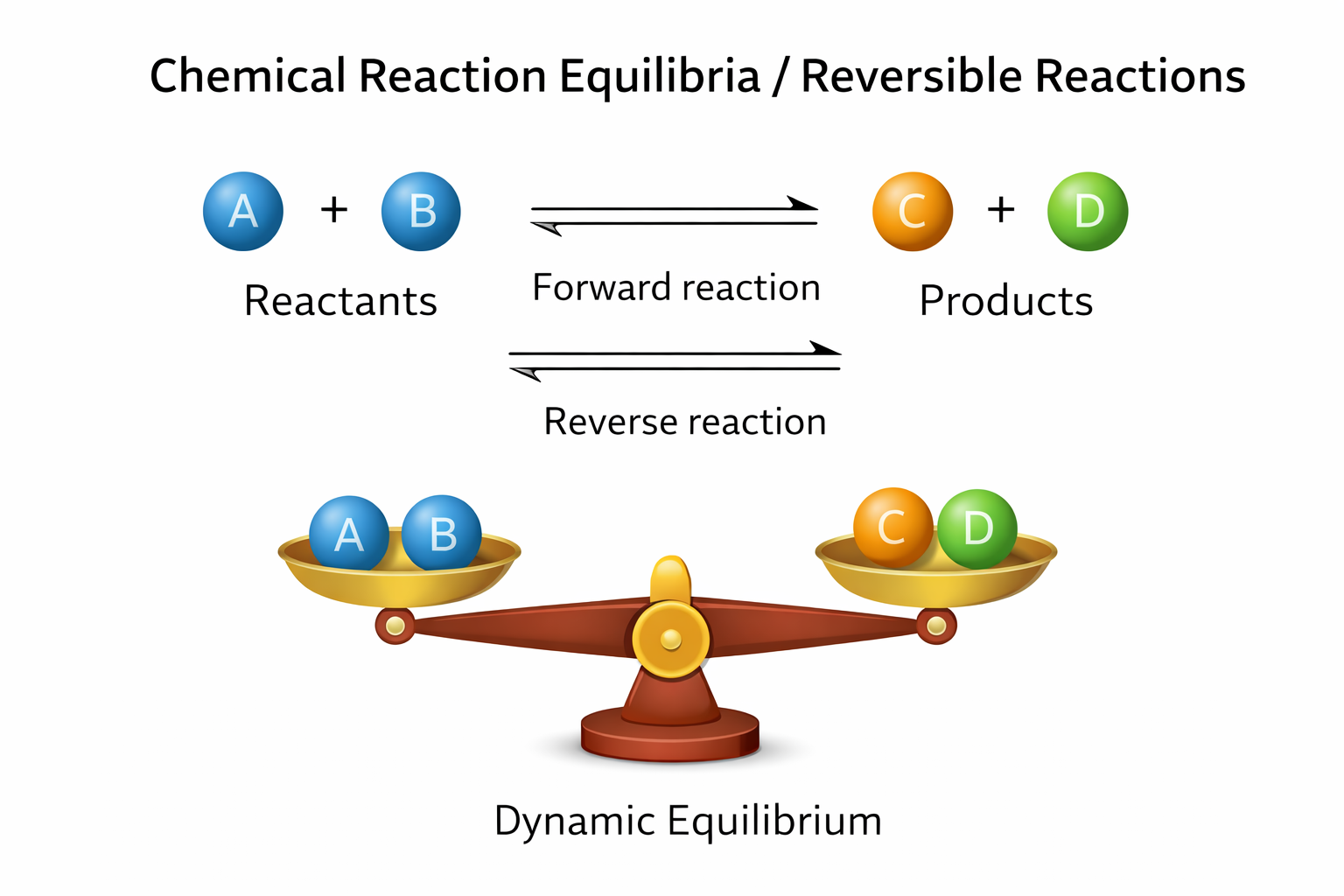
What if you poured some water into a glass, then poured some back into a bottle? Things can go forward or backward. This happens in a lot of chemical reactions. They don't always go to completion; they can move in both directions and settle into a balanced state called equilibrium.
In chemistry, reactions are not always one way. Some reactions are reversible, meaning that once the reactants are changed into the products, the products can then change back into reactants. When this forward and backward process balances out, the system reaches chemical equilibrium.
A chemical reaction is a process in which substances called reactants change into new substances called products.
This happens because the atoms of the substances are rearranged and some bonds break and new ones form.
However, in real situations such as closed systems with containers, many reactions can occur in both directions:
The double-headed arrow (⇌) means that this is a reversible reaction.
If a reaction is irreversible, it means that it is going mostly in one direction and does not easily reverse.
These include examples such as:
These kinds of reactions release energy, or produce extremely stable products, which means that the reverse reaction is not going to happen easily.
In order for a reaction to be reversible, it means that it can occur in both directions, only under certain conditions.
Some examples include:
In the case of a reversible reaction, the forward reaction converts the reactants into products and the backward one does the opposite, that is, converts the products back into reactants.
Both the forward and backward reactions can occur simultaneously.
Chemical Equilibrium is a stage where:
Important points to keep in mind:
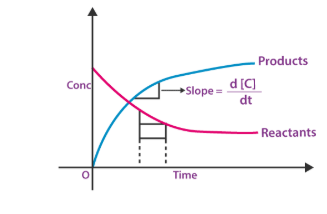
The equilibrium state can look like nothing is changing because the overall amount is not changing when you look at it closely.
Equilibrium can only be reached in closed systems.
Closed systems:
If there are products escaping the system, for example gas products are escaping an open container, equilibrium will never be reached because the products will not be able to go back.
If a system is at equilibrium, it means:
The concentrations throughout the system are not equal and will not be equal for all time again.
Imagine two people throwing the same number of balls back and forth between one another. Each person maintains a constant number of balls. This is an example of equilibrium on a molecular level.
The equilibrium position can change due to the changes in effecting factors that will be discussed next.
Some of these factors include:
The principle states that when a change is made to a system in equilibrium, the system will shift in the direction to counteract the change. This principle will assist when determining in which direction equilibrium will shift.
When a system is in equilibrium, the following changes will occur:
Shifts equilibrium to a greater extent toward products.
Shifts equilibrium to a greater extent toward reactants.
Causes equilibrium to shift to a greater extent backward.
Causes equilibrium to shift to a greater extent forward.
The system will attempt to use the substance that is newly added to the system and will attempt to replace the substance that is removed.
Temperature changes can affect the position of equilibrium for:
General ideas:
Temperature changes can affect the position of equilibrium, not just the rate of the reactions.
Only reactions that involve gases are affected by pressure changes.
This allows the system to minimize the effects of the pressure change.
A catalyst is a substance that:
In equilibrium, a catalyst:
A catalyst just helps the system get to equilibrium faster.
This is why catalysts are important in industrial chemistry, because they save time and energy.
The equilibrium constant is written as K. The equilibrium constant describes how far a reaction goes toward forming products at equilibrium.
Main Points To Remember:
At this level, you do not need to do complicated calculations, though the concept is useful in comparing different equilibria.
Chemical equilibrium applies to many processes in everyday life:
The binding of oxygen to hemoglobin. The equilibrium of carbon dioxide in the blood.
The production of ammonia for fertilizers. The manufacture of some acids and chemicals.
The equilibrium of dissolved carbon dioxide in the oceans. The natural equilibrium of gases in the atmosphere.
The knowledge of equilibrium enables scientists to appropriately direct reactions to obtain more of the desired products and minimize the by-products.
The focus of this unit is on how to construct the foundations for your future studies in chemistry, specifically how to focus on reactions that can be completed both in the forward and reverse direction and apply it to future studies in chemistry. You will be able to do the following:
Chemical equilibrium teaches you that reactions are not "done" and many systems are continuously in balance, adjusting to their surrounding systems. Understanding this balance and this is the point where chemistry stops being a large collection of reactions and starts being the identification of patterns in response of matter to changing conditions in the systems.