Endothermic & Exothermic Reactions
Do you know why ice melts on a hot day? Or why a fire feels warm and nice? With every chemical reaction, there are changes in energy; this even happens in the reactions that occur inside your body when you eat or when you exercise. In some reactions, energy is absorbed; in others, energy is released. These changes in energy are very important because they help chemists predict how reactions will behave, show them how useful things can be made, and help them understand everyday occurrences, such as the ones in cooking and staying warm.
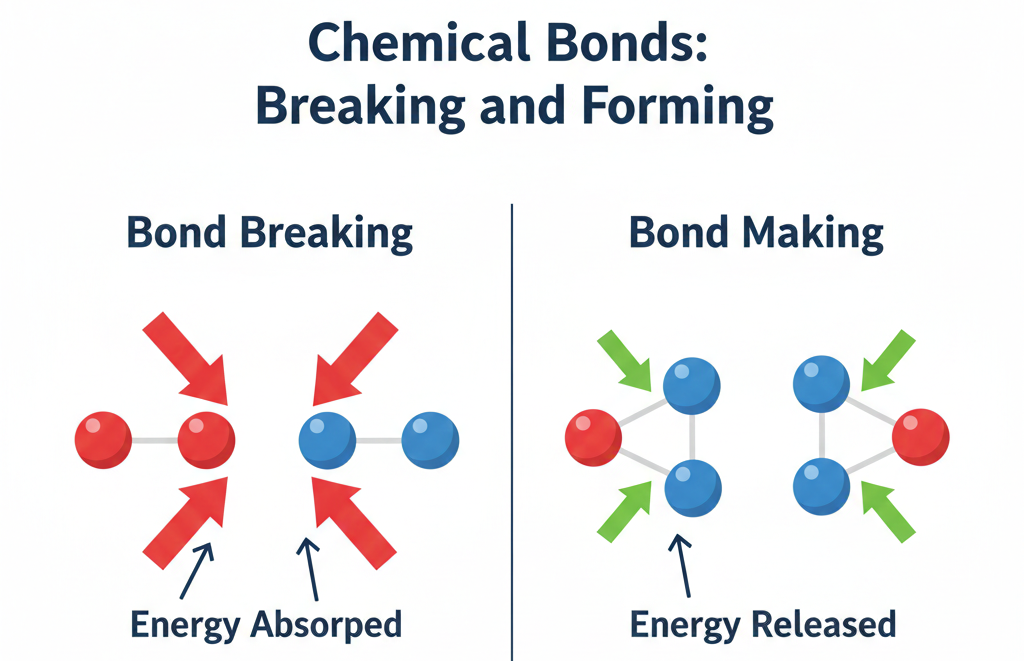
Chemistry is involved with rearranging atoms, and forming and breaking chemical bonds.
- Breaking a bond: Energy is absorbed
- Forming a bond: Energy is released
The energy overall of a reaction dictates if the reaction is endothermic or exothermic.
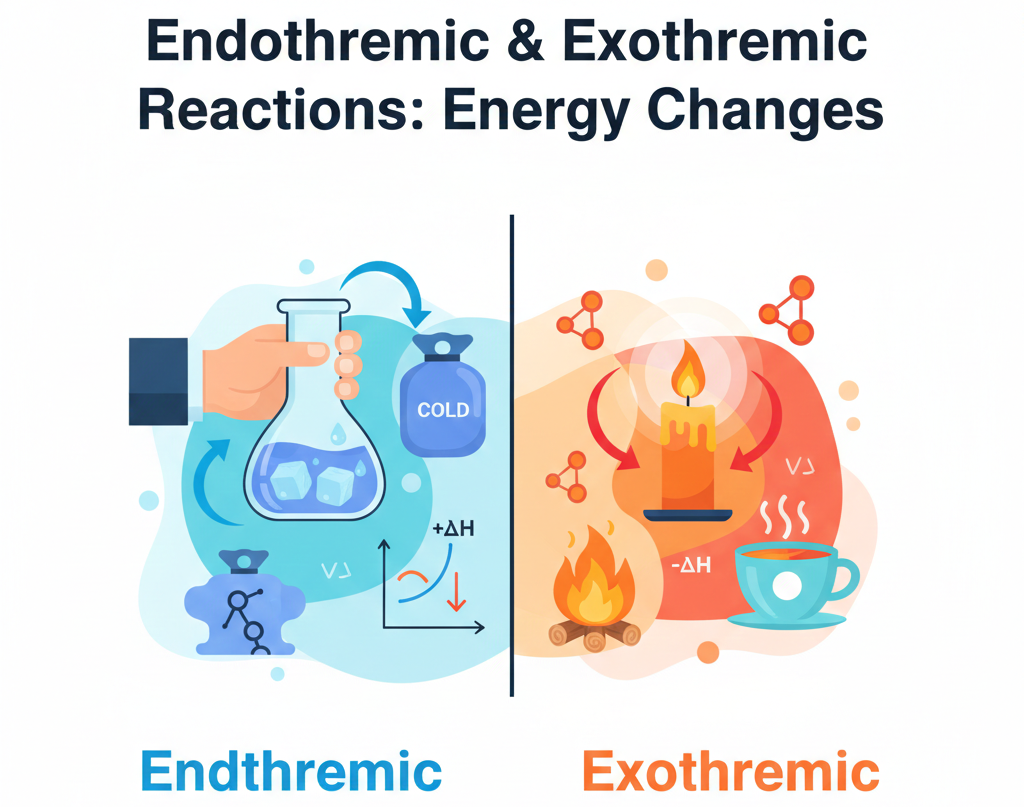
What Are Endothermic Reactions?
Endothermic reactions take energy from the surroundings. This means it can heat up. You can actually feel this reaction become colder.
Key Points:
- Energy gets absorbed from surroundings.
- Surroundings become cool.
- Products end with a higher energy state than the starting reactants.
- The energy of the reaction is illustrated on the energy diagram, with reactants lower than products.
Everyday Examples:
- Photosynthesis
- Ice Melting
- Water Evaporating
- Cooking an Egg (heat must be absorbed to break molecular bonds)
Exothermic Reactions
Endothermic reactions absorb energy from the surrounding environment, and this energy can manifest as heat, light, or sound, which causes the reaction to feel cooler.
Key Points:
- There are no energy changes to the environment.
- The surrounding environment cools during the reaction.
- The reactants have more energy than the products.
- Energy diagram shows the products to be lower than the reactants.
Everyday Examples:
- Combustion reactions (gas, wood)
- Cellular Respiration
- Water Freezing
- Fireworks
Energy Transfer and Bonding
Two main processes occur during chemical reactions:
- Bond breaking (requires an input of energy)
- Bond making (releases energy)
The dominant process determines the net energy change:
- Endothermic reaction = more energy is absorbed to break the bonds.
- Exothermic reaction = more energy is released when new bonds are formed.
Understanding Points
- Bond breaking = energy is absorbed (think of climbing the hill!)
- Bond making = energy is released (think of rolling down the hill!)
- Net energy change = energy absorbed - energy released.
Reaction Energy Profiles
An energy profile graph shows how the energy of a reaction changes over time.
Endothermic Reactions
- Energy Graph: The absorbance of energy causes a rise in the graph.
- Reactants: Have a lower energy level
- Products: Have a higher energy level
- Ongoing Process: The continuous process absorb heat from their surroundings in Endothermic reactions.
Exothermic Reactions
- Energy Graph: The release of energy causes a fall in the graph.
- Reactants: Have a higher energy level
- Products: Have a lower energy level
- Ongoing Process: The continuous process give out heat to their surroundings in Exothermic reactions.
Other Definitions
Activation Energy:
- Every reaction starts with a minimum energy called (Ea).
- Of the graph, peak represent Ap.
- Ap leads to lower catalysis of the reaction.
Law of Conservation of Energy:
- Energy cannot be created or destroyed, only changed from one form to other.
- Chemical reactions: Endothermic: energy is stored in the chemical bonds of the product. Exothermic: energy is transferred to the surroundings.
- Chemical reactions are used to heat homes, cook food, or generate electricity.
Everyday Applications of Endothermic and Exothermic Reactions
Applying the knowledge of Endothermic and Exothermic reactions helps in day to day activities:
Endothermic Reactions:
- Cold packs for injuries absorb heat from your skin.
- Photosynthesis absorbs energy to food in plants.
Exothermic Reactions:
- Hand warmers give out heat during oxidation of iron.
- The combustion of fuels give out energy that is used in cooking, heating, and moving things.
Theory to Practice:
- Fuel combustion = energy for machines.
- Respiration = energy for living organisms.
- Ice packs = energy absorbed for first aid.
- Cooking food is an example of a chemical reaction.
Energy Changes
When a chemical reaction occurs, it has an energy change that is affected by these factors:
- Type of bonds. The stronger bonds that form, the more energy is released.
- Concentration of reactants. The more molecules, the more energy is released or absorbed.
- Temperature. The higher the temperature, the more energy there is to supply the threshold to start the reaction.
- Catalysts. They lower the threshold energy to start the reaction, but do not change the overall energy change.
Summary
- In endothermic reactions, energy is absorbed. The reaction products end with higher energy than the reactants. The surroundings become colder.
- In exothermic reactions, energy is released. The reaction products end with lower energy than the reactants. The surroundings become hotter.
- Energy is absorbed to break bonds and released to form new bonds.
- All reactions have threshold energy to start.
- Energy changes explain many things in nature, industry, and in our everyday life.
Key Points
- The most significant component of any chemical reaction is the energy change that occurs.
- Energy is never lost in a reaction; it is transferred somewhere else in the reaction.
- Our understanding of the processes in a chemical reaction is aided by real world examples of endothermic and exothermic reactions.
- Chemical reactions are more than just equations; they are stories that are told through energy.
- The heat that is absorbed or released during a reaction is what is happening. It helps us use the reaction safely.
- Have you ever wondered why a fire is hot or why ice is melting on a warm day?
- Even chemical reactions are happening in your body when you eat, breathe, and move your muscles.
- Chemists are able to design materials and explain the processes of the world around us by understanding energy in chemical reactions.
We can study the changes of energy to provide prediction of the reactions for the design and construction of practical substances and to elaborate the processes occurring around us everyday. To sum it up, every reaction tells a story. The story revolves around energy. The heat changes that are observed provide a greater understanding of the principles of chemistry in the practical world.