Emissions and Environmental Implications
What do you think about the air you breathe? What do you think about the processes that are happening in the background? Almost everything that involves the movement of a vehicle, the operation of a factory, or the burning of waste generates the emission of microscopic chemical particles that are released into the environment. These emissions may have a beneficial or detrimental effect on the environment and the health of humans.
Chemistry allows us to understand what these emissions are, the nature and source of these emissions, the emissions interactions, and the emissions mitigation strategies.
The pollution of the environment is something that is noticed and studied every day; it is measured and studied to learn how to manage it. There is no doubt that emissions are very important in the scope of environmental conservation.
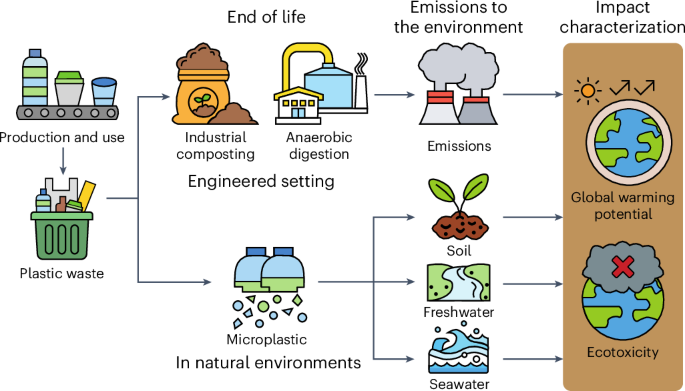
What Are Emissions?
Emissions are materials that are created in a gaseous, liquid, or solid particulate form and are released into the surrounding environment. Emissions are a result of human and, in some instances, natural processes. Typical sources of emissions include:
- Burning fuels in vehicles and power plants
- Factories and industrial activities
- Burning waste and landfills
- Farming and the use of fertilizers
- Natural sources such as volcanic eruptions, wildfires, and decomposition
Different types of emissions:
- Gaseous emissions: carbon dioxide (CO₂), nitrogen oxides (NOₓ), and sulfur dioxide (SO₂)
- Particulate matter (PM): small solid or liquid particles present in smoke and dust
- Liquid pollutants: the chemical waste that flows into rivers and oceans
Chemical pollutants may not always be seen, but their effects on the environment and living organisms are felt and measured.
Chemistry of Air Pollutants
If harmful substances are combined with the air we breathe, that is considered air pollution, and the primary source of air pollution is combustion (burning).
Carbon monoxide (CO)
Every time a fuel is burned, a small amount of CO is released.
Nitrogen oxides (NO & NO₂)
Are produced in high temperatures in motors.
Sulfur dioxide (SO₂)
Is produced from the combustion of sulfur in coal and oils.
Volatile organic compounds (VOCs)
Are produced by fuels, paints, and solvents.
Particulate Matter (PM10, PM2.5)
Are small particles that penetrate the lungs.
Chemistry is important here because:
- In the atmosphere, these gases interact.
- They can lead to the formation of secondary pollutants, such as acid and smog.
- The structure of the gas and how reactive it is determine the degree of danger it poses.
An example of this is the nitrogen dioxide that reacts with sunlight to produce photochemical smog, the brown haze that is common in many urban centres.
Greenhouse gases (GHGs) are emissions that do not poison the atmosphere but create an added burden by trapping heat in the atmosphere and thereby warming the globe.
Main Greenhouse Gases and their Sources
CO₂
Carbon dioxide (CO₂): Fossil fuel burning and deforestation
CH₄
Methane (CH₄): Landfills, rice paddies, and livestock
N₂O
Nitrous Oxide (N₂O): Fertilizers and some industrial activities
H₂O
Water vapor: A natural greenhouse gas that varies with temperature
How the Greenhouse Effect Works
- Sunlight reaches the Earth's atmosphere.
- The Earth releases some of that heat into space.
- Greenhouse gases capture some of that heat.
- The heat that is trapped increases the Earth's temperature.
Environmental Effects of the Greenhouse Effect
- The Earth's temperature increases.
- Ice caps and glaciers melt.
- Sea levels rise.
- The weather becomes more extreme.
The chemistry is based on how gas molecules capture infrared radiation and the associated molecular structure.
Rain's Acidity and Its Effects
Rain is natural; without pollution, it is slightly acidic. Given that there is pollution (more SO₂ and NOₓ), it becomes more acidic, and you get acid rain.
The key pollution components are: Sulfur dioxide (SO₂) and Nitrogen oxides (NOₓ)
Some of the reactions in the atmosphere that result in more acidic rain are:
- SO₂ + O₂ + H₂O → Sulfuric acid.
- NOₓ + H₂O → Nitric acid.
Effects of Acid Rain
- The acid rain damages forests and crops.
- The acid rain damages from a distance. Wind is responsible for the acid rain falling.
- The acid rain is corrosive, which means that it damages the statues.
- Acid rain damages fish inhabiting the lakes and rivers.
- Acid rain also damages the soil by leaching its nutrients.
Acid rain is a classic case of how emissions travel. They do not stay in their source or the area they are close to. Acid rain is a classical case of how the wind can carry gases (before they react) a long distance from their source, to where they fall as acid rain.
Ozone - Good in the Stratosphere, Bad in the Troposphere
Ozone (O₃) has differing roles depending on the layer of the atmosphere.
Stratospheric ozone (good):
- Good ozone / the ozone layer
- Protects us from harmful UV rays (good)
- Protects us from UV rays that can cause DNA mutations
Tropospheric ozone (bad):
- Bad ozone
- Made from ground-level pollution (bad)
- Made from the reaction of NOₓ, UVs
- A major component of pollution
- Irritates the lungs and damages crops/trees.
Ozone Layer
- Ozone layer destruction is primarily due to CFCs
- UV light reacts with CFCs and releases chlorine
- Chlorine decimates the ozone molecules (chain reactions)
A prime example of how a minute amount of a certain chemical can drastically alter the environment.
Water Pollution
Pollution is not solely airborne; the pollution of water systems is a big issue.
Some pollution sources:
- Wastewater from factories
- Pesticides and fertilizers runoff from farms
- Oil and plastic pollution
- Untreated human excrement.
Effects of pollution on water:
- Algal blooms caused by an excess of nitrates/phosphates (eutrophication)
- Algal decay uses dissolved oxygen, which causes oxygen depletion.
- Toxic heavy metals (lead and mercury) kill aquatic life and are harmful to us.
The results of water pollution are:
- Death of fish and the destruction of ecosystems
- Contaminated water is not safe for consumption
- Contaminated ecosystems cannot be used for a long time.
Pollution in the water can be studied, tested, and treated with the help of chemistry.
Impact of Emissions on Human Health
The field of environmental chemistry is essential for human healthcare. It includes health effects of emissions such as:
- Particulate matter leads to respiratory issues and triggers asthma.
- Carbon monoxide causes headaches and dizziness.
- Carbon monoxide increases the risk of heart and lung disease.
- Some VOCs are linked to long-term cancer risk.
Why are small particles dangerous?
- The most dangerous particles are those that can enter the deepest areas of the respiratory system.
- Some particles are small enough to cross the membranes of the blood.
- Small particles carry with them additional toxins that are highly dangerous.
Some pollutants are more dangerous than others based on their chemical construction.
Pollutants Measurement and Monitoring
Pollution control begins with pollution measurement.
Monitoring of Air Quality
- Measurement of CO₂, NO₂, SO₂ emissions
- Water-quality measuring devices that detect pH, Nitrates, and Heavy metals
- Other devices that measure emissions in parts per million (PPM).
The dependence on measurement is the following:
- Captures pollution
- Shows pollution sources.
- Supports the formation of governing laws based on pollution measurement.
- Establishes different pollution levels in different places.
Environmental measurement would be the whites of your eye, guesswork.
Sustainable Solutions
Not all of chemistry is problems; a lot of chemistry has a lot of positive solutions.
Technological solutions
- Cars with catalytic converters reduce CO and NOₓ.
- SO₂ scrubbing allows power plants to reduce SO₂.
- Filtration removes particulate matter.
- Renewable energy replaces fossil fuels.
Everyday actions that matter
- Public transport/cycling.
- Electricity/fuel saving.
- Reduce, reuse, recycle.
- Buy less harmful chemical products.
Green chemistry principles
- Design safer chemicals.
- Reduce waste in reactions.
- Renewable materials.
- Energy efficient.
These approaches reduce harmful emissions.
Why Emissions Matter in MYP Chemistry
In MYP Chemistry, Emissions integrates many big ideas into one real-world narrative.
- Chemical reactions: combustion, oxidation, reactions in the atmosphere.
- The nature and behaviour of the substances involved: toxicity, reactivity, and solubility.
- The Systems: atmosphere, hydrosphere, biosphere.
- Human impact: technology alters the natural cycle.
- The duty: to use science in the aid of environmental protection.
The chemistry of emissions demonstrates that the minute and the invisible can determine the fate of the planet. It empowers us to simplify the more sophisticated emissions and make smart choices.