

On this page:
Introduction What is Corrosion? What causes metals to corrode? Rusting: A Unique Form of Corrosion The Science Behind Forming Corrosion Different Conditions for Corrosion Forms of Corrosion Societal Impacts of Corrosion Controlling Corrosion Corrosion and the environment The Importance of Understanding Corrosion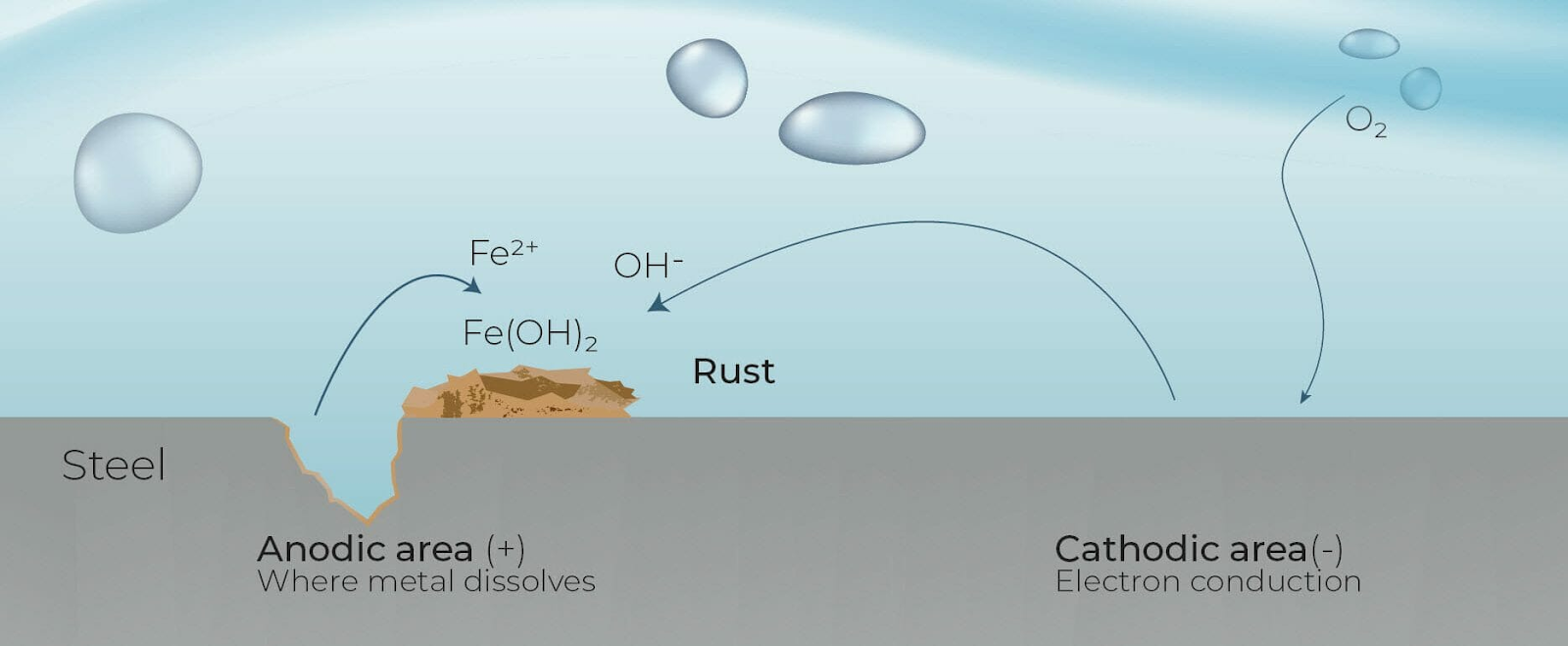
Although metals may appear to be strong and durable, they can be slowly damaged over time. How come shiny metals appear to have their value and attractiveness removed without anyone physically interacting with them? Why do objects like the old gate, school railing, bicycle chain, and metals lose their luster and become rough and dull?
This is not a magical process.
In chemistry, rusting, or slowly damaging metals, is a process is called corrosion. Corrosion is a natural process whereby a metal reacts with the environment and is converted into a more stable form. Corrosion is significant because it
Corrosion understanding is significant to protecting useful metals and developing advanced technologies.
The definition of Corrosion is damage to a metal due to slow reactions occurring over a long period of time. Metal extractive processes use a significant amount of energy. Due to this, all metals have a natural tendency to undergo the processes of corrosion, as they want to be in a lower energy and more stable state.
More simply put, metals undergo corrosion because they want to return to their more stable state, and the available environment provides the metals with the means to do so (i.e. oxygen, water, and salts, etc).
This slow and gradual chemical change is what we call corrosion.
As an example, rust forms on iron, a green layer covers copper, and older silver jewelry turns black.
Corrosion, while noticeable, is less obvious than the damage caused by fire. Unlike fire, corrosion is slow and silent. This means it can be present, causing significant damage, long before it is noticed.
The high corrosion rates observed in t outer layer of metals can be attributed to the metal's extractive chemical state. Each time a new metal is uncovered, it is at a high energy, high potential state and encased in a more stable, less energetic state. Therefore, the energetic metal will corrode to a more stable state (i.e. less energetic) due to the reactions with the surroundings as described below.
As we all are aware, metals that are left outdoors and those in the ocean show obvious signs of corrosion and rusting. This also explains why more rusting occurs in coastal areas compared to arid areas and deserts.
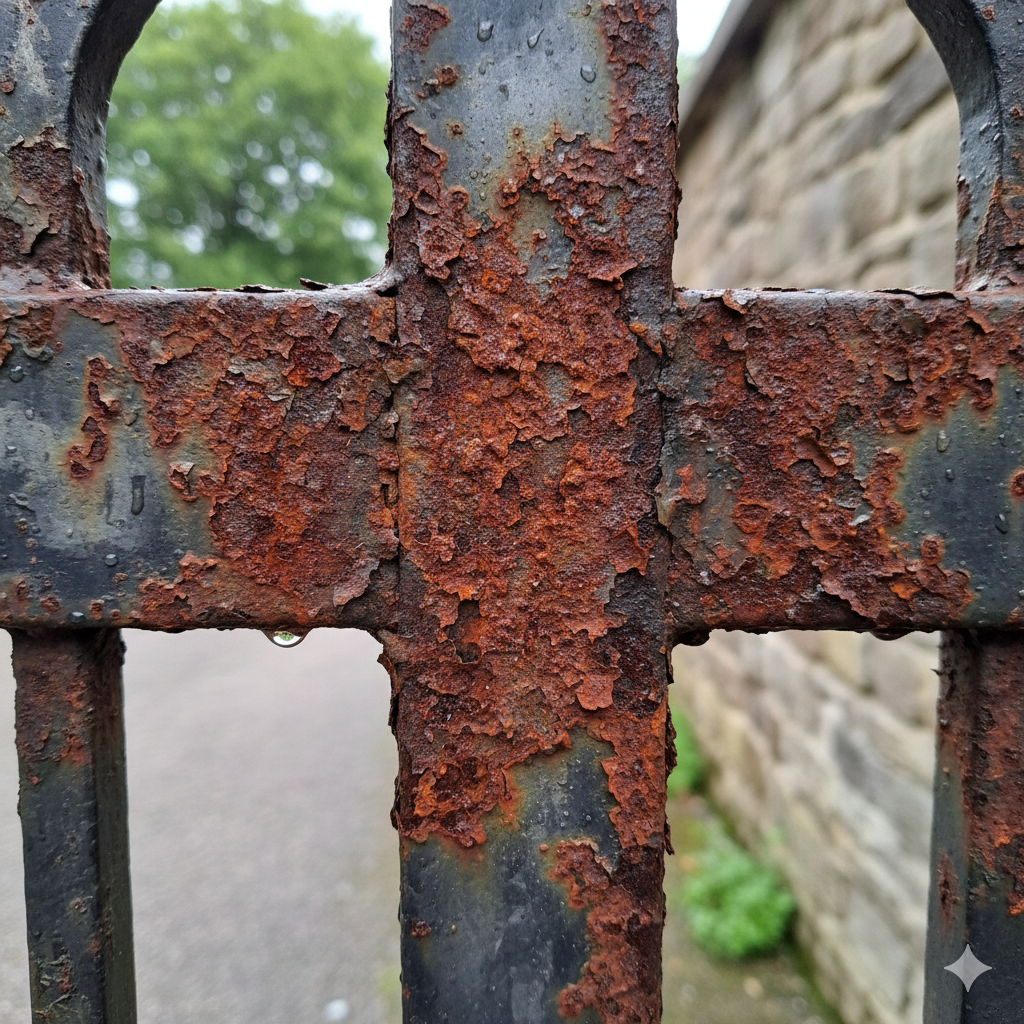
Rusting is a specific and prevalent type of corrosion that only affects iron and steel, and occurs when the following three components simultaneously present:
When all three components are present, an iron reaction occurs that results in the formation of oxidized iron, commonly referred to as rust.
Rust formation means that for construction materials such as iron and steel, the formation of rust does not offer protection to them. Instead:
This is why rusted bridges, pipelines, and tools are dangerous if the rusted materials are not properly treated.
Rusting is a type of corrosion that occurs through oxidation and reduction, also described as a type redox reaction.
In the case of iron oxidation, iron oxidation occurs through the loss of electrons, and water and oxygen vapor in the air are electrochemically active.
Because corrosion occurs in an electrochemical process, the idea contributes to the effective management of corrosion prevention.
The factors that influence the corrosion process vary from place to place. Depending on the conditions applied, corrosion can happen very quickly in some places and in some places can take a long time to happen.
Based on the conditions applied and the materials used, corrosion can take on different forms. Some of the most common forms of corrosion are:
Knowing these types help engineers design structures that are less likely to fail.
Corrosion has an important relevance in society aside from being a fascinating chapter in a chemistry textbook.
Over the years, countless billions of dollars in developed countries have been spent on the:
This gives an indication of the extent to which it is necessary to manage corrosion.
Corrosion is a process that can be controlled but not stopped.
It is Alway present in the environment and its process can be controlled by keeping contact between the metal and the surrounding environment.
There are many Corrosion control methods that aim to prevent the flow of corrosive elements to the metal being protected.
Corrosion protection is based on cost, environment and purpose of the metal.
Corrosion is affected by environmental conditions like rain or snow, and human activity.
Remember these points: Corrosion is increased by rain, and industrial waste in the water
Pollution contains gases that are corrosive and that contribute to acid rain.
Waste and natural resource protection can be achieved by using better materials and protective coatings.
The importance of protecting not only the metal but also the environment can be seen in the application of protective coatings and more structurally efficient designs.
Corrosion is more than just rust on iron, it is chemistry in action. Understanding corrosion allows students to: -See chemistry in action.
Metals are present in all aspects of contemporary society. Studying how they alter, why changes occur, and how we can safeguard metals demonstrates the role of chemistry in advancing civilization.