

On this page:
Introduction Unity: What All Living Things Share Cellular Organization Genetic Information in DNA The Genetic Code Protein Synthesis Metabolism Homeostasis Growth and Reproduction Response to Stimuli Evolution Diversity: The Variety of Life Diversity in Body Plans Diversity in Nutrition Diversity in Reproduction Diversity in Adaptation to Extreme Environments Evolution as the Explanation Implications for Biology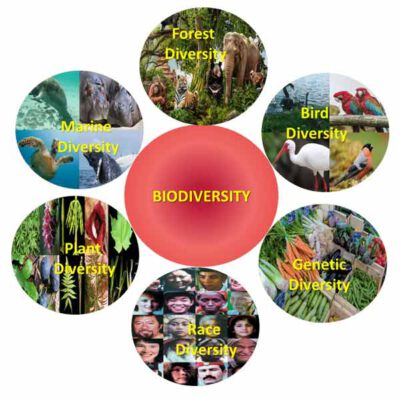
Look at a bacterium under a microscope. Now look at a blue whale. Or a giant sequoia tree. Or a deep-sea tubeworm living near a hydrothermal vent with no sunlight. These organisms seem impossibly different from each other.
And yet, at the molecular and cellular level, they share features so fundamental and so universal that biologists are certain all life on Earth descended from a common ancestor. The story of life is simultaneously a story of profound unity and breathtaking diversity.
Despite the enormous variety of life forms, all living organisms share a set of fundamental characteristics. These shared features are so deep and so universal that they define what it means to be alive.
All living organisms are made of cells. This is the first principle of cell theory and it applies without exception to every organism on Earth.
Prokaryotic organisms like bacteria consist of a single cell with no membrane-bound nucleus. Eukaryotic organisms like plants, animals, and fungi have one or more cells with membrane-bound nuclei. But all are made of cells.
All living organisms store genetic information in DNA (deoxyribonucleic acid). The same four nucleotide bases — adenine, thymine, guanine, and cytosine — are used by every organism on Earth to encode genetic information. The same base-pairing rules apply universally. The same process of DNA replication copies genetic information before cell division.
This universal genetic code is one of the strongest pieces of evidence that all life shares a common ancestor.
The genetic code, the system by which sequences of three DNA bases (codons) specify particular amino acids, is virtually identical in all organisms. The codon AUG specifies the amino acid methionine in bacteria, in plants, in animals, and in fungi alike. This remarkable universality of the genetic code indicates that it was established very early in the history of life and has been conserved ever since.
All living organisms synthesize proteins using ribosomes, messenger RNA, and transfer RNA, following the same fundamental process of transcription and translation. The ribosomes of prokaryotes and eukaryotes differ in their structure, but the basic mechanism is the same.
All living organisms carry out metabolism, the sum of all chemical reactions occurring within an organism. This includes obtaining and transforming energy, synthesizing biological molecules, breaking down waste products, and maintaining internal conditions.
All organisms carry out some form of cellular respiration to release energy from organic molecules, using ATP as the universal energy currency.
All living organisms maintain relatively stable internal conditions despite changes in the external environment. The specific mechanisms vary enormously between organisms, but the principle of maintaining internal stability is universal.
All living organisms grow and reproduce, passing genetic information to offspring. Reproduction may be sexual (combining genetic material from two parents) or asexual (producing offspring genetically identical to the parent), but all organisms have the capacity to produce new organisms.
All living organisms detect and respond to stimuli from their environment. A bacterium moves toward a chemical attractant. A plant grows toward light. An animal withdraws from a painful stimulus. The mechanisms are vastly different but the capacity to respond to the environment is universal.
All populations of living organisms evolve over time through natural selection acting on heritable variation. Evolution is not just something that happened in the past. It is an ongoing process occurring in every population of every species alive today.
While all life shares fundamental unity, the diversity of living organisms is extraordinary. Over the approximately 4 billion years of life on Earth, natural selection has produced an estimated 8 to 10 million living species, and this represents only a small fraction of all species that have ever existed.
Life has evolved an astonishing variety of body plans suited to different environments and lifestyles.
Body symmetry varies from the radial symmetry of jellyfish and sea urchins to the bilateral symmetry of most animals to the irregular forms of many sponges and plants.
Living organisms obtain energy and organic molecules in fundamentally different ways.
Produce their own organic molecules from inorganic sources.
Obtain organic molecules by consuming other organisms.
Reproductive strategies vary enormously across life forms.
Life has colonized virtually every environment on Earth, including environments that seem incompatible with life.
Extremophiles are organisms adapted to extreme conditions.
The discovery of extremophiles has dramatically expanded our understanding of where life can exist, and has implications for the search for life elsewhere in the universe.
The pattern of unity within diversity is elegantly explained by evolution.
Unity exists because all life descended from a common ancestor. Features that evolved early and proved fundamentally important, like the genetic code, the structure of cell membranes, and the mechanisms of protein synthesis, have been conserved across billions of years of evolution because any change to them would be catastrophic.
Diversity exists because populations became isolated from each other over time and evolved in different directions in response to different selective pressures in different environments. Natural selection, acting on the heritable variation present in every population, produced organisms precisely suited to their particular environments and ecological niches.
Charles Darwin recognized this connection in the 19th century when he wrote about the grandeur in the view of life, with all its diversity having descended with modification from one or a few original forms. Modern molecular biology has provided extraordinary confirmation of this insight, revealing the shared DNA sequences and cellular mechanisms that link all life on Earth.
Understanding both unity and diversity in life forms has profound practical importance.
The unity of biochemistry means that discoveries made in one organism often apply to others. Insulin produced by bacteria for medical use works in humans because the biochemical pathways are shared. Research on yeast cell division has directly informed our understanding of cancer because the cell cycle mechanisms are conserved.
The diversity of life forms provides an extraordinary range of biological solutions to ecological and physiological challenges, solutions that have been refined by billions of years of natural selection and that represent an irreplaceable biological heritage.
Protecting this diversity is therefore not only an ethical obligation but a practical necessity for human wellbeing and for the stability of the ecosystems on which all life depends.