
On this page:
Introduction Levels of Organization What Are Tissues? Types of Animal Tissue Types of Plant Tissue What Are Organs? Examples of Human Organs What Are Organ Systems? Digestive System Circulatory System Respiratory System Nervous System Musculoskeletal System Other Key Systems How Systems Work Together Stem Cells and Differentiation Why This Organization Matters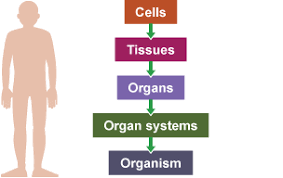
A single cell on its own can do remarkable things. It can take in nutrients, release energy, respond to signals, and even divide to make more cells. But a single cell cannot pump blood around a body, digest a meal, or coordinate the movement of limbs.
For complex organisms like humans to function, cells must work together, organized into increasingly sophisticated levels of structure. This organization is one of the most elegant features of multicellular life, and understanding it is central to understanding how living bodies actually work.
The levels of organization in a multicellular organism move from simplest to most complex: cells → tissues → organs → organ systems → organism.
A tissue is a group of similar cells that work together to perform a specific function.
In a tissue, the cells share the same structure, are produced from the same origin, and carry out the same or closely related jobs. The cells in a tissue are held together by cell adhesion molecules and often surrounded by a non-cellular material called the extracellular matrix, which provides structural support.
In animals, there are four main types of tissue.
Epithelial tissue covers surfaces and lines cavities throughout the body. The skin covering your body is epithelial tissue. So is the lining of your digestive tract, your lungs, and your blood vessels. Epithelial cells are tightly packed together and form protective sheets. Some epithelial tissues also secrete substances; glands are made of secretory epithelial tissue.
Connective tissue supports, connects, and separates other tissues and organs. Bone, cartilage, blood, fat (adipose tissue), and tendons are all types of connective tissue. Despite their very different appearances and functions, they all share the characteristic of having cells scattered within a large amount of extracellular matrix. Blood is a particularly unusual connective tissue: its matrix is liquid plasma.
Muscle tissue is specialized for contraction: it can shorten and generate force. There are three types:
Nervous tissue is specialized for receiving, processing, and transmitting electrical signals. It makes up the brain, spinal cord, and the network of nerves throughout the body. Nervous tissue consists of neurons, cells that transmit electrical impulses, and supporting cells called glial cells.
Plants also have distinct tissue types.
Consists of actively dividing cells found at the tips of roots and shoots, the growing points of the plant. These cells are undifferentiated, meaning they can develop into any other type of plant cell.
Covers the outer surfaces of the plant, leaves, stems, and roots. It protects against water loss, physical damage, and pathogens. The epidermis of leaves contains tiny pores called stomata that control gas exchange and water vapor loss.
Transports water, minerals, and sugars throughout the plant. It consists of two types:
Fills the interior of leaves and is the primary site of photosynthesis. It is packed with chloroplasts and organized to maximize light absorption and gas exchange.
An organ is a structure made of two or more different types of tissue that work together to perform a specific function.
Organs are more complex than tissues because they bring together different tissue types, each contributing something different to the overall function of the organ.
The heart, for example, is an organ made of cardiac muscle tissue (which contracts to pump blood), epithelial tissue (lining the interior chambers), connective tissue (providing structural support), and nervous tissue (coordinating the heartbeat). No single tissue type could perform the function of the heart alone; it takes all of them working together.
The stomach is an organ that digests food. It contains smooth muscle tissue for churning, epithelial tissue for lining and secretion, and nervous tissue for coordination.
The lungs are organs for gas exchange. They contain epithelial tissue forming the thin walls of the alveoli, connective tissue providing support and elasticity, smooth muscle in the airways, and blood vessels bringing blood close to the air surface.
The kidney filters blood and produces urine. It contains highly specialized epithelial tissue in the tubules, blood vessels, and connective tissue throughout.
The leaf is a plant organ for photosynthesis. It contains mesophyll tissue, epidermal tissue, and vascular tissue, all working together to capture light, exchange gases, and transport materials.
An organ system is a group of organs that work together to carry out a major physiological function for the whole organism.
Each organ system has a specific overall role, and the organs within it are physically connected and functionally coordinated. In the human body, there are eleven major organ systems.
The digestive system breaks down food into small molecules that can be absorbed into the blood. Organs include the mouth, esophagus, stomach, small intestine, large intestine, liver, and pancreas. Each organ performs a different part of the process, from mechanical breakdown in the mouth to chemical digestion in the stomach and small intestine to absorption across the intestinal wall.
The circulatory system transports materials around the body, delivering oxygen and nutrients to cells and removing carbon dioxide and waste products. It consists of the heart, blood vessels (arteries, veins, and capillaries), and blood. The heart pumps blood continuously through approximately 100,000 kilometers of blood vessels in the human body.
The respiratory system brings oxygen into the body and removes carbon dioxide. Its organs include the nose, trachea, bronchi, lungs, and diaphragm. Gas exchange occurs in the alveoli, tiny air sacs deep in the lungs, with walls just one cell thick, perfectly designed for rapid diffusion of gases between air and blood.
The nervous system detects changes in the internal and external environment, processes information, and coordinates responses. It consists of the brain, spinal cord, and an extensive network of nerves. The nervous system allows rapid, precise communication across the body using electrical impulses.
The musculoskeletal system supports the body, enables movement, and protects internal organs. The skeleton provides the rigid framework; muscles attached to bones contract and relax to produce movement at joints.
The organ systems of the body do not operate independently. They are constantly interacting and supporting each other in ways that maintain the stable internal environment the body's cells need to function, a state called homeostasis.
When you exercise, for example, your muscles need more oxygen and glucose. Your nervous system detects this demand. Your circulatory system speeds up, and your heart rate increases to deliver more oxygen-rich blood to your muscles. Your respiratory system increases breathing rate to bring in more oxygen and remove carbon dioxide faster. Your digestive system releases stored glucose. Your endocrine system releases hormones like adrenaline to coordinate the whole response.
No system acts alone. Everything is integrated.
All the tissues and organs of the body develop from a single fertilized egg cell. As that cell divides, the daughter cells gradually become specialized — they develop into the specific cell types needed for each tissue and organ. This process is called cell differentiation.
Stem cells are undifferentiated cells that retain the ability to divide and differentiate into specialized cell types. Embryonic stem cells can differentiate into any cell type in the body. Adult stem cells are found in various tissues and can generate the specific cell types of that tissue — bone marrow stem cells, for example, continuously produce new blood cells throughout life.
The study of stem cells has enormous medical potential — the possibility of growing replacement tissues and organs, or repairing damaged ones, by harnessing the body's own differentiation machinery.
The progression from cell to tissue to organ to organ system is not just a classification system for biology students to memorize. It reflects something fundamental about how complex life works — through specialization and cooperation at every level. Individual cells specialize to do one thing extremely well. Tissues bring specialized cells together. Organs combine tissues for more complex functions. Systems integrate organs for whole-body processes. And the organism emerges from all of this as a unified, functional living being.