Pathogens and Parasites
For every multicellular organism alive today, there exists a community of smaller organisms that have evolved to exploit it. Some live on its surface. Some invade its tissues. Some hijack its cells. Some sip its blood. This is not an accident or a failure of biology. It is the inevitable result of billions of years of co-evolution between hosts and the organisms that live at their expense.
Pathogens and parasites represent some of the most successful lifestyles on Earth. Understanding how they cause disease, how they spread, and how hosts defend against them is not just fascinating biology. It is the foundation of medicine and public health.
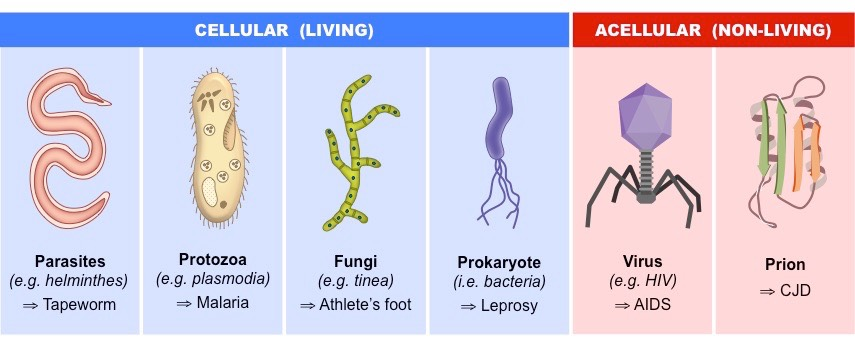
What Is a Pathogen?
A pathogen is a microorganism that causes disease in a host organism.
The word pathogen comes from the Greek words for disease and producer. Pathogens cause disease through several mechanisms, including direct destruction of host cells, competition with host cells for nutrients, production of toxic waste products, and triggering damaging immune responses.
Bacteria as Pathogens
Bacteria are single-celled prokaryotic organisms. Most bacteria are harmless or beneficial, but a small proportion cause significant disease.
How Bacteria Cause Disease
- Direct tissue destruction: Some bacteria invade and destroy host cells directly.
- Toxin production: Many pathogenic bacteria produce toxins, chemical substances that damage host tissues even at sites distant from the bacteria themselves.
- Exotoxins are proteins secreted by living bacteria. Botulinum toxin (from Clostridium botulinum) is among the most toxic substances known.
- Endotoxins are components of the cell wall of gram-negative bacteria, released when bacteria die. They trigger inflammation and fever.
- Immune evasion: Successful bacterial pathogens have evolved mechanisms to avoid or suppress the host's immune defenses, including capsules that resist phagocytosis and proteins that inhibit immune signaling.
Treatment
Bacterial infections can be treated with antibiotics, which target structures or processes specific to bacteria:
- Cell wall synthesis inhibitors (penicillins, cephalosporins)
- Protein synthesis inhibitors (tetracyclines, erythromycin)
- DNA replication inhibitors (fluoroquinolones)
Because these targets are absent or different in human cells, antibiotics can kill bacteria without harming the host.
Antibiotic resistance is a major and growing public health crisis. Through natural selection, bacteria with mutations conferring resistance to antibiotics survive treatment and reproduce. Resistant strains spread, rendering previously effective treatments useless.
Important Bacterial Pathogens
| Bacterium |
Disease |
Transmission |
| Mycobacterium tuberculosis | Tuberculosis | Airborne droplets |
| Salmonella typhi | Typhoid fever | Contaminated food and water |
| Vibrio cholerae | Cholera | Contaminated water |
| Streptococcus pneumoniae | Pneumonia, meningitis | Airborne droplets |
| Clostridium tetani | Tetanus | Soil contamination of wounds |
| Yersinia pestis | Plague | Flea bites, contact |
Viruses as Pathogens
Viruses are not cells. They are particles of genetic material (DNA or RNA) enclosed in a protein coat called a capsid, sometimes surrounded by a lipid envelope. They are not considered living organisms by many biologists because they cannot reproduce independently.
How Viruses Cause Disease
Viruses are obligate intracellular parasites. They must enter host cells to reproduce.
Lytic cycle:
- A virus binds to specific receptor proteins on the host cell surface
- Viral genetic material enters the host cell
- Host cell machinery is hijacked to produce new viral proteins and copy viral genetic material
- New viral particles are assembled
- Host cell bursts (lyses), releasing new viruses that infect neighboring cells
Lysogenic cycle (in some viruses): Viral DNA integrates into the host cell's chromosome and replicates with it without immediately causing disease. Under certain conditions, the virus switches to the lytic cycle.
Disease results from the destruction of host cells, the immune response to infection, and sometimes from virus-induced changes in cell behavior (as in cancer-causing viruses).
Treatment
Antibiotics have no effect on viruses. Antiviral drugs are available for some viral infections and work by:
- Blocking viral entry into cells
- Inhibiting viral replication enzymes
- Preventing new viral particles from assembling or escaping cells
Vaccines are the most effective intervention against viral diseases. They train the immune system to recognize specific viral proteins without causing disease, so that if the actual virus is encountered, the immune system responds rapidly before the virus can cause significant damage.
Important Viral Pathogens
| Virus |
Disease |
Transmission |
| Influenza virus | Influenza (flu) | Airborne droplets |
| HIV | AIDS | Blood, sexual contact, breast milk |
| SARS-CoV-2 | COVID-19 | Airborne droplets, aerosols |
| Hepatitis B virus | Hepatitis B | Blood, sexual contact |
| Measles virus | Measles | Airborne droplets |
| Dengue virus | Dengue fever | Mosquito bites |
Fungi as Pathogens
Most fungi are beneficial decomposers, but some cause disease, particularly in individuals with weakened immune systems.
Fungal diseases (mycoses) include:
- Athlete's foot (Tinea pedis): infection of the skin between the toes
- Ringworm (Tinea corporis): circular skin infection despite the name
- Candidiasis: infection by Candida species, causing oral thrush or genital yeast infections
- Aspergillosis: lung infection by Aspergillus, dangerous in immunocompromised patients
Treatment uses antifungal drugs that target components of fungal cell membranes (ergosterol) absent from human cells.
Parasites
A parasite is an organism that lives in or on a host organism, obtaining nutrients at the host's expense, harming but usually not immediately killing the host.
Parasitism is one of the most common lifestyles on Earth. It is estimated that parasites outnumber free-living species.
Ectoparasites
Ectoparasites live on the external surface of the host.
- Ticks: Attach to skin and feed on blood. Can transmit bacterial diseases, including Lyme disease (Borrelia burgdorferi), and viral diseases while feeding.
- Fleas: Feed on blood of mammals and birds. Vector for plague bacteria and tapeworm larvae.
- Lice: Permanent ectoparasites living in hair or feathers. Head lice (Pediculus humanus capitis) are common in school-age children.
- Mites: Sarcoptes scabiei causes scabies, burrowing into skin and causing intense itching.
Endoparasites
Endoparasites live inside the host's body.
Protozoan Parasites
- Plasmodium (malaria):
- Transmitted by female Anopheles mosquito bites
- Infects liver cells, then red blood cells
- Red blood cells burst in cycles, causing recurring fever, chills, and anemia
- Kills approximately 600,000 people annually, mainly children under five in sub-Saharan Africa
- Four species cause malaria, with Plasmodium falciparum being the deadliest
- Trypanosoma (sleeping sickness):
- Transmitted by tsetse fly bites
- Invades the nervous system, causing neurological damage and eventual coma
- Leishmania:
- Transmitted by sandfly bites
- Causes skin ulcers or systemic disease affecting internal organs
Helminth Parasites (Worms)
- Tapeworms (Cestodes):
- Live in the intestines of vertebrates
- Absorb digested nutrients directly through their body surface
- Can grow to several meters in length
- Humans are infected by eating undercooked meat containing larvae
- Roundworms (Nematodes):
- Ascaris lumbricoides infects approximately 800 million people globally
- Hookworms attach to intestinal walls and feed on blood, causing anemia
- Filarial worms cause lymphatic filariasis (elephantiasis) and river blindness
- Schistosomes (Flukes):
- Transmitted through contact with freshwater containing infected snails
- Cause schistosomiasis, a chronic disease affecting the liver, bladder, and intestines
Transmission of Pathogens and Parasites
Understanding how pathogens spread is essential for controlling disease.
| Route |
Examples |
| Airborne droplets | Influenza, tuberculosis, COVID-19, measles |
| Contaminated food and water | Cholera, typhoid, Salmonella, hepatitis A |
| Direct contact | Skin infections, sexually transmitted infections |
| Vector-borne | Malaria (mosquito), plague (flea), Lyme disease (tick) |
| Blood contact | HIV, hepatitis B, hepatitis C |
| Soil contact | Tetanus, hookworm |
| Vertical transmission | Mother to child: HIV, rubella, cytomegalovirus |
The Immune Response
The host immune system defends against pathogens and parasites through multiple layers of defense.
Physical and Chemical Barriers
- Skin: impermeable to most pathogens
- Mucus in the airways traps pathogens
- Cilia sweep mucus and trapped particles out of the airways
- Stomach acid kills most pathogens in food
- Lysozyme in tears and saliva destroys bacterial cell walls
Non-Specific Immune Response
Responds to any pathogen, does not require prior exposure.
- Inflammation: Damaged tissues release histamine, causing vasodilation and increased capillary permeability. White blood cells migrate to the site.
- Phagocytosis: Neutrophils and macrophages engulf and destroy pathogens by phagocytosis, fusing lysosomes with the ingested pathogen.
- Fever: Elevated body temperature inhibits pathogen reproduction and stimulates immune activity.
- Natural killer cells: Destroy cells infected with viruses or cancerous cells.
Specific Immune Response
Responds to specific pathogens and improves with exposure (immunological memory).
Humoral immunity (B lymphocytes):
- B cells recognize specific antigens on pathogen surfaces
- Activated B cells multiply and differentiate into plasma cells
- Plasma cells produce large quantities of antibodies specific to that antigen
- Antibodies bind to pathogens, neutralizing them, marking them for destruction (opsonization), and activating complement proteins
- Memory B cells persist long-term, enabling a rapid response on re-exposure
Cell-mediated immunity (T lymphocytes):
- Cytotoxic T cells directly destroy cells infected with viruses or intracellular parasites
- Helper T cells coordinate both arms of the immune response
- Memory T cells persist long-term
Disease Control
- Vaccination: Introduces antigens in a harmless form, stimulating immunological memory without causing disease. The most successful public health intervention in history, responsible for the eradication of smallpox and the near-elimination of polio.
- Vector control: Reducing mosquito populations through insecticides, draining standing water, and bed nets reduces malaria transmission.
- Sanitation: Clean water supplies and sewage treatment eliminate the waterborne transmission of cholera, typhoid, and many other diseases.
- Quarantine and contact tracing: Isolating infected individuals and identifying contacts reduces transmission of infectious diseases.
- Antibiotic stewardship: Careful use of antibiotics to slow the development and spread of antibiotic resistance.