

On this page:
Introduction What Is Natural Selection? The Four Conditions for Natural Selection Adaptation Types of Adaptation Natural Selection in Action: Antibiotic Resistance Types of Natural Selection Sexual Selection Speciation Allopatric Speciation Sympatric Speciation Evidence for Evolution by Natural SelectionIn 1831, a young naturalist named Charles Darwin boarded a ship called the HMS Beagle for a five-year voyage around the world. What he observed, particularly the finches and tortoises of the Galapagos Islands, set him on a path of thinking that would produce one of the most important ideas in the history of science.
In 1859, he published On the Origin of Species, introducing the theory of evolution by natural selection. In the 160 years since, it has been confirmed and refined by evidence from genetics, molecular biology, the fossil record, and direct observation of evolution occurring. It remains the unifying theory of all of biology.
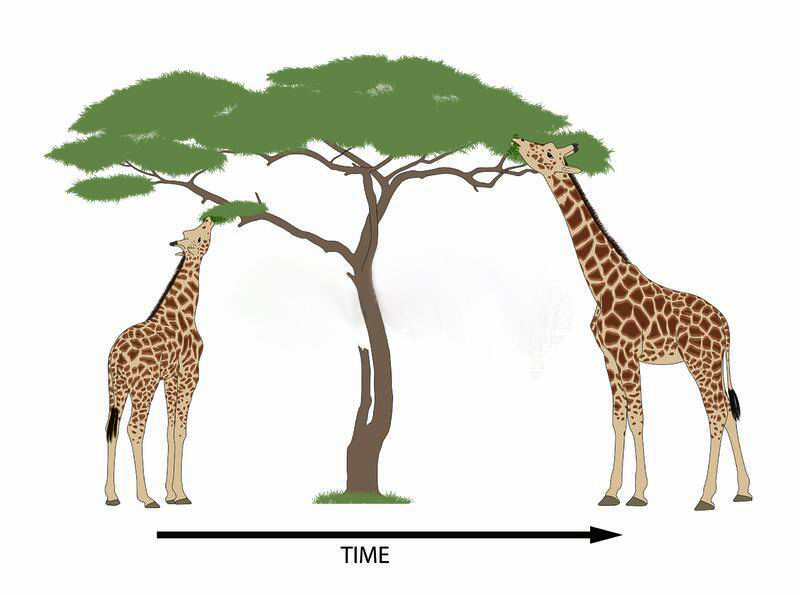
Natural selection is the process by which individuals with heritable characteristics that improve their survival and reproductive success in a particular environment tend to leave more offspring than those without such characteristics, causing those characteristics to become more common in the population over successive generations.
Natural selection was first described independently by Charles Darwin and Alfred Russel Wallace. Its power lies in its simplicity. It requires only four conditions to operate.
Individuals within a population are not identical. They vary in their characteristics, including size, color, behavior, physiology, and resistance to disease.
This variation is the raw material on which natural selection acts. Without variation, all individuals would be equally likely to survive and reproduce, and no selection would occur.
Some of the variation between individuals is heritable, meaning it can be passed from parents to offspring through genes.
Non-heritable variation (caused by environmental factors) cannot be acted upon by natural selection because it is not transmitted to offspring. Only heritable variation can lead to evolutionary change.
Not all individuals survive to reproduce. Resources are limited. Predators, disease, competition, and environmental hazards mean that many individuals die before reproducing.
Individuals with characteristics that improve their ability to survive, find food, escape predators, resist disease, or attract mates will tend to leave more offspring than those without such characteristics.
Because survival and reproduction are not random but influenced by heritable characteristics, the characteristics of successful individuals are passed to offspring at a higher rate than those of unsuccessful individuals.
Over many generations, this causes the frequency of beneficial characteristics to increase in the population and the frequency of harmful characteristics to decrease.
An adaptation is a heritable characteristic that increases an organism's fitness, its ability to survive and reproduce in its environment.
Adaptations evolve through natural selection over many generations. They are not acquired by individual organisms during their lifetimes. An organism cannot choose to develop an adaptation.
Physical features of an organism's body.
Internal biochemical or metabolic features.
Patterns of behavior that enhance survival or reproduction.
Antibiotic resistance in bacteria is one of the clearest and most consequential examples of natural selection occurring in real time.
When a population of bacteria is exposed to an antibiotic:
This process, driven entirely by natural selection, has produced strains of bacteria resistant to multiple antibiotics. MRSA (methicillin-resistant Staphylococcus aureus) and drug-resistant tuberculosis are serious public health consequences of natural selection operating in bacterial populations.
Natural selection can act on a population's variation in three different ways depending on which phenotypes are favored.
Stabilizing selection favors intermediate phenotypes and acts against both extremes.
It reduces variation in the population and maintains the current average phenotype.
Example: Human birth weight. Babies that are very small have reduced survival due to underdevelopment. Babies that are very large have difficult births and also reduced survival. Intermediate birth weights have the highest survival rates.
Directional selection favors one extreme phenotype, causing the average phenotype to shift over generations in one direction.
Example: The peppered moth (Biston betularia) in industrial Britain. Before industrialization, pale moths were camouflaged against pale lichen-covered trees and survived better than dark moths. After industrialization covered trees with soot, dark moths were better camouflaged and survived better. Dark moths became increasingly common. When pollution was reduced and trees recovered, the balance shifted back toward pale moths.
Disruptive selection favors both extreme phenotypes and acts against the intermediate.
It increases variation in the population and can potentially lead to the formation of two distinct groups.
Example: African seedcracker birds have either large, strong beaks for hard seeds or small beaks for soft seeds. Intermediate-sized beaks are less efficient at either task.
Sexual selection is a special case of natural selection in which certain traits are favored because they increase mating success, even if they reduce survival.
The peacock's tail is a classic example. It is costly to grow and maintain; it makes the peacock more visible to predators, and it impairs flight. Yet it has evolved because females preferentially mate with males with the most elaborate tails. The reproductive advantage of attracting more mates outweighs the survival cost.
Sexual selection can produce traits that appear to contradict straightforward survival selection, explaining some of the most elaborate and striking features of the living world.
Speciation is the evolutionary process by which new species arise from existing species.
Natural selection drives speciation when populations of the same species become isolated from each other and evolve independently in response to different selective pressures.
Allopatric speciation occurs when a population is divided by a geographic barrier such as a mountain range, ocean, or river.
The two isolated populations cannot interbreed. They experience different environments and therefore different selective pressures. Over time, they evolve different adaptations. Eventually, they become so genetically different that they can no longer interbreed successfully even if the barrier is removed. At this point, they are recognized as separate species.
The finches Darwin observed in the Galapagos Islands are a classic example. Ancestral finches from the South American mainland colonized different islands. Isolated on different islands with different food sources, they evolved different beak shapes suited to different diets. The 13 or more species of Galapagos finch all descended from a common ancestor through allopatric speciation.
Sympatric speciation occurs within the same geographic area without physical separation. It is less common than allopatric speciation and typically involves reproductive isolation through differences in mating behavior, timing, or habitat use within the same area.
The evidence for evolution by natural selection comes from multiple independent lines of evidence.