

Every organism moves through a predictable sequence of stages from its origin as a new individual through growth, development, reproduction, and ultimately death. This sequence is its life cycle. And the remarkable diversity of life cycles across the living world, from bacteria that divide in 20 minutes to trees that live for thousands of years, reflects the extraordinary range of evolutionary solutions to the challenge of surviving and reproducing.
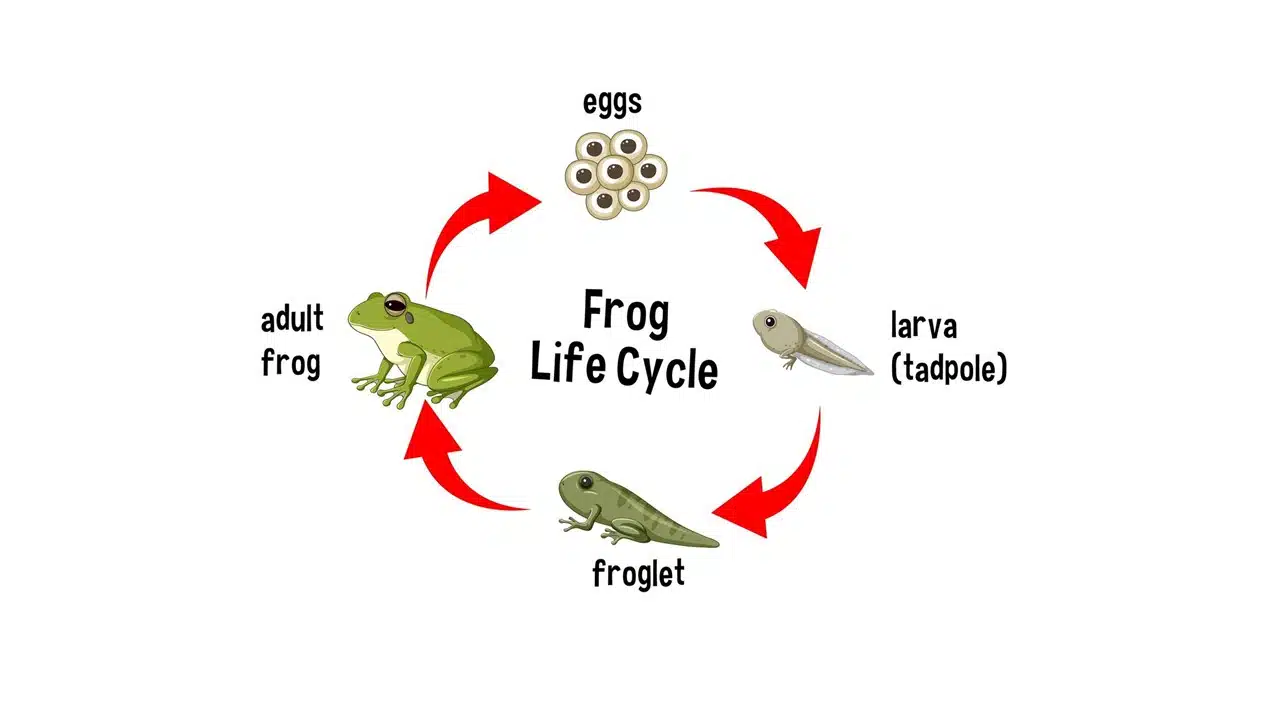
A life cycle is the complete sequence of stages through which an organism passes from its origin (as an offspring of a parent) through its own reproductive stage, back to the production of a new generation.
Life cycles always include reproduction and always involve the transmission of genetic information to offspring. Beyond these common features, the details vary enormously.
Most animals follow a relatively straightforward diploid life cycle.
In the animal life cycle, the diploid phase dominates. Haploid cells exist only briefly as gametes before fertilization.
Many animals undergo metamorphosis, a dramatic transformation in body form during development.
Four distinct stages: egg, larva, pupa, adult. The larval form (caterpillar, maggot, grub) is completely different from the adult form and often occupies a completely different ecological niche. Examples: Butterflies, beetles, flies, and bees.
Three stages: egg, nymph, adult. The nymph resembles a small version of the adult but lacks wings and reproductive structures. Examples: Grasshoppers, dragonflies, and cockroaches.
Plant life cycles differ fundamentally from animal life cycles in having two distinct multicellular phases that alternate with each other. This is called alternation of generations.
The relative prominence of these two phases differs greatly between plant groups.
In mosses, the gametophyte (haploid) generation dominates. The familiar green moss plant is the gametophyte.
Mosses are restricted to moist environments because their reproduction depends on water.
In ferns, the sporophyte (diploid) generation dominates. The familiar fern plant with its fronds is the sporophyte.
In flowering plants, the sporophyte generation completely dominates. The gametophyte is reduced to just a few cells contained within the flower.
Flowering plants have overcome the dependence on water for fertilization by using wind or animals to transfer pollen, allowing them to colonize dry environments.
Fungi can reproduce both sexually and asexually.
Asexual reproduction: Production of enormous numbers of spores by mitosis. Spores are dispersed by air or water and germinate into new hyphae. This allows rapid colonization of new substrates.
Sexual reproduction: Two hyphae of compatible mating types fuse. Their nuclei may remain separate for a period before fusing, a condition called dikaryotic. Eventually nuclei fuse and meiosis occurs, producing genetically diverse sexual spores.
The fruiting body (mushroom) of a fungus is the reproductive structure that produces and disperses sexual spores.
The diversity of life cycles represents different evolutionary solutions to the fundamental challenges of reproduction, development, and dispersal.
The shift from water-dependent reproduction (as in mosses and ferns) to independence from water (as in seed plants and animals with internal fertilization) was a key evolutionary development that allowed colonization of dry terrestrial environments.
The evolution of seeds in plants represents a particularly significant innovation. A seed contains an embryo with its own food supply, protected by a tough seed coat, able to survive drought, cold, and transport over long distances before germinating under favorable conditions.