

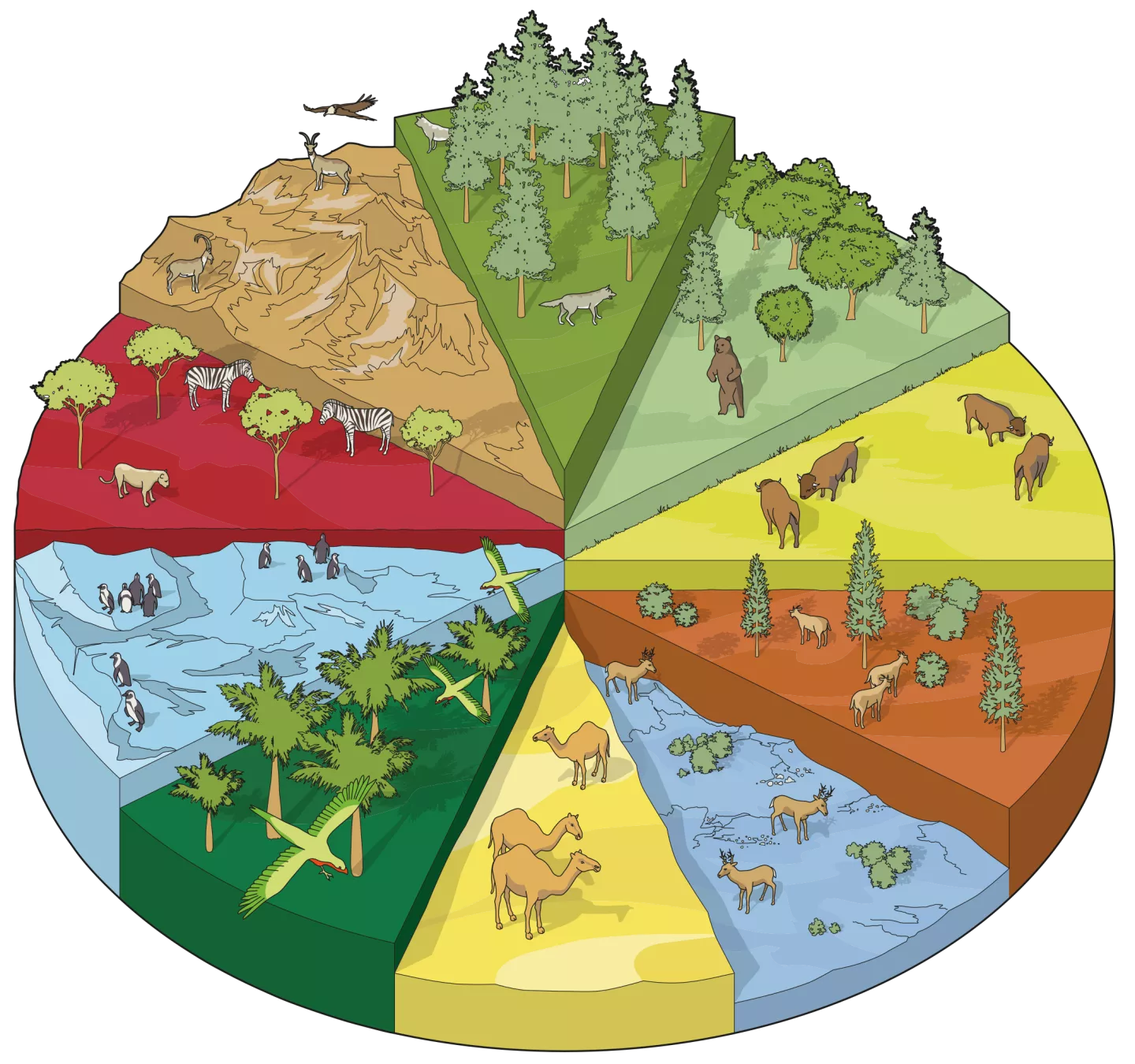
Every species on Earth has a place where it lives. Not just any place, but a specific type of environment with the right temperature, the right food sources, the right shelter, and the right conditions for reproduction. A polar bear could not survive in a tropical rainforest. A coral cannot thrive in a mountain stream. A cactus cannot grow in a swamp.
The specific place where an organism lives and finds everything it needs to survive is its habitat. And the match between an organism and its habitat, refined over millions of years of evolution, is one of the most elegant aspects of biology.
A habitat is the natural environment in which a specific organism lives and to which it is adapted. It provides everything the organism needs: food, water, shelter, suitable temperature, and opportunities for reproduction.
A habitat is defined by both its physical characteristics (abiotic factors) and the community of organisms living there (biotic factors).
The habitat of a species is not the same as the ecosystem it lives in. An ecosystem includes all the species and abiotic factors in an area. A habitat refers specifically to the place that meets the requirements of a particular species.
The physical characteristics of a habitat determine which organisms can live there.
| Abiotic Factor | Effect on Habitat |
|---|---|
| Temperature | Determines metabolic rates, limits the species that can survive |
| Water availability | Essential for all life processes |
| Light intensity | Controls photosynthesis rates, affects the plant species present |
| Soil pH and type | Determines which plant species can grow |
| Salinity | Separates freshwater and marine habitats |
| Oxygen levels | Limits aerobic organisms in poorly oxygenated environments |
| Altitude | Affects temperature, pressure, and UV exposure |
High rainfall and temperature throughout the year. Extremely high biodiversity, estimated to contain over half of all species on Earth. Layered structure from the forest floor to the emergent canopy. Nutrient cycling is rapid but soils are surprisingly poor in nutrients. Example: Amazon Basin
Seasonal temperature variation, moderate rainfall. Deciduous trees shed leaves in autumn. Rich soil from decomposing leaf litter. Moderate biodiversity. Example: Eastern North America
Very low rainfall, extreme temperature variation between day and night. Organisms show extreme adaptations to water conservation. Low biodiversity but highly specialized species. Example: Sahara Desert
Moderate rainfall, insufficient for forest growth. Dominated by grasses and herbaceous plants. Supports large populations of grazing animals. Example: African Savanna
Extremely cold, low rainfall, short growing season. Permafrost layer beneath the soil. Low biodiversity, dominated by mosses, lichens, and small plants. Example: Arctic Tundra
Extreme cold, permanent ice cover. Very low biodiversity. Food chains based on marine productivity. Example: Antarctica
Covers approximately 71 percent of Earth's surface. Divided into zones by depth and light penetration. The photic zone near the surface supports photosynthesis. The aphotic zone in deep ocean relies on falling organic matter from above. Example: Pacific Ocean
Rivers, lakes, ponds, wetlands. Much lower salinity than marine environments. High diversity of plants, invertebrates, fish, and amphibians in well-oxygenated, productive freshwater systems. Example: Amazon River
Found in warm, shallow, clear tropical waters. Among the most biodiverse ecosystems on Earth. Built by coral polyps depositing calcium carbonate skeletons. Support approximately 25 percent of all marine species despite covering less than 1 percent of the ocean floor. Example: Great Barrier Reef
The ecological niche of a species is its role in the ecosystem, including not just where it lives but what it eats, what eats it, when it is active, and how it interacts with all the biotic and abiotic factors in its environment.
Competitive Exclusion Principle: Two species cannot occupy exactly the same ecological niche in the same habitat indefinitely. If they try, they will compete directly for every resource, and the less efficient competitor will eventually be excluded.
Species that appear to occupy similar niches generally have subtle differences in their niches that reduce direct competition, allowing them to coexist.
Organisms are adapted to their habitats through features that evolved over many generations by natural selection. These adaptations can be structural, physiological, or behavioral.
Organisms in desert habitats must conserve water and tolerate heat.
Organisms in polar habitats must retain heat and survive food scarcity.
Fish have streamlined bodies, fins for propulsion and steering, gills for extracting dissolved oxygen, and a lateral line system for detecting water movements.
Habitat is the most important factor determining the survival of species. When habitat is destroyed or degraded, species decline or go extinct.
Habitat destruction through deforestation, wetland drainage, urban expansion, and agricultural conversion directly eliminates the environments species depend on.
Habitat fragmentation divides continuous habitats into smaller, isolated patches. Even if some habitat remains, fragmentation has severe consequences:
Conservation responses to habitat loss include establishing protected areas, creating wildlife corridors to connect isolated habitat fragments, and restoring degraded habitats.
Every species on Earth is adapted to a specific set of environmental conditions that its habitat provides. When those conditions change faster than evolution can respond, species cannot survive. Protecting habitats is therefore not just about protecting individual species. It is about maintaining the environmental conditions within which the extraordinary diversity of life on Earth is possible.