

On this page:
Introduction Nutrition and Diet Macronutrients Micronutrients Water Malnutrition Exercise and Physical Activity Infectious Diseases Non-Infectious Diseases Lifestyle Factors Environmental Factors Health Is Never Just One FactorMost people think of health simply as not being sick. If nothing hurts and you are not in bed with a fever, you must be healthy. But from a biological perspective, health is a far more complete concept than the absence of disease.
The World Health Organization defines health as a state of complete physical, mental, and social well-being, not merely the absence of disease or infirmity. True health means all organ systems functioning within normal ranges, tissues being continuously maintained and repaired, the immune system defending effectively against pathogens, and the body successfully maintaining homeostasis.
Health is influenced by a wide range of factors. Some are within a person's control. Others are not. Understanding what these factors are and how they affect the body at a biological level is one of the most practically important things a student of biology can learn.
Every cell in the human body requires a continuous supply of nutrients to function. Nutrients are chemical substances obtained from food that provide energy, building materials for cellular structures, and molecules needed to regulate biological processes.
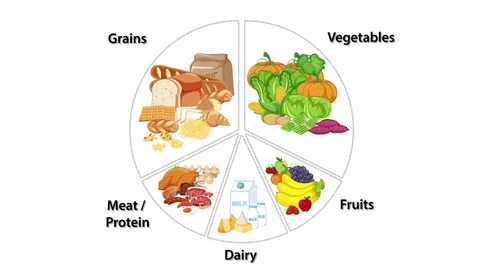
Macronutrients are required in relatively large quantities because they provide energy and structural building materials.
Carbohydrates are the body's primary energy source. They are broken down during digestion into glucose, which enters cells and is used in cellular respiration to produce ATP.
Proteins are essential for growth, repair, and the production of enzymes, hormones, antibodies, and structural molecules. They are built from chains of amino acids. Of the 20 amino acids used by the body, eight cannot be synthesized internally and must come from food. These are called essential amino acids.
Fats provide a concentrated energy store, form the phospholipid bilayer of every cell membrane, insulate the body, protect organs, and serve as precursors for steroid hormones.
Micronutrients are required in small quantities but are essential for normal physiological function. Their absence causes specific deficiency diseases.
| Vitamin | Function | Deficiency Disease |
|---|---|---|
| Vitamin C | Collagen synthesis, immune function | Scurvy |
| Vitamin D | Calcium absorption, bone mineralization | Rickets |
| Vitamin A | Vision, maintaining epithelial surfaces | Night blindness |
| Vitamin B12 | Red blood cell production, nerve function | Anemia, nerve damage |
| Mineral | Function | Deficiency Effect |
|---|---|---|
| Calcium | Bone and teeth structure, muscle contraction | Osteoporosis |
| Iron | Component of hemoglobin for oxygen transport | Anemia, fatigue |
| Iodine | Thyroid hormone production | Goiter, impaired metabolism |
| Phosphorus | Bone structure, ATP production | Bone weakness |
Water constitutes approximately 60 to 70 percent of the human body and is the medium in which virtually all biochemical reactions occur.
Functions in the body:
Even mild dehydration of 1 to 2 percent of body water impairs physical and cognitive performance measurably. Severe dehydration is rapidly life-threatening.
Malnutrition occurs when the diet is deficient in quantity or quality of nutrients.
Insufficient caloric intake or specific nutrient deficiencies leading to stunted growth, weakened immunity, and organ dysfunction.
Excessive caloric intake leading to obesity, which increases the risk of type 2 diabetes, cardiovascular disease, and certain cancers.
Regular physical activity has measurable positive effects on almost every organ system in the body.
Effects on the muscular system:
Effects on the cardiovascular system:
Effects on the skeletal system:
Effects on the immune system:
Effects on mental health:
Physical inactivity is now recognized as a major risk factor for obesity, type 2 diabetes, cardiovascular disease, certain cancers, and depression.
A disease is any condition that impairs the normal structure or function of an organism. Infectious diseases are caused by pathogens, microorganisms that invade the body and cause damage through direct tissue destruction or the release of toxic substances.
Bacteria are single-celled prokaryotic organisms that cause disease by directly destroying host cells or releasing toxins.
Bacterial infections can be treated with antibiotics, which target bacterial structures without harming host cells.
Viruses are not cells. They are particles of genetic material surrounded by a protein coat. They cannot reproduce independently and must enter host cells, take over cellular machinery, and use it to produce new viral particles. The host cell is typically destroyed in the process.
Non-infectious diseases are not caused by pathogens and cannot be transmitted between individuals.
Cystic fibrosis:
Sickle cell anemia:
Cancer occurs when cells lose normal control over cell division due to mutations in genes regulating the cell cycle.
Risk factors:
Degenerative diseases involve the progressive deterioration of tissues and organs over time.
Personal choices have direct biological consequences that accumulate over time and significantly influence health outcomes.
The physical and social environment a person lives in significantly affects health in ways that are often beyond individual control.
Air pollution:
Water quality:
UV radiation:
Socioeconomic factors:
Health is shaped by the continuous interaction of genetics, nutrition, physical activity, disease exposure, lifestyle choices, and environmental conditions. No single factor tells the complete story. Understanding the biological mechanisms behind each factor transforms health guidance from abstract rules into principles that make sense at the cellular level.
True health means all organ systems functioning within normal ranges, tissues being continuously maintained and repaired, the immune system defending effectively against pathogens, and the body successfully maintaining homeostasis.