

On this page:
Introduction What Is DNA? The Double Helix Structure Genes and the Genetic Code Chromosomes Genes and Alleles Genotype and Phenotype Dominant and Recessive Alleles Homozygous and Heterozygous From Gene to Protein Transcription Translation Mutations The Human Genome Sex Determination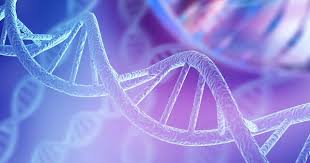
Inside the nucleus of almost every cell in your body sits a molecule so long that if you stretched it out completely, it would measure approximately 2 meters. Yet it is coiled so tightly that it fits inside a nucleus just 6 micrometers across. And within that molecule is the complete set of instructions for building and running an entire human being.
That molecule is DNA. And the science of how it stores, copies, and expresses that information is genetics.
DNA stands for deoxyribonucleic acid. It is the molecule that carries the genetic information of all living organisms.
DNA is a polymer made of repeating units called nucleotides. Each nucleotide consists of three components:
DNA has a double helix structure, first described by Watson and Crick in 1953, based on X-ray crystallography data produced by Rosalind Franklin.
The structure consists of two polynucleotide strands wound around each other in a spiral. The sugar-phosphate groups form the backbone of each strand on the outside. The bases project inward and pair with bases on the opposite strand.
Base pairing rules:
These pairings are called complementary base pairs and are held together by hydrogen bonds. The specific base pairing is what makes DNA replication and protein synthesis possible.
A gene is a specific sequence of DNA bases on a chromosome that codes for a particular protein or polypeptide.
The sequence of bases in a gene carries the instructions for building a specific protein. These instructions are written in a code of triplets. Each group of three consecutive bases, called a codon, specifies a particular amino acid.
Since there are four bases, there are 64 possible codons (4³ = 64), but only 20 amino acids. This means most amino acids are coded for by more than one codon. The genetic code is therefore described as degenerate.
This code is virtually universal. The same codons specify the same amino acids in bacteria, plants, and humans alike.
DNA in eukaryotic cells is organized into chromosomes. Each chromosome consists of one very long DNA molecule wrapped around proteins called histones, which help package the DNA into a compact structure.
Human body cells contain 46 chromosomes arranged in 23 pairs. Each pair consists of two homologous chromosomes carrying genes for the same characteristics at the same positions (loci).
One chromosome of each pair is inherited from the mother. The other is inherited from the father.
Every gene occupies a specific position on a chromosome called its locus. The two copies of a gene found at the same locus on homologous chromosomes may be identical or slightly different.
An allele is a specific version of a gene. Different alleles have slightly different base sequences and may code for slightly different versions of the same protein, producing different phenotypic effects.
For example, the gene for blood type has three main alleles: Iᴬ, Iᴮ, and i. Different combinations of these alleles produce blood groups A, B, AB, or O.
Genotype is the genetic makeup of an organism. It refers to the specific alleles an organism carries for a particular gene or for all its genes.
Phenotype is the observable characteristics of an organism resulting from the interaction of its genotype with the environment.
The same genotype can produce different phenotypes in different environments. For example, a plant with the genotype for tall growth may remain short if it grows in poor soil with insufficient nutrients. The environment modifies the expression of genes.
In a diploid organism carrying two alleles for a gene, the alleles may interact in different ways.
A dominant allele is one whose effect is expressed in the phenotype whenever it is present, even if only one copy is present.
A recessive allele is one whose effect is only expressed when two copies are present (when the organism is homozygous recessive).
Dominant alleles are conventionally written as capital letters. Recessive alleles are written as lowercase letters.
Both alleles for a gene are the same (e.g., TT or tt)
The two alleles for a gene are different (e.g., Tt)
An organism that is heterozygous for a dominant and recessive allele will show the dominant phenotype. The recessive allele is present in the genotype but hidden in the phenotype.
Genes are expressed through a two-stage process: transcription and translation.
Transcription occurs in the nucleus. The DNA double helix unwinds at the gene to be expressed. One strand serves as a template. The enzyme RNA polymerase builds a complementary strand of messenger RNA (mRNA) using free RNA nucleotides.
The base pairing rules apply, with one difference: RNA contains uracil (U) instead of thymine. So where the DNA template has adenine, the mRNA has uracil.
The completed mRNA molecule carries a complementary copy of the gene's base sequence. It passes through nuclear pores into the cytoplasm.
Translation occurs at ribosomes in the cytoplasm. The ribosome reads the mRNA sequence in triplets (codons). Transfer RNA (tRNA) molecules carry specific amino acids to the ribosome, each recognizing a specific mRNA codon through its complementary anticodon.
As the ribosome moves along the mRNA, amino acids are joined by peptide bonds in the sequence specified by the codons. The result is a polypeptide chain that folds into a functional protein.
A mutation is a change in the DNA base sequence.
Mutations can affect a single base pair (point mutation) or involve larger segments of DNA. Most mutations are harmless or have no significant effect. Some alter protein function. A few have significant consequences.
Sickle cell anemia is caused by a single base substitution in the hemoglobin gene, changing one amino acid in the protein chain. This produces hemoglobin with significantly different properties, affecting red blood cell shape and function.
Mutations arise from errors in DNA replication, or from the action of mutagens including ultraviolet radiation, X-rays, and certain chemicals.
The human genome is the complete set of genetic information in a human cell, containing approximately 3 billion base pairs distributed across 46 chromosomes.
The Human Genome Project, completed in 2003, produced the first complete sequence of the human genome. This has transformed medicine, enabling the identification of genes associated with genetic diseases, the development of new diagnostic tests, and the beginning of gene therapy approaches.
Only about 2 percent of the human genome codes for proteins. The function of much of the remaining DNA is still being investigated.
In humans, sex is determined by the sex chromosomes. Females carry two X chromosomes (XX). Males carry one X and one Y chromosome (XY).
The sex chromosomes carry genes for sex determination and for other traits. Genes located on the sex chromosomes are called sex-linked genes.
Because males have only one X chromosome, any recessive allele on the X chromosome will be expressed in males since there is no second X chromosome with a dominant allele to mask it. This explains why certain conditions like color blindness and hemophilia are more common in males.