
On this page:
Introduction What Is Cellular Respiration? Why ATP? Aerobic Respiration Stage 1: Glycolysis Stage 2: The Krebs Cycle Stage 3: Oxidative Phosphorylation ATP Yield of Aerobic Respiration Anaerobic Respiration Lactic Acid Fermentation Alcoholic Fermentation Comparing Aerobic and Anaerobic Factors Affecting Respiration Rate Respiration and Photosynthesis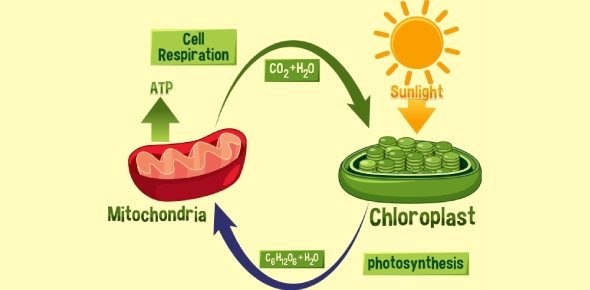
You breathe even when you are completely still. Your heart beats without stopping. Your brain processes information continuously. Your cells repair themselves around the clock. All of this requires energy.
But where does that energy actually come from? Not directly from the food you eat. Food must first be broken down, and the energy stored in its chemical bonds must be released in a controlled way that cells can actually use.
This is exactly what cellular respiration does.
Cellular respiration is the process by which living cells break down organic molecules, primarily glucose, to release energy in the form of ATP (adenosine triphosphate).
ATP is the universal energy currency of all living cells. It is a small molecule that stores energy in its chemical bonds and releases it exactly where and when the cell needs it, powering everything from muscle contraction to protein synthesis to active transport across membranes.
Cellular respiration is not the same as breathing. Breathing is the physical process of moving air in and out of the lungs. Cellular respiration is the biochemical process occurring inside every cell of every living organism.
Glucose contains a large amount of chemical energy. But this energy cannot be used directly to power cellular processes. It must first be converted into ATP.
Think of glucose as a large, high-denomination banknote. You cannot use it to pay for small individual purchases. ATP is like the change. It comes in small, precise units that can be spent exactly where needed.
Each molecule of glucose yields a maximum of approximately 36 to 38 molecules of ATP through aerobic respiration.
Aerobic respiration is the process of breaking down glucose using oxygen to produce ATP, carbon dioxide, and water.
The word aerobic means requiring oxygen. It is the most efficient form of cellular respiration and occurs in organisms that have access to oxygen.
Checking the balance: Carbon: 6 on left, 6 on right; Hydrogen: 12 on left, 12 on right; Oxygen: 18 on left, 18 on right.
Glycolysis occurs in the cytoplasm and does not require oxygen.
Glycolysis is the only stage of respiration that occurs in all living cells, including prokaryotes. It is the most ancient metabolic pathway and was present before oxygen became available in the atmosphere.
The Krebs cycle occurs in the matrix of the mitochondria and requires oxygen to be present (though oxygen is not directly used in this stage).
The CO₂ produced in the Krebs cycle is the carbon dioxide that you exhale with each breath.
The electron transport chain occurs on the inner mitochondrial membrane (cristae) and is where most ATP is produced.
This is why oxygen is essential for aerobic respiration. Without oxygen to accept electrons at the end of the chain, the entire electron transport chain stops and ATP production falls dramatically.
| Stage | Location | ATP Produced |
|---|---|---|
| Glycolysis | Cytoplasm | 2 ATP (net) |
| Krebs Cycle | Mitochondrial matrix | 2 ATP |
| Electron Transport Chain | Inner mitochondrial membrane | 32-34 ATP |
| Total | 36-38 ATP |
The electron transport chain produces by far the most ATP, which is why aerobic respiration is so much more efficient than anaerobic respiration.
Anaerobic respiration is the breakdown of glucose to release ATP without using oxygen.
It occurs when oxygen is unavailable or insufficient for the demands of the cell. The process begins with glycolysis, producing 2 molecules of pyruvate and a net gain of 2 ATP. What happens to the pyruvate afterwards depends on the organism.
Glycolysis produces NADH as it converts glucose to pyruvate. For glycolysis to continue, NADH must be converted back to NAD⁺. Without oxygen, the electron transport chain cannot do this. Anaerobic respiration solves this problem by using pyruvate to accept electrons from NADH, regenerating NAD⁺ and allowing glycolysis to continue.
In animal cells and some bacteria, pyruvate accepts hydrogen from NADH, converting it into lactic acid (lactate).
Word equation:
Chemical equation:
Lactic acid builds up in muscles during intense exercise when oxygen delivery cannot keep up with demand. This causes the burning sensation felt during vigorous exercise. When sufficient oxygen becomes available again after exercise, lactic acid is converted back to pyruvate and enters aerobic respiration in the liver. The extra oxygen needed to process accumulated lactic acid is called oxygen debt.
In plant cells and yeast, pyruvate is first converted to ethanal (acetaldehyde) with the release of CO₂, and then ethanal accepts hydrogen from NADH to form ethanol.
Word equation:
Chemical equation:
This process is the biochemical basis of bread making and alcohol production.
| Feature | Aerobic Respiration | Anaerobic Respiration |
|---|---|---|
| Oxygen required | Yes | No |
| Starting material | Glucose | Glucose |
| Stages | Glycolysis, Krebs cycle, ETC | Glycolysis only, then fermentation |
| Location | Cytoplasm and mitochondria | Cytoplasm only |
| ATP yield | 36-38 ATP per glucose | 2 ATP per glucose |
| End products in animals | CO₂ and water | Lactic acid |
| End products in yeast/plants | CO₂ and water | Ethanol and CO₂ |
| Efficiency | Very high | Very low |
Cellular respiration is controlled by enzymes. As temperature increases up to the optimum, enzyme activity increases and the rate of respiration rises. Above the optimum temperature, enzymes begin to denature and the rate falls sharply.
Glucose is the primary substrate for respiration. When glucose is plentiful, respiration proceeds at its maximum rate. When glucose is scarce, cells may switch to metabolizing other substrates including fatty acids and amino acids.
In aerobic organisms, oxygen availability determines whether aerobic or anaerobic respiration occurs. As oxygen becomes limiting, cells switch increasingly to anaerobic pathways.
Respiration and photosynthesis are complementary processes that together cycle carbon, oxygen, and energy through living systems.
Photosynthesis absorbs CO₂ and releases O₂, building glucose from inorganic raw materials using light energy.
Respiration consumes O₂ and releases CO₂, breaking down glucose to release energy stored in its chemical bonds.
The products of photosynthesis are the raw materials of respiration. The products of respiration are the raw materials of photosynthesis. Together they form the basis of the carbon cycle and the continuous flow of energy through living systems.