
Every second, your body produces approximately 3.8 million new cells. Skin cells that were shed are replaced. Red blood cells worn out after 120 days are renewed. Damaged tissues are repaired. A wound that was open yesterday begins to close today.
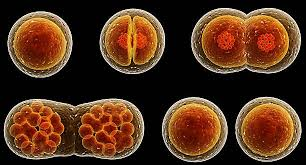
All of this depends on cell division, the process by which one cell produces two. It is one of the most fundamental processes in all of biology and the basis of growth, repair, reproduction, and the continuity of life.
Cell division serves three essential purposes in living organisms.
The cell cycle is the sequence of events a cell goes through from one division to the next.
It consists of two main phases.
Interphase is the period between cell divisions. It is not a resting phase, despite sometimes being called one. During interphase, the cell is extremely active.
The M phase includes nuclear division (mitosis or meiosis) and cytoplasmic division (cytokinesis).
Before a cell can divide, it must copy all of its DNA so that each daughter cell receives a complete set of genetic instructions.
DNA replication is semi-conservative. Each new DNA molecule consists of one original strand and one newly synthesized complementary strand.
The process:
DNA replication is remarkably accurate. DNA polymerase also has a proofreading function, correcting most errors as they occur. Replication errors occur approximately once per billion base pairs copied.
There are two fundamentally different types of cell division in eukaryotes.
Produces two daughter cells that are genetically identical to each other and to the parent cell. It is used for growth, repair, and asexual reproduction.
Produces four daughter cells each with half the chromosome number of the parent cell. The daughter cells are genetically different from each other and from the parent cell. It is used to produce gametes for sexual reproduction.
The cell cycle is tightly controlled at several checkpoints where the cell checks that conditions are right to proceed.
Proteins called cyclins and cyclin-dependent kinases (CDKs) regulate progression through the cell cycle. Their levels rise and fall at specific points, triggering the transitions between phases.
If checkpoint controls fail, cells may divide uncontrollably. This is the fundamental basis of cancer.
Cancer results from mutations in genes that control the cell cycle.
When both types of control are lost, cells divide uncontrollably, forming tumors. If tumor cells acquire the ability to invade surrounding tissues and travel through blood or lymph to establish new tumors elsewhere (metastasis), the cancer becomes life-threatening.
Mutagens such as UV radiation, tobacco smoke, and certain viruses increase the rate of mutations in cell cycle control genes, which is why they are associated with increased cancer risk.
Apoptosis is programmed cell death, a controlled process by which cells that are damaged, infected, or no longer needed are systematically dismantled and removed.
Apoptosis is essential for normal development and tissue homeostasis. During development it sculpts tissues. The spaces between fingers and toes form because cells in between die by apoptosis.
Apoptosis is also the mechanism by which the immune system kills infected cells and by which cells with irreparable DNA damage are eliminated before they can become cancerous.