

On this page:
Introduction Biochemistry: The Chemistry of Life Carbohydrates Proteins Lipids Nucleic Acids What Are Enzymes? Why Are Enzymes Required? Enzyme Specificity Lock and Key Model Induced Fit Model Factors Affecting Enzyme Activity Temperature pH Substrate Concentration Enzyme Concentration Enzyme Inhibition Enzymes in Everyday Life Coenzymes and Cofactors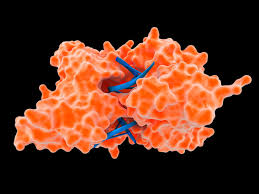
Inside your body, there are thousands of chemical reactions occurring every second. Proteins are built. Glucose is broken down. DNA is replicated. Waste is processed. Hormones are synthesized.
Most reactions would happen too slowly to sustain life without help. The required activation energy is too high at body temperature for reactions to occur that are essential for life.
The problem is completely solved by enzymes.
The chemistry of life is called biochemistry. It is the study of chemical substances and chemical processes within and related to living organisms. Chemistry is fundamental to biology as the processes involved and the four classes of biomolecules are used to describe the functional molecules in living organisms.
Carbohydrates are biological molecules, comprised of carbon, hydrogen and oxygen. The ratio of these elements in carbohydrates is approximately 1:2:1. The carbohydrates play the role of maintaining energy and structural usage in living organisms.
The simplest form of carbohydrates are monosaccharides. Glucose (C₆H₁₂O₆) is the most important monosaccharide in biology. It is the main substrate for the process of cellular respiration and is therefore the most pivotal.
A condensation reaction, which releases water, joins two monosaccharides, forming disaccharides. Examples include sucrose (glucose + fructose) and maltose (glucose + glucose).
A polysaccharide is a long chain of monosaccharides. In plants, glucose is stored as starch and, in animals, as glycogen. Additionally, cellulose forms the cell wall of plants.
Amino acids are the building blocks of proteins, and these acids are linked through condensation reactions in which peptide bonds are formed. There are 20 different types of amino acids and so the number of possible sequences is virtually endless.
Proteins serve a wide range of functions including:
A protein is made of a specific sequence of amino acids. The sequence is the basis of the protein's three-dimensional shape and the shape is the protein's function.
Lipids are the molecules that do not dissolve in water and are characterized as non-polar. They include triglycerides (fats and oils), phospholipids, and steroids.
The stored and transferred genetic information is in nucleic acids which are known as DNA and RNA. The DNA contains the instructions for building all of the proteins. The RNA contains the instructions that are carried from the nucleus to the ribosomes.
Biological catalysts are known as enzymes. Enzymes act upon chemical reactions of living organisms without being altered or changed during the course of the reactions.
Almost all enzymes are made of proteins. Their protein structure determines which type of reaction an enzyme will catalyze. Their protein structures are made of specific sequences of unique amino acids.
Every chemical reaction needs an initial energy input for the reaction to commence. The initial energy input is called activation energy. Enzymes reduce the activation energy of particular reactions. Enzymes allow chemical reactions to occur faster at the temperatures of living organisms.
If there were no enzymes to aid in chemical reactions, the reactions that occur in living organisms at the order of milliseconds would take years to occur.
A single enzyme is able to catalyze only one type of reaction or a particular reaction. This is termed enzyme specificity.
Specificity is a result of the arrangement of the surface of an enzyme that is termed active site. The active site of an enzyme is a unique arrangement that has a similar shape to the enzyme's substrate.
The lock and key model explains the relationship between an enzyme and a substrate.
Enzymes behave like locks and substrates like keys. Only substrates with the right shape fit into the active site of the enzyme. When the correct substrate binds, it forms the enzyme-substrate complex and triggers a chemical change, releasing products. The enzyme then becomes available again and can catalyze the same chemical reaction repeatedly.
The process can be broken down into steps:
An improved version of the lock and key model is known as the induced fit model. This model suggests that, instead of the active site being a rigid structure, it is flexible. When the substrate binds to the active site, the enzyme alters its shape by way of an induced fit phenomenon, allowing the substrate to be positioned in a way that is optimal for the reaction to take place.
The induced fit model helps to better explain how specific an enzyme is, as well as the mechanisms behind some chemical substances that inhibit enzyme activity.
Increased temperature elevates the kinetic energy of the enzyme and of the substrate. The molecules move faster, and the rate of successful collisions increases. The reaction rate increases with temperature, up to a specific optimum temperature.
Enzymes function best within a narrow range of conditions; their optimum conditions. Each enzyme has a specific optimum range of conditions including temperature, pH, and substrate concentration.
When temperatures exceed the optimum temperature, enzymes start to denature. This means the enzyme's three-dimensional structure, which is maintained by hydrogen bonds and non-covalent interactions, is disrupted. Changes to the active site of the enzyme can occur, and the substrate can no longer attach. This means the enzyme can no longer catalyze a reaction.
Once denatured, an enzyme is permanently changed and cannot restore its shape and function.
The enzymes present in the human body work best at temperatures of 37°C, which is the normal temperature of the human body.
Every enzyme has a specific pH at which it is most active, and at which the shape of the active site is most suitable for binding to the substrate.
Above or below the optimum pH, hydrogen ions present in the solution affect the charge of the enzyme's amino acids. This impacts the bond interactions between the amino acids, and changes the shape of the active site.
Enzymes will denature at extreme pH values.
| Enzyme | Location | Optimum pH |
|---|---|---|
| Salivary amylase | Mouth | 7 (neutral) |
| Pepsin | Stomach | 2 (strongly acidic) |
| Trypsin | Small intestine | 8 (slightly alkaline) |
| Catalase | Most cells | 7 |
Reactions obtain a greater rate of increase as substrate concentration is amplified, as more substrate particles can bind to the active sites of the enzymes.
At elevated substrate levels, every active site gets filled, which indicates that the enzyme reaches its peak operating velocity, Vmax. Further substrate additions would not influence the reaction. At this point, the focus shifts towards the enzyme concentration as it becomes the reactor's bottleneck.
When substrate is considered in excess, higher enzyme concentration propels the reaction because there are more active sites available.
When substrate is in short supply, higher enzyme concentration won't make a difference because there is insufficient substrate available to saturate the newly available active sites.
An enzyme inhibitor is a substance that diminishes or halts the function of an enzyme.
Competitive inhibitors mimic the substrate, which allows them to compete for the enzyme's active site.
When the active site is occupied by a competitive inhibitor, the substrate cannot access it, and therefore the reaction is blocked.
Competitive inhibition can be alleviated by boosting substrate concentration. An increased concentration of substrate molecules can outcompete the competitor for the active sites.
Non-competitive inhibitors attach to a site distinct from the active site, which is known as the allosteric site.
This form of binding alters the entire shape of the enzyme, including the active structure. The substrate cannot fit in the active site but will not be immediately blocked.
By increasing substrate concentration, non-competitive inhibition cannot be overcome.
Some inhibitors are capable of permanently binding to an enzyme and deactivating it. The enzyme will not be able to be returned to its active form.
Certain nerve agents and pesticides irreversibly inhibit the enzyme acetylcholinesterase, which is responsible for the breakdown of the neurotransmitter acetylcholine at nerve synapses.
Enzymes are not located inside of cells, and are highly useful elsewhere.
Enzymes involved in digestion include amylase, which is responsible for the digestion of starch, proteases, which break down proteins, and lipase, which digests fats. These digestive enzymes are crucial to the process of breaking down food into molecules that can be absorbed by the body.
Enzymes are also useful in the medical field. Enzyme assays are used for the diagnosis of disease, and the presence of certain enzymes in the blood above a certain threshold can indicate damage to the liver, heart attack, or other conditions.
In the food industry, streams, and also in the biofuel industry, as well as in the industry of biological washing powders to break down stains and in the industry of washing powders to break down stains, enzymes are also used.
Enzymes also play an important part in the field of biotechnology. Restriction enzymes have the ability to cut DNA at specified sequences and are therefore extremely important tools in the field of genetic engineering and molecular biology.
Some enzymes require other additional non-protein molecules to function.
Cofactors: Certain enzymes need assistance from ions that are not biological molecules, which are called cofactors. Examples are iron ions in catalase, and zinc ions in some digestive enzymes.
Coenzymes: are organic molecules that function with enzymes, often transporting atoms or electrons between chemical reactions. NAD and FAD are examples of coenzymes that originate from B vitamins, and are involved in the transport of electrons and hydrogen in the process of cellular respiration.
The fact that coenzymes are derived from vitamins accounts for the fact that metabolic processes are slowed or stopped in a person who is vitamin deficient. Essential metabolic reactions are unable to proceed when there is a deficiency of the coenzymes that are derived from the vitamins.