

On this page:
Introduction Legacy of Versailles and Rise of Revisionism Germany's Systematic Dismantling of Versailles Italy's Expansion: Ethiopia and North Africa The Policy of Appeasement Into War (1939–1940) ConclusionThe road to World War II was not paved overnight. Between 1933 and 1940, Germany and Italy methodically dismantled the post-World War I international order through a series of calculated moves — each one testing how far they could go before anyone pushed back. The answer, for most of the decade, was further than anyone should have allowed. Understanding this period means understanding both what Hitler and Mussolini wanted and why the democracies of Europe repeatedly chose to let them have it.
When Adolf Hitler became Chancellor of Germany on January 30, 1933, he inherited a country that had spent fourteen years nursing deep grievances. The Treaty of Versailles (1919) had stripped Germany of 13 percent of its prewar territory, imposed reparations of 132 billion gold marks, limited the German army to 100,000 men, demilitarized the Rhineland, and assigned Germany full responsibility for the war through the infamous "War Guilt Clause." These terms were resented across the political spectrum in Germany. Hitler simply weaponized that resentment more effectively than anyone else.
His foreign policy had three overlapping goals: reverse Versailles, unite all ethnic Germans under one Reich, and acquire Lebensraum — living space in Eastern Europe for German settlement. He was explicit about these aims. In a secret meeting with his military commanders on November 5, 1937 — recorded in what became known as the Hossbach Memorandum — he stated directly that Germany's future required expansion and that the window for action was the period before 1943–45, while Germany held a military advantage.
In Italy, Mussolini had been in power since 1922. His goals were different in specifics but similar in logic. He wanted to rebuild a Roman-style Mediterranean empire, establish Italian control over North Africa, and restore Italy's status as a great power. Italy too felt cheated by the post-World War I settlement — it had entered the war on Allied promises of territorial gains and felt those promises had not been fully honored.
Hitler's first moves were legal in form but deliberately provocative in intent. In October 1933, Germany withdrew from both the League of Nations and the Geneva Disarmament Conference. On March 16, 1935, Hitler publicly announced German rearmament and reintroduced military conscription — both direct violations of Versailles. He anticipated protests. What he received instead was limited diplomatic complaints while Britain quietly negotiated the Anglo-German Naval Agreement in June 1935, which allowed Germany a fleet up to 35 percent of British naval tonnage. France was not consulted. The message was clear: the Versailles military restrictions were negotiable.
On March 7, 1936, German troops marched into the demilitarized Rhineland — the strip of German territory bordering France and Belgium that Versailles had forbidden German forces from entering. It was Hitler's boldest gamble yet. His generals were nervous; German forces were in no position to resist a French military response. Hitler later admitted that if France had moved, he would have had to withdraw in humiliation.
France did not move. Britain counseled restraint. The League of Nations condemned Germany in words and did nothing in deeds. The Rhineland remilitarization was a turning point. After this, France's ability to threaten western Germany if Hitler attacked eastward was permanently reduced. Germany immediately began constructing the Siegfried Line fortifications, tying down French military planning for years.
The Spanish Civil War gave Germany and Italy a testing ground. When General Francisco Franco launched a military uprising against the Spanish Republic in July 1936, Hitler and Mussolini both intervened on his side. Germany sent the Condor Legion — an air force unit that provided crucial support to Franco and gave German pilots and aircraft combat experience. The bombing of Guernica on April 26, 1937, a Basque civilian town, by German and Italian aircraft killed an estimated 150 to 400 people and became a symbol of fascist brutality that shocked the world. Militarily, it demonstrated that civilian populations could be deliberately targeted from the air.
On March 12, 1938, German troops crossed into Austria and the country was annexed to Germany the following day in the Anschluss (union). Hitler had long regarded Austria as rightfully German territory, and Austrian Nazis had been agitating for merger since 1933. The Austrian chancellor Kurt von Schuschnigg had tried to call a referendum on independence, but German pressure forced him to resign. Austrian crowds greeted German troops with genuine enthusiasm in many cities. Britain and France protested but took no action.
The next target was Czechoslovakia's Sudetenland — a border region with a large ethnic German majority. Hitler demanded its transfer to Germany in the summer of 1938, threatening war. Britain and France, desperate to avoid another European conflict, agreed. At the Munich Conference of September 29–30, 1938, British Prime Minister Neville Chamberlain, French Premier Édouard Daladier, Mussolini, and Hitler agreed to the German annexation of the Sudetenland. Czechoslovakia — whose territory was being dismembered — was not invited to attend. Chamberlain returned to London promising "peace for our time."
Less than six months later, on March 15, 1939, Germany occupied the remainder of Czechoslovakia, declaring the Czech provinces a German "protectorate" and allowing Slovakia to become a nominally independent German satellite. Czechoslovakia ceased to exist. For the first time, Hitler had seized territory that was not ethnically German — revealing that Versailles revision was only part of his agenda, not all of it.
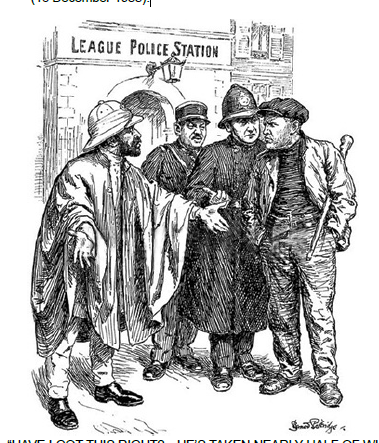
Mussolini launched the invasion of Ethiopia on October 3, 1935, using modern military technology — aircraft, artillery, and chemical weapons including mustard gas — against an army fighting with rifles and spears. The invasion killed an estimated 275,000 Ethiopians in the war phase. Ethiopia's Emperor Haile Selassie appealed to the League of Nations. The League imposed economic sanctions on Italy — but deliberately excluded oil, the one commodity that would have crippled Italy's war machine. Britain and France were more concerned about keeping Italy as an ally against Germany than about defending Ethiopia.
Ethiopia was conquered by May 1936. Mussolini declared the establishment of Italian East Africa, merging Ethiopia with Eritrea and Italian Somaliland. The League's failure to stop Italy dealt a decisive blow to collective security as a credible concept.
Italy's invasion of Ethiopia and the international community's weak response pushed Mussolini closer to Hitler. On October 25, 1936, the Rome-Berlin Axis was formally declared — a political alignment between the two fascist powers. In May 1939, the Pact of Steel converted the political alignment into a full military alliance. Italy and Germany would enter World War II as partners.
Britain and France's repeated accommodation of German and Italian expansion is known as appeasement, most closely associated with British Prime Minister Neville Chamberlain. The logic was not simply cowardice. Britain was still rebuilding its military after years of budget cuts. France was politically divided and its army, though large, was tied down by defensive thinking built around the Maginot Line. Both countries had vivid memories of the millions killed in World War I and genuinely wanted to avoid another war.
There was also a belief — at least in the early years — that Hitler had legitimate grievances rooted in the harsh Versailles settlement and that addressing those grievances through diplomacy might stabilize Europe. Churchill's warnings about Nazi rearmament were dismissed by many as alarmist.
The Munich Agreement of September 1938 was the clearest demonstration of appeasement's failure. Rather than deterring Hitler, it convinced him that the Western democracies would not fight. When Germany invaded Poland on September 1, 1939, Britain and France finally declared war — two days later.
Germany invaded Poland in six weeks using Blitzkrieg (lightning war) — a combination of armored divisions, mechanized infantry, and close air support that overwhelmed the Polish defense. The Soviet Union invaded Poland from the east on September 17 under the terms of the secret Molotov-Ribbentrop Pact signed in August 1939. Poland was divided and occupied.
In April 1940, Germany invaded Denmark and Norway. In May 1940, the Netherlands, Belgium, Luxembourg, and France fell in six weeks. France's armistice with Germany came on June 22, 1940 — a collapse so rapid that it stunned the world. Italy entered the war on Germany's side on June 10, 1940, once France's defeat was apparent.
Blitzkrieg (Lightning War) — Armored divisions + mechanized infantry + close air support
The expansion of Germany and Italy between 1933 and 1940 demonstrated how quickly an international order built on collective security can collapse when the major powers lack the will or capacity to enforce it. Each step Hitler took was a test. Each time the democracies yielded, the next demand grew larger. By the time Britain and France found their resolve, Germany controlled most of continental Europe and the war that appeasement was meant to prevent had already begun — on far worse terms than it needed to.
Key Documents: Treaty of Versailles (1919) | Anglo-German Naval Agreement (1935) | Hossbach Memorandum (1937) | Munich Agreement (1938) | Pact of Steel (1939) | Molotov-Ribbentrop Pact (1939)