

On this page:
Introduction The Colonial Roots of Apartheid National Party Victory and Construction of Apartheid (1948) African National Congress and Early Resistance The Sharpeville Massacre (1960) The Rivonia Trial and Silencing of the Movement (1963–1964) ConclusionThe word apartheid comes from Afrikaans and means simply "apartness." As a description of the system it named, it was almost clinical in its understatement. What apartheid actually created in South Africa from 1948 onward was one of the most comprehensive and deliberately enforced systems of racial discrimination in the 20th century — a legal architecture that controlled where people could live, work, study, move, marry, and be buried, based entirely on the color of their skin. Understanding this period means understanding both how the system was built and how the first organized resistance against it took shape.
South Africa's racial hierarchy did not begin with apartheid. It had deep roots in Dutch and British colonialism going back to 1652, when the Dutch East India Company established the first European settlement at Table Bay. Dutch-speaking settlers — the Boers, later called Afrikaners — established farming communities that relied on enslaved and forced indigenous labor. When Britain took control in the early 19th century, it abolished slavery in 1834, but this did not end racial discrimination or the Afrikaners' insistence on white supremacy.
The Union of South Africa, established in 1910, already operated under a racial framework that excluded Black South Africans from political representation. The Natives Land Act of 1913 confined Black South Africans to only 7 percent of the country's land (later increased to 13 percent), despite Black South Africans comprising the majority of the population. Racial segregation in employment, housing, and public facilities was widespread before 1948. What apartheid did was systematize, deepen, and enforce that segregation with unprecedented legal thoroughness.
In the South African general election of May 1948, the National Party (NP) under Daniel François Malan won a narrow victory over the United Party of Jan Smuts. The NP ran on an explicitly apartheid platform — promising white Afrikaner voters that a NP government would control and reverse the increasing migration of Black workers into South African cities.
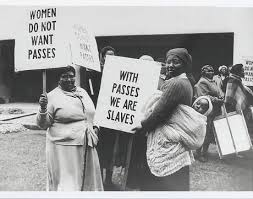
Once in power, the NP wasted no time. Between 1948 and the early 1960s, it passed a series of laws that built apartheid into every aspect of South African life:
The African National Congress (ANC) had been founded in 1912. For its first decades it pursued moderate, petition-based advocacy — writing letters, sending delegations, appealing to the British Crown. The NP government ignored it completely.
The 1948 election and the torrent of apartheid legislation radicalized the ANC's younger leadership. In 1949, the ANC adopted a Programme of Action rejecting the previous accommodationist approach in favor of strikes, boycotts, and civil disobedience. The Youth League, led by figures including Nelson Mandela, Walter Sisulu, and Oliver Tambo, drove this shift.
The Defiance Campaign of 1952 was the first major organized mass resistance to apartheid. Over 8,000 volunteers deliberately violated apartheid laws, inviting arrest. The campaign increased ANC membership from around 7,000 to over 100,000.
In 1955, a broad coalition adopted the Freedom Charter, declaring that "South Africa belongs to all who live in it, black and white" and outlining a vision of non-racial democratic governance. The government arrested 156 delegates, charging them with treason. The Treason Trial dragged on until 1961, when all defendants were acquitted.
In July 1963, police raided a farm at Rivonia, near Johannesburg, and arrested the underground leadership of the ANC and MK. Documents found at the farm revealed plans for a campaign of sabotage and guerrilla war. Nelson Mandela, already in prison since 1962, was brought back to face new charges.
At the Rivonia Trial, Mandela and seven co-defendants faced the death penalty. In his statement from the dock on April 20, 1964, Mandela delivered one of the most famous speeches of the 20th century, ending:
"I have cherished the ideal of a democratic and free society in which all persons live together in harmony and with equal opportunities. It is an ideal which I hope to live for and to achieve. But if needs be, it is an ideal for which I am prepared to die."
On June 12, 1964, all eight defendants were sentenced to life imprisonment. Mandela was sent to Robben Island, where he would remain for 27 years.
The period from 1948 to 1964 saw apartheid constructed in its fullest legal form and the first serious organized resistance to it built, tested, and violently suppressed. The Sharpeville Massacre marked the moment when nonviolent protest gave way to armed resistance, and the Rivonia sentences removed the ANC's entire visible leadership from the political stage for a generation. Yet the system they opposed was not stable — its reliance on increasingly open brutality was steadily costing South Africa its international standing, and the men imprisoned on Robben Island had not abandoned their cause. The struggle had simply been forced underground.