

On this page:
What Is Power in Geography? Globalization: The Engine of Modern Networks Transnational Corporations (TNCs) Geopolitical Power The Geography of the Internet and Digital Networks Places and Their Relationships with Global Networks Resistance to Globalization ConclusionA T-shirt designed in New York, made in Bangladesh, shipped through Singapore, and sold in London tells you more about the modern world than most textbooks.
Behind that single garment is a network of factories, shipping lanes, trade agreements, corporate decisions, and labor markets that spans the globe. Power shaped every step of that journey. Someone decided where the factory would be built, who would be paid how much, which port would handle the cargo, and which company would take the profit.
Power, places, and networks are about understanding who controls these systems, how those systems are organized across geographic space, and what the consequences are for different people and places caught within them.
In geography, power refers to the ability of individuals, groups, corporations, or states to influence outcomes, control resources, shape decisions, and determine how places develop. Power operates at multiple scales simultaneously — from the global decisions of multinational corporations to the local politics of city planning.
Power is not just political or military. It is also economic, cultural, and technological. Understanding who holds power, and how that power is exercised across geographic space, is fundamental to understanding why the world looks the way it does.
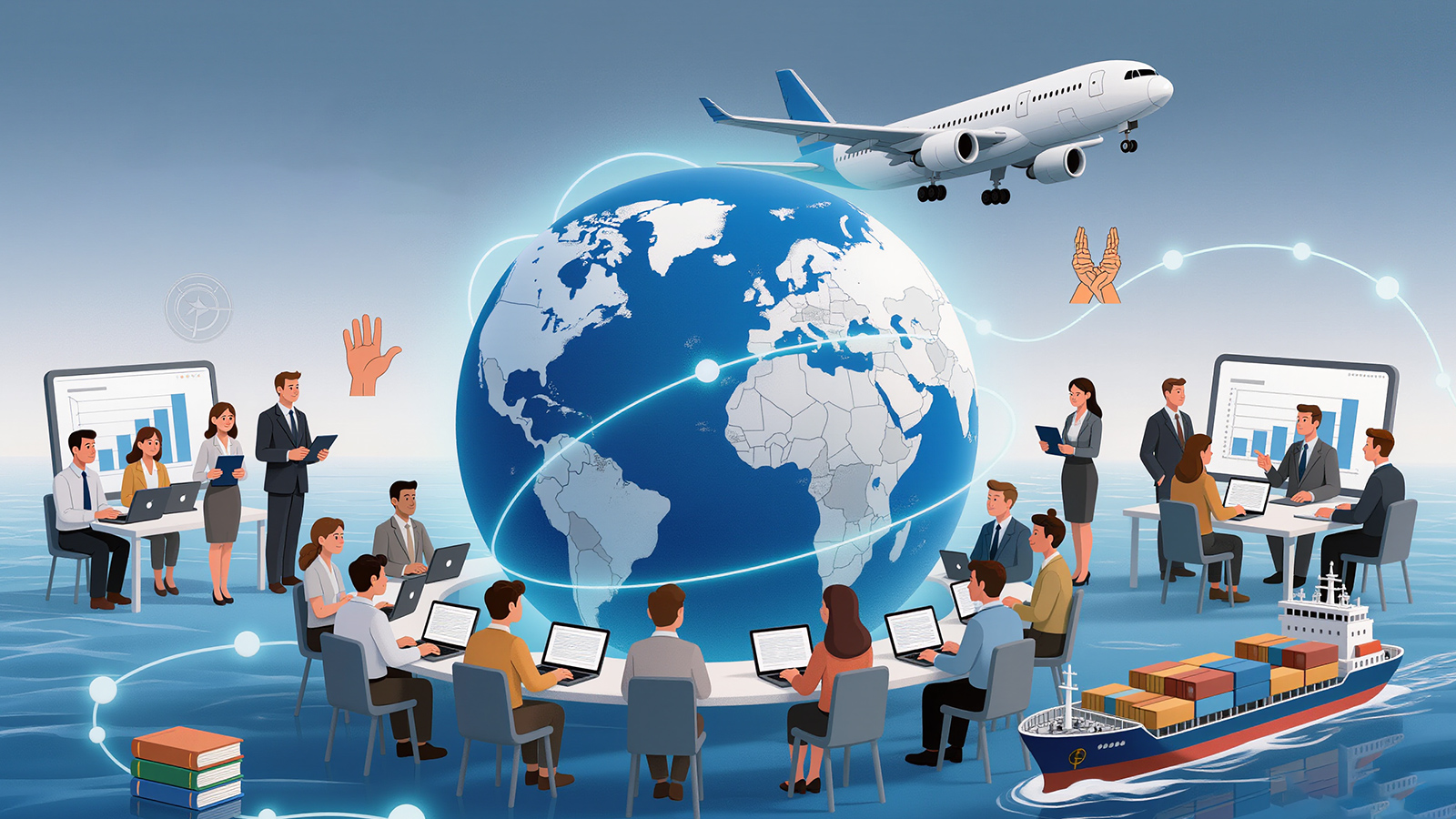
Globalization is the process by which the world's economies, cultures, and populations have become increasingly interconnected through trade, investment, migration, technology, and the flow of ideas. It is the framework within which modern power networks operate.
Globalization is not new; trade routes connecting distant civilizations have existed for thousands of years. But the speed, scale, and depth of contemporary globalization are historically unprecedented, driven by:
Dimensions of Globalization:
Transnational corporations (TNCs), also called multinational corporations (MNCs), are companies that operate in multiple countries simultaneously, with headquarters typically in one country and production, sales, or service operations in many others.
TNCs are the primary architects of global economic networks. They organize production across multiple countries to minimize costs and maximize profits, sourcing raw materials where they are cheapest, manufacturing where labor costs are lowest, locating research and development where skills are concentrated, and selling where purchasing power is highest.
The annual revenues of the largest corporations exceed the GDP of most countries, giving them enormous leverage in negotiations with governments. TNCs exercise power through:
Case Study: Apple Inc. — Apple designs its products in California, sources components from across Asia, assembles products primarily in China through Foxconn, and sells globally. The value captured is highly unequal — Apple and its shareholders capture the vast majority of profit, while assembly workers earn relatively low wages for complex, demanding work.
Geopolitics refers to the influence of geography on political power and international relations. It examines how location, resources, territory, and geographic characteristics shape the power of states and their relationships with each other.
Hard power is the use of military force or economic coercion to influence other states — military spending, weapons exports, trade sanctions, territorial control.
Soft power (Joseph Nye) is the ability to influence others through attraction rather than coercion — cultural influence, diplomacy, international aid, appeal of values and institutions. American films, European universities, and democratic ideals are forms of soft power.
Smart power combines both, using hard and soft power strategically depending on the situation.
The United States has been the world's dominant superpower since the end of the Cold War, projecting power globally across military, economic, cultural, and political dimensions.
China is the most significant emerging power of the 21st century, now the world's second-largest economy. It projects power through the Belt and Road Initiative (infrastructure investment across over 140 countries), military modernization, technological competition, and growing influence in international institutions.
The US-China relationship — economic interdependence combined with strategic competition — is the defining geopolitical dynamic of the early 21st century.
The internet is often described as borderless, but this is a myth. The internet has a very real physical geography that is both spatially concentrated and geopolitically significant.
Digital Divides: Access to the internet and digital technology is deeply unequal:
Data as Power: In the digital economy, data is power. The ability to collect, analyze, and monetize data about people's behavior is the foundation of the most valuable companies (Google, Meta, Amazon). These companies hold data on billions of people and exercise influence over information flows that shape political opinions, consumer behavior, and social norms globally. The concentration of data power in a small number of US-based corporations (and increasingly Chinese ones) raises profound questions about privacy, sovereignty, and unequal distribution of value.
Not all places are equally connected to global networks. Place in geography refers not just to a location but to a location with meaning, shaped by its history, culture, economy, and relationships with other places.
World cities are the primary nodes of the global economy, concentrating financial services, corporate headquarters, legal and consulting firms, international media, and cultural production. London, New York, and Tokyo are consistently ranked as the top three, followed by Singapore, Hong Kong, and Paris. Characteristics include high concentrations of financial services, headquarters of major TNCs, international transport hubs, cultural production, and high levels of income inequality.
Global networks do not benefit all places equally. Uneven development — whereby some regions grow wealthy while others stagnate or decline — is both a cause and consequence of how power operates in global networks.
This model (Immanuel Wallerstein) explains why global economic integration has not produced equal development — the terms on which different places participate in global networks reflect historical power relationships that do not automatically equalize over time.
Not everyone benefits from globalization equally, and resistance to it takes many forms:
Power is not evenly distributed across the world's places and networks. It concentrates in world cities, in the headquarters of transnational corporations, in the data centers of technology platforms, and in the governments of geopolitically dominant states.
Geography does not just describe where things are. It explains why power concentrates where it does, how networks connect and exclude different places, and what the consequences of those connections and exclusions are for the people who live within them.