

On this page:
Defining Leisure, Tourism & Sport The Growth of Global Tourism Butler's Tourism Area Life Cycle Types of Tourism The Impacts of Tourism Ecotourism: Promise & Problems Sport and Geography Mega-Events and Their Impacts Sport as Geopolitical Tool Sport, Inequality & Development Sustainable Tourism Management Case Study: Venice & Overtourism ConclusionSomeone books a flight. Someone else builds a hotel. A stadium goes up. A coral reef gets quieter. All of this from one decision — to travel somewhere for fun. Tourism is one of the most powerful forces shaping the modern world. It moves money, people, and culture across borders at a scale that rivals entire industries. It creates livelihoods and destroys ecosystems. It connects civilizations and commodifies them. For Geography, understanding leisure, tourism, and sport means understanding one of the most complex human systems on the planet, one that is growing faster than almost anyone predicted, and generating consequences that almost no destination was prepared for.
Leisure refers to time free from work or obligatory activities, used for rest, recreation, or personal enjoyment. Tourism is travel away from home for at least one night for purposes of leisure, business, health, religion, or visiting friends and family (UNWTO defines a tourist as staying 24 hours to one year). Recreation refers to activities undertaken during leisure time that provide enjoyment. Sport in a geographical context refers to organized physical activity, either as participation or spectator experience, including its spatial dimensions — where sport is played, watched, and organized, and how it shapes places and economies.
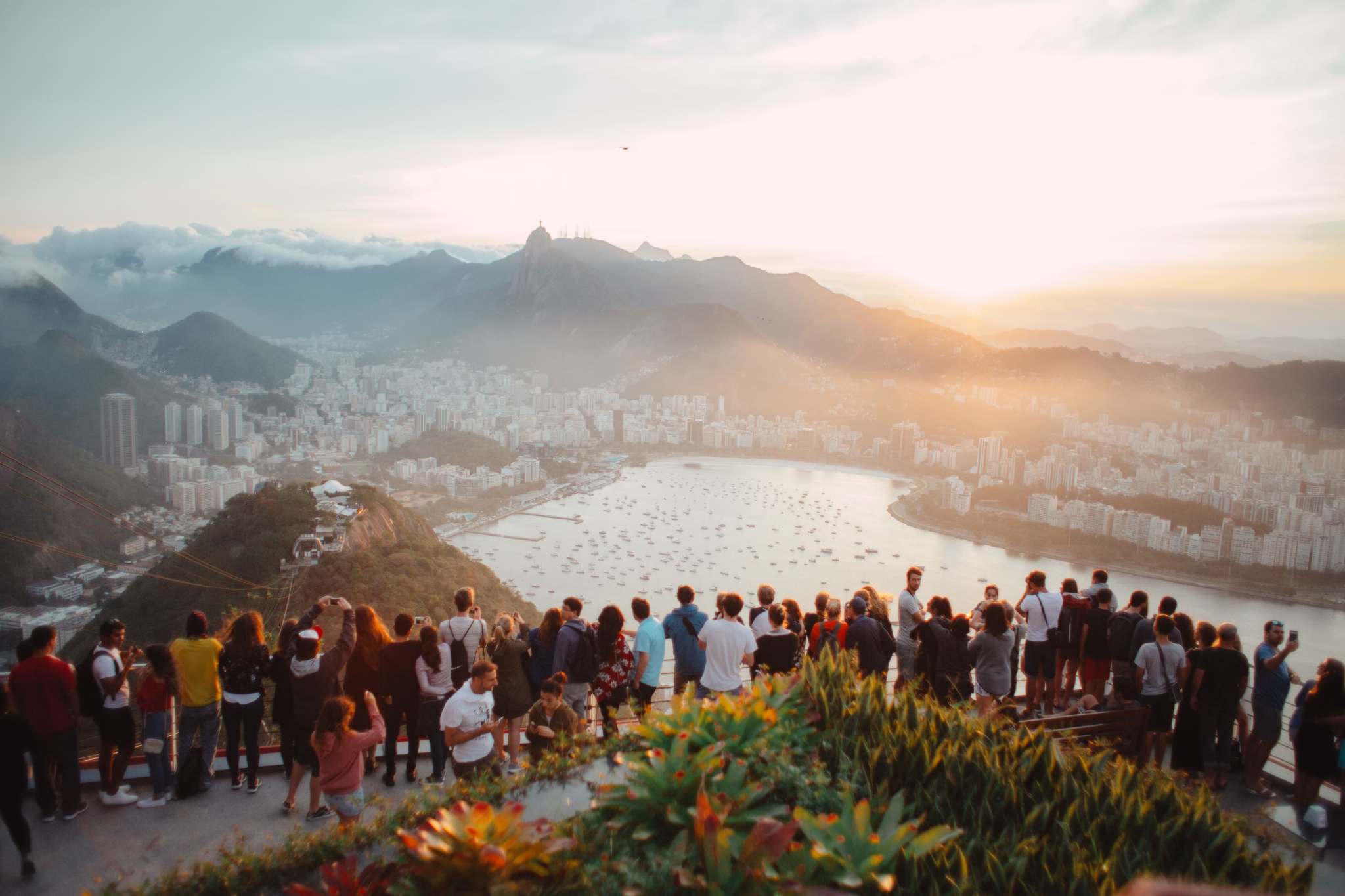
Tourism is one of the world's largest industries. Before the COVID-19 pandemic, international tourist arrivals reached 1.5 billion per year, and tourism accounted for approximately 10% of global GDP. Even accounting for the dramatic collapse during the pandemic, tourism rebounded faster than most economists expected, with projections suggesting continued long-term growth.
Why has tourism grown so rapidly? Rising incomes, more paid leave, cheaper air travel (budget airlines), improved infrastructure, globalization of media (social media and travel platforms), and political stability in many regions have all driven expansion since the mid-20th century.
Butler's model describes how tourist destinations evolve through six stages:
Examples: Benidorm (Spain) moved through development to consolidation; Blackpool (England) reached stagnation and attempted rejuvenation. Limitations: not all destinations follow this neat sequence.
Large numbers of tourists visiting popular destinations via package holidays. Generates significant revenue but concentrates pressure on specific places.
Travel to natural environments that aims to conserve and improve local well-being. Funds conservation when done well.
Experiencing history, art, architecture, and traditions. Cities like Rome, Kyoto, Istanbul rely on cultural tourism.
Physically challenging activities (trekking, climbing, rafting) often in fragile ecosystems.
Travel for healthcare (cheaper/faster abroad). Thailand, India, Mexico are major destinations.
Visits to sites of death, tragedy, or suffering (Auschwitz, Chornobyl). Raises ethical questions about commodification.
Economic Impacts: Positive — foreign exchange earnings, employment, infrastructure investment, tax revenues. Negative — leakage (money flows out to foreign-owned chains), overdependence on tourism (vulnerable to shocks), seasonal low-paid employment, rising property prices displacing residents.
Social and Cultural Impacts: Positive — cultural exchange, revival of traditional crafts, investment in heritage. Negative — demonstration effect (erosion of traditional culture), commodification of culture (authentic traditions performed for tourists), overcrowding reducing quality of life, overtourism (Venice, Barcelona, Kyoto).
Environmental Impacts: Positive — tourism revenue funds conservation. Negative — physical degradation of natural sites, coral reef damage, carbon emissions from aviation (a single long-haul flight can produce more CO₂ than months of everyday activities), deforestation for resorts, water overuse in water-scarce destinations.
Ecotourism aims to make tourism environmentally sustainable and locally beneficial. Successful examples: community-based ecotourism in Costa Rica (largest industry while maintaining forest cover), Kenya's Maasai Mara conservancies (direct local revenue distribution). Problems include greenwashing (marketing as eco-friendly without meaningful impact), damage to fragile ecosystems even from small groups, and inequitable distribution of income creating community conflict. The key distinction is between nature-based tourism and genuine ecotourism meeting environmental sustainability, local benefit, and education criteria.
Sport is a massive industry, a tool of geopolitical influence, a driver of urban development, and a mirror of social inequality. Sports have uneven global distributions rooted in history, climate, and culture: cricket dominates South Asia and former British colonies; American football is almost exclusively played in the USA; football (soccer) is the only truly global sport, played competitively on every continent. These patterns reflect colonial history and geographic factors like climate.
Mega-events include the Olympic Games, FIFA World Cup, and Rugby World Cup. Arguments for hosting: infrastructure investment, tourism revenue, global media exposure, national pride. Arguments against: costs consistently exceed budgets (2016 Rio Olympics cost ~3x estimate), white elephants (expensive venues with no long-term use, e.g., 2004 Athens Olympics), displacement of local communities, environmental impact, and benefits rarely reaching the poorest sections of host communities.
Governments use sport to project power and legitimacy, a practice called sportswashing. Hosting major events improves international image, distracts from domestic problems, or signals arrival as global powers. The 2022 FIFA World Cup in Qatar generated controversy around labor rights and climate suitability. The 2008 Beijing Olympics was debated for political messaging. Sport has also been a diplomacy tool — Ping-Pong diplomacy between the USA and China in the 1970s thawed political relations.
Access to sport is deeply unequal. High-income countries have school programs, public facilities, and leisure time. Lower-income countries have scarce facilities, limited leisure time, and elite sport depends on individual talent finding support. Yet sport has been a pathway out of poverty for individuals and a tool for community development. "Sport for Development" programs use sport to improve health, reduce violence, promote gender equality, and build social cohesion in dozens of developing countries.
The central challenge is managing growth without destroying what makes destinations worth visiting. Management strategies include:
Venice receives approximately 30 million visitors per year in a city with fewer than 250,000 permanent residents. Impacts: residents displaced by rising rents from short-term holiday lets; historic center lost functioning local economy, replaced by tourist services; cruise ships contributed to erosion and water quality degradation (large cruise ships now banned from historic center). Residents have held protests. Venice has introduced visitor entry fees, restricted cruise ship access, and piloted visitor flow management systems. Its challenges illustrate what happens when a destination becomes so desirable that tourism begins destroying the qualities that made it desirable.
Every tourist is making a choice. Every destination is living with the consequences of millions of those choices, made simultaneously, year after year. Leisure, tourism, and sport are not trivial topics. They sit at the intersection of economic development, environmental sustainability, cultural identity, and geopolitical power. They shape cities, fund conservation, displace communities, and accelerate climate change — sometimes all in the same place at the same time.