

On this page:
What Is Human Development? Measuring Development: Key Indicators Global Patterns of Human Development Inequality Within Countries Gender and Development Cultural Diversity and Identity The Sustainable Development Goals (SDGs) Development Theories and Approaches Conclusion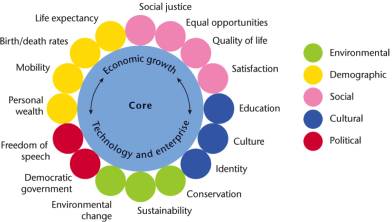
Two children start school on the same day. One has books, breakfast, and a qualified teacher. The other has none of these things.
Both are equally intelligent. Both have equal potential. But geography, the country, region, and family they were born into, has already determined that their lives will unfold very differently.
Human development is about far more than economic growth. It is about whether people can live long, healthy, educated lives with the freedom to make meaningful choices. And human diversity, the extraordinary range of cultures, identities, languages, and ways of life across the world, is both something to celebrate and something that shapes, in deeply unequal ways, who gets access to development and who does not.
For much of the 20th century, development was measured almost entirely by economic growth, by GDP per capita. A country was "developed" if it was rich and "undeveloped" if it was poor. This framework missed something fundamental: economic growth does not automatically translate into better lives for people.
The Human Development approach, associated primarily with economists Amartya Sen and Mahbub ul Haq, argues that development should be measured by the expansion of human capabilities — the real freedoms people have to live lives they have reason to value. This means not just income, but health, education, political freedom, personal security, and social participation.
Sen's concept of capabilities shifts the focus from what countries produce to what people can actually do and be. A country might have a high average income, but if that income is concentrated among a small elite, if women are excluded from economic and political life, or if ethnic minorities face systematic discrimination, genuine human development remains limited for large parts of the population.
Gross Domestic Product (GDP) per capita measures the total economic output of a country divided by its population. Gross National Income (GNI) per capita includes income earned by a country's residents abroad. Both are widely used but have significant limitations; they measure averages that can disguise enormous inequality, and they count economic activity without distinguishing between activities that improve wellbeing and those that do not.
The Human Development Index (HDI), developed by the United Nations Development Programme (UNDP), is the most widely used composite measure of development. It combines three dimensions:
Countries are ranked on a scale from 0 to 1 and classified as having very high, high, medium, or low human development. The HDI reveals patterns that GDP alone would miss; some countries have relatively modest incomes but high life expectancy and education levels, while others have significant oil revenues that do not translate into broad human wellbeing.
Limitations of the HDI:
Human development is deeply unequal across the world. The highest HDI scores are concentrated in Western Europe, North America, Australia, Japan, and South Korea. The lowest scores are concentrated in sub-Saharan Africa, with countries like Niger, Chad, and the Central African Republic consistently at the bottom of global rankings.
These patterns reflect historical processes including colonialism, which systematically extracted wealth from colonized regions while investing in colonizing ones, established institutional frameworks that persisted long after independence, and drew borders that cut across ethnic and ecological communities in ways that created enduring instability.
They also reflect ongoing structural inequalities in global trade, where commodity exporters receive less value for their exports than manufacturers and service providers, and in global finance, where debt servicing consumes a significant portion of government budgets in many low-income countries.
Inequality refers to the unequal distribution of income, wealth, opportunity, or well-being within a population. It is measured most commonly through the Gini coefficient, a number between 0 (perfect equality) and 1 (perfect inequality, where one person holds everything).
High levels of inequality matter not just because they are morally troubling but because research consistently shows that more unequal societies have:
Some of the world's most unequal countries are in Latin America and sub-Saharan Africa. South Africa has one of the highest Gini coefficients in the world, a legacy of apartheid-era spatial and economic segregation that persists decades after formal apartheid ended.
Inequality is not inevitable. Countries at similar income levels can have very different levels of inequality depending on their tax systems, social spending, labor market institutions, and historical land distribution. Scandinavian countries consistently combine high incomes with relatively low inequality through progressive taxation and generous social provision.
Gender is one of the most powerful dimensions of human diversity in shaping development outcomes. Across virtually every country in the world, women face systematic disadvantages in access to education, economic opportunity, political representation, and personal autonomy, though the severity varies enormously.
In parts of sub-Saharan Africa and South Asia, girls are still less likely than boys to complete secondary education due to direct and indirect costs, safety concerns, early marriage and pregnancy, and cultural norms valuing boys' education more highly. Girls' education is one of the most powerful investments in development. Educated women have fewer children, space births more carefully, earn higher incomes, invest more in their children's health and education, and participate more actively in civic life.
Women perform the majority of unpaid care work globally (childcare, elder care, cooking, household management) — work that is economically essential but not captured in GDP or formal employment statistics. In formal labor markets, women face persistent gender pay gaps, limited access to senior positions, and concentration in lower-paying sectors. The gender pay gap persists in every country, though it is narrowing in many.
Women's Political Representation: Women remain significantly underrepresented in political institutions globally. As of the early 2020s, women hold approximately 26% of parliamentary seats worldwide. Rwanda is the notable exception, with over 60% female representation in its parliament following post-genocide reconstruction efforts that explicitly promoted women's political inclusion.
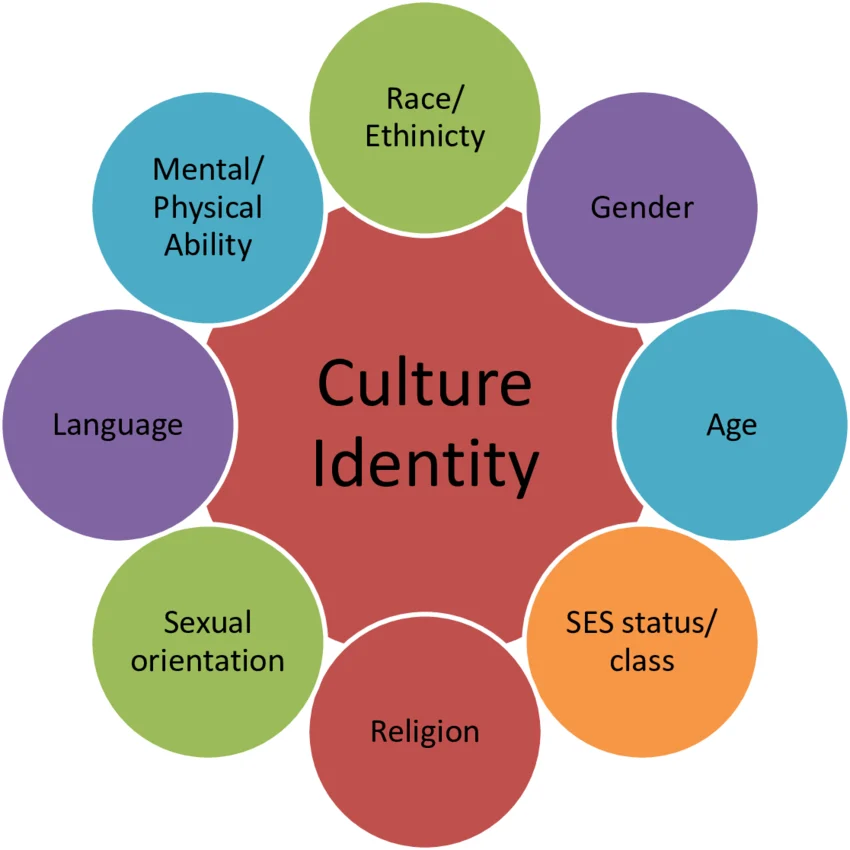
Culture refers to the shared values, beliefs, practices, languages, and ways of life of a group of people. It is one of the most fundamental dimensions of human diversity and shapes individual identity, community cohesion, and relationships between groups.
The world's extraordinary cultural diversity — over 7,000 languages, countless religious traditions, artistic forms, and ways of organizing social life — is both a product of geographic separation over millennia and an ongoing source of human creativity and adaptation.
Cultural diversity is under pressure from globalization, which spreads dominant languages, media, and consumption patterns that can displace local ones. Of the world's 7,000 languages, approximately half are endangered, spoken by small numbers of elderly people with few younger speakers. When a language disappears, it takes with it unique ways of understanding and describing the world.
Indigenous peoples are communities with historical continuity with pre-colonial societies, distinct cultures, and strong attachment to ancestral territories. They represent enormous cultural diversity, with an estimated 476 million people belonging to over 5,000 distinct groups across 90 countries.
Indigenous peoples are among the most marginalized groups in the world. They are disproportionately represented among the world's poorest people, face discrimination in access to education and healthcare, and their lands and cultural heritage are frequently threatened by extractive industries, agricultural expansion, and infrastructure development.
The UN Declaration on the Rights of Indigenous Peoples (UNDRIP), adopted in 2007, affirms indigenous peoples' rights to self-determination, cultural preservation, and free, prior, and informed consent over decisions affecting their lands and resources. Implementation remains deeply uneven.
Religion and Development: Religion shapes identity, community organization, gender relations, and political life across the world. Religious institutions provide enormous social welfare functions (schools, hospitals, community networks), particularly where state provision is weak. Religious values can motivate both social justice activism and resistance to change. Managing religious pluralism is a governance challenge that many multi-faith societies navigate with varying degrees of success.
The UN Sustainable Development Goals (SDGs), adopted in 2015, provide the current global framework for human development. The 17 goals and 169 targets cover poverty, hunger, health, education, gender equality, clean water, energy, economic growth, inequality, sustainable cities, responsible consumption, climate action, and more.
The SDGs represent a significant advance over their predecessor, the Millennium Development Goals (MDGs), in several ways:
Progress toward the SDGs has been uneven. Gains in poverty reduction, child mortality, and access to education made in the 2000s and 2010s were significantly set back by the COVID-19 pandemic. Climate change threatens to reverse progress on food security, health, and poverty in the most vulnerable regions.
Geographers and economists have debated how development happens and what policies best promote it.
Associated with W.W. Rostow. Argued that all societies follow a similar linear path from traditional to modern economic structures, and that developing countries simply needed to follow the path already taken by industrialized ones. Critics argue this ignored the role of historical exploitation and structural power imbalances.
Argued that underdevelopment is not a stage on the way to development but a condition actively maintained by the structure of the global economy, which extracts value from peripheral regions to benefit core ones.
Emphasize free markets, trade liberalization, and private investment as the primary drivers of development (Washington Consensus policies promoted by the IMF and World Bank from the 1980s). Results were mixed; some countries grew rapidly, others experienced deep crises.
Sen and ul Haq reframe development as expanding human freedom and capability rather than maximizing economic output, shifting attention to what policies actually improve people's lives.
Human development is not simply about money. It is about whether people can live healthy lives, get an education, participate in the decisions that affect them, and express their identities and cultures freely.
Human diversity, in culture, language, religion, gender, and identity, is one of the most remarkable features of our species. But diversity also intersects with power in ways that determine who is included and who is marginalized, who develops and who is left behind.