

On this page:
Food, Health & Their Relationship Global Food Systems The Green Revolution Food Insecurity: Causes & Patterns Case Study: The Sahel Region Malnutrition: The Double Burden Health: Patterns & Inequalities The Epidemiological Transition Social Determinants of Health Disease: Geographic Patterns Food Systems & Health Connection Strategies for Food Security & Health ConclusionTwo children are born on the same day. One will never know hunger. The other may never know enough.
Same planet. Same year. Completely different futures, shaped not by biology, but by geography.
Food and health are perhaps the most personal topics in all of Geography. They are about bodies, about survival, about what it means to live well or struggle to live at all. But they are also about systems, food production systems, healthcare systems, economic systems, and political systems that determine who eats, who gets sick, and who gets help.
Understanding this unit means understanding why geography is never just about maps. It is about the decisions, structures, and inequalities that produce very different human lives in very different places.
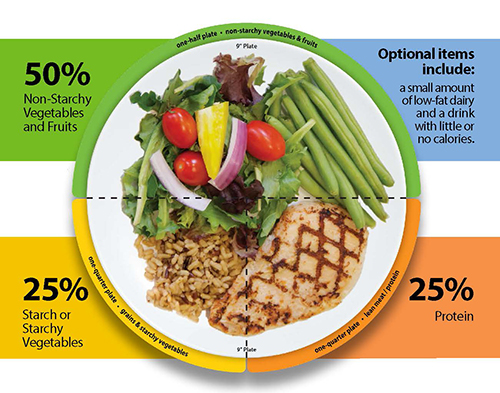
Before diving in, it helps to establish clear definitions for the core concepts in this unit.
Food security exists when all people, at all times, have physical and economic access to sufficient, safe, and nutritious food to meet their dietary needs and food preferences for an active and healthy life. This definition, from the Food and Agriculture Organization (FAO), has four dimensions: availability, access, utilization, and stability.
Malnutrition refers to deficiencies, excesses, or imbalances in a person's intake of energy and nutrients. It includes both undernutrition (not enough food) and overnutrition (too much of the wrong food). This distinction is important; malnutrition is not just about hunger.
Health is defined by the World Health Organization (WHO) not merely as the absence of disease, but as a state of complete physical, mental, and social well-being. Geography influences health through access to food, clean water, healthcare, safe environments, and economic opportunity.
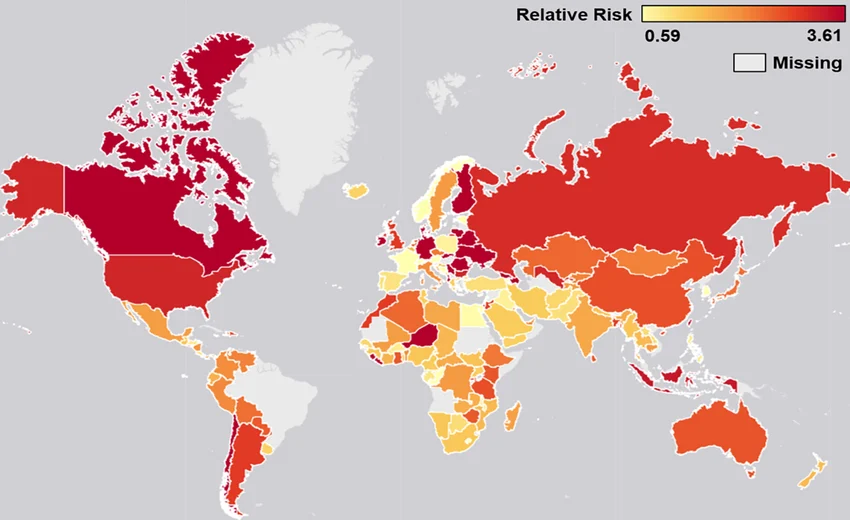
A food system includes all the processes involved in feeding a population, growing, harvesting, processing, packaging, transporting, marketing, consuming, and disposing of food. Understanding food systems means understanding why food is plentiful in some places and scarce in others.
Agricultural Systems
Different agricultural systems produce food in very different ways:
Subsistence agriculture involves farming primarily to feed the farming family, with little or no surplus for sale. It is common across sub-Saharan Africa, South Asia, and parts of Southeast Asia. It is highly vulnerable to weather, pests, and market fluctuations.
Commercial agriculture produces food primarily for sale. It ranges from smallholder commercial farms to enormous industrial operations spanning thousands of hectares. Efficiency and yield are prioritized, often at the cost of environmental sustainability.
Intensive agriculture maximizes output from a given area of land through high inputs of labor, machinery, fertilizers, and pesticides. It produces high yields but can degrade soil quality, pollute water, and reduce biodiversity.
Extensive agriculture uses large areas of land with lower inputs per hectare. Cattle ranching on the Argentinian Pampas and wheat farming on the Canadian Prairies are examples. Land use is efficient in terms of labor but not in terms of space.
The Green Revolution of the 1960s and 1970s transformed global food production through the introduction of high-yielding crop varieties, synthetic fertilizers, pesticides, and irrigation systems. It dramatically increased food production in South and Southeast Asia and is credited with preventing famines that many predicted would kill hundreds of millions.
However, the Green Revolution also had significant negative consequences:
The Green Revolution illustrates a recurring theme in this unit: solutions that increase food production do not automatically increase food security for the most vulnerable.
Nearly 800 million people globally experience chronic hunger. Understanding why requires looking at multiple interconnected causes.
Physical Causes
Climate and environment — arid regions, poor soils, and irregular rainfall limit agricultural productivity. Sub-Saharan Africa faces particular challenges from climate variability.
Natural hazards — droughts, floods, and storms can destroy harvests and disrupt food supply chains.
Landlocked geography — countries far from ports and trade routes face higher food import costs and supply disruptions.
Economic Causes
Poverty — food insecurity is ultimately rooted in the inability to produce or purchase enough food. The issue is often not a shortage of food globally, but an inability to access it.
Land ownership inequality — in many regions, small numbers of wealthy landowners control most productive agricultural land, leaving the majority of rural populations landless or with tiny holdings.
Market failures — volatile food prices, inadequate storage infrastructure, and poor market access mean that even when food is produced, it may not reach those who need it.
Political Causes
Conflict — war disrupts farming, destroys infrastructure, displaces populations, and cuts off food aid. The majority of the world's most food-insecure countries are experiencing or recovering from conflict.
Governance failures — corruption, poor investment in rural infrastructure, and inadequate social safety nets all contribute to food insecurity.
Trade policies — agricultural subsidies in wealthy countries make it difficult for farmers in developing countries to compete, distorting global food markets.
The Sahel, the semi-arid belt stretching across Africa south of the Sahara, is one of the world's most food-insecure regions. It faces a combination of:
The Sahel illustrates how food insecurity is never caused by a single factor; it is always the result of multiple pressures reinforcing each other.
Malnutrition takes multiple forms, and increasingly, different forms coexist within the same country, even within the same household. This is known as the double burden of malnutrition.
Undernutrition
Undernutrition occurs when people do not consume enough calories or nutrients to meet their basic needs. It includes:
Undernutrition is concentrated in sub-Saharan Africa and South Asia, where poverty, conflict, and climate vulnerability combine to limit food access.
Overnutrition and Obesity
Overnutrition, consuming too many calories, particularly from processed foods high in fat, sugar, and salt, is rising rapidly across both developed and developing countries. It leads to obesity, type 2 diabetes, cardiovascular disease, and certain cancers.
Obesity is no longer a problem confined to wealthy countries. The fastest growth in obesity rates is now occurring in middle-income countries undergoing rapid urbanization and dietary transition. Countries like Mexico, Brazil, Egypt, and South Africa now face simultaneous epidemics of undernutrition and obesity, the double burden made visible.
The rise of ultra-processed foods, cheap, calorie-dense, nutritionally poor products manufactured by global food corporations, is a major driver of this shift. These products are aggressively marketed, widely available, and affordable in a way that fresh, nutritious food often is not.
Geography shapes health outcomes profoundly. Where you are born, and the conditions into which you are born, are among the strongest predictors of how long you will live and how healthy that life will be.
Measuring Health
Several indicators are used to measure health at national and global levels:
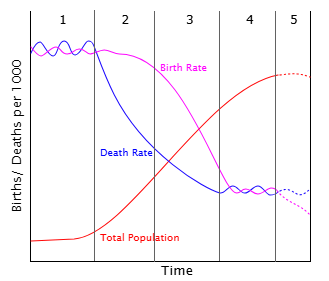
The epidemiological transition describes the historical shift in the pattern of disease as countries develop. It was first proposed by Abdel Omran in 1971.
In low-income countries, the disease burden is dominated by communicable diseases (also called infectious diseases), malaria, tuberculosis, HIV/AIDS, diarrhoeal diseases, and respiratory infections. These are diseases of poverty, poor sanitation, malnutrition, and limited healthcare access.
As countries develop and incomes rise, sanitation improves, vaccines become available, and healthcare systems strengthen. Communicable disease deaths fall. Life expectancy rises. But as people live longer, non-communicable diseases (NCDs), such as heart disease, cancer, diabetes, and stroke, become the leading causes of death. This is the pattern seen across high-income countries.
Many middle-income countries now face both simultaneously, still fighting communicable diseases while experiencing rapid growth in NCDs. This is sometimes called the double burden of disease.
Communicable Diseases
Malaria is one of the world's most significant communicable diseases, killing over 600,000 people per year, the majority of whom are children under five in sub-Saharan Africa. It is caused by the Plasmodium parasite, transmitted through the bites of infected Anopheles mosquitoes. Its distribution is tightly linked to climate; the mosquito requires warm temperatures and standing water to breed, confining malaria largely to tropical and subtropical regions.
Malaria is both a cause and consequence of poverty. It reduces economic productivity, strains healthcare systems, and disproportionately affects the poorest communities with the least access to prevention and treatment.
HIV/AIDS has killed over 40 million people since the epidemic began. Sub-Saharan Africa accounts for the majority of current infections. The geographic concentration of HIV is shaped by social factors, including gender inequality, stigma, poverty, and healthcare access, not simply biology.
Tuberculosis (TB) remains one of the world's top infectious killers, with the highest burden in South and Southeast Asia and sub-Saharan Africa. Drug-resistant TB is a growing concern, particularly challenging to treat and increasingly widespread.
Non-Communicable Diseases
NCDs, heart disease, cancer, diabetes, and chronic respiratory disease are the leading causes of death globally, responsible for approximately 74% of all deaths. Their geographic distribution is shifting. While they have historically been associated with wealthy, aging populations, NCD deaths are now rising fastest in low and middle-income countries, where healthcare systems are least equipped to manage them.
Food systems and health are deeply linked. What people eat, and what they can afford to eat, is one of the most powerful determinants of health outcomes.
Dietary diversity protects against micronutrient deficiencies. Access to fresh fruits and vegetables reduces the risk of NCDs. Safe food handling and storage prevent foodborne illness. Breastfeeding protects infants from infection and provides optimal nutrition in the critical early months of life.
Food deserts, areas where affordable, nutritious food is physically inaccessible, are a significant health equity issue in both developed and developing countries. In many urban areas of the United States and the United Kingdom, low-income neighborhoods have far fewer supermarkets and far more fast-food outlets than wealthier areas, creating environments where healthy eating is genuinely difficult regardless of individual choice.
No single strategy can solve food insecurity or health inequality. Effective responses combine multiple approaches across different scales.
Agricultural innovation includes developing drought-resistant crop varieties, improving soil health through agroecology, reducing post-harvest losses through better storage infrastructure, and expanding irrigation efficiency.
Food distribution and trade reform mean reducing the distorting effects of agricultural subsidies in wealthy countries, improving transport infrastructure in food-insecure regions, and strengthening local food markets.
Social protection programs, cash transfers, school feeding programs, and food voucher systems improve food access for the most vulnerable without distorting local food markets. Brazil's Bolsa Família program dramatically reduced hunger and poverty by providing direct cash transfers to poor families, conditional on children attending school and receiving healthcare.
Primary healthcare expansion, investing in community health workers, basic clinics, vaccination programs, and maternal and child health services, addresses the healthcare access gaps that drive communicable disease mortality.
Education, particularly girls' education, is one of the most powerful levers for improving both food security and health. Educated women have fewer children, space births more carefully, earn higher incomes, make better nutritional decisions for their families, and are more likely to use healthcare services.
Sustainable food systems that reduce environmental impact while maintaining nutrition quality are essential for long-term food security. This means reducing food waste (currently about one-third of all food produced is wasted), shifting diets in high-income countries toward lower meat consumption, and investing in agroecological farming that builds rather than depletes natural resources.
Food and health are where geography becomes most personal.
The difference between a child who grows up well-nourished and healthy and one who does not is rarely about individual choices. It is about the food system that surrounds them, the healthcare system available to them, the income their family has access to, and the political decisions made by people they will never meet.
For Geography students, this unit is a reminder that geography is not neutral. The patterns of food insecurity and disease we see across the world are not natural; they are produced. And because they are produced, they can be changed. Understanding how and why they exist is the first step toward understanding what it would take to change them.
Social Determinants of Health
The social determinants of health are the conditions in which people are born, grow, live, work, and age that shape their health outcomes. They include:
These determinants explain why health inequalities exist not just between countries but within them. In virtually every country in the world, poorer people have worse health outcomes than wealthier people, even when controlling for individual behaviors like diet and exercise.