

On this page:
What Are Extreme Environments? Cold Environments Permafrost Alpine Environments Hot Arid Environments (Deserts) Desert Landforms Adaptations to Extreme Environments Human Activity in Extreme Environments Threats to Extreme Environments Desertification Sustainable Management ConclusionSome places on Earth seem impossible to live in. Yet people do. Temperatures that freeze skin in minutes. Landscapes with no rain for years. Altitudes where the air barely contains enough oxygen to breathe. These are not the edges of the world; they are some of the most studied, most contested, and most threatened environments in all of geography. Extreme environments are not just dramatic backdrops. They are living systems with their own logic, their own fragility, and their own future. Understanding them is essential for Geography, and increasingly, for understanding what climate change is doing to our planet.
An extreme environment is any environment where physical conditions make human survival and economic activity difficult without significant adaptation or technology. The word "extreme" is relative. What makes these environments extreme is not just one factor but a combination of temperature, precipitation, altitude, terrain, and remoteness that together push beyond the range of what humans and most ecosystems can easily tolerate. Geography focuses on two primary types of extreme environments: cold environments (polar and alpine) and hot arid environments (deserts). Both share key characteristics; they are fragile, sparsely populated, resource-rich, and increasingly affected by human pressure and climate change.
Polar environments are found in the Arctic (around the North Pole) and Antarctic (around the South Pole). They are characterized by permanently or seasonally frozen ground, extreme cold, low precipitation, and long periods of darkness in winter, followed by continuous daylight in summer. Temperatures in Antarctica regularly fall below -40 degrees Celsius. The Arctic, though warmer, still experiences prolonged freezing conditions across most of the year. Precipitation is extremely low; Antarctica is technically the world's largest desert. Vegetation is minimal or absent. Biodiversity is limited but highly specialized.
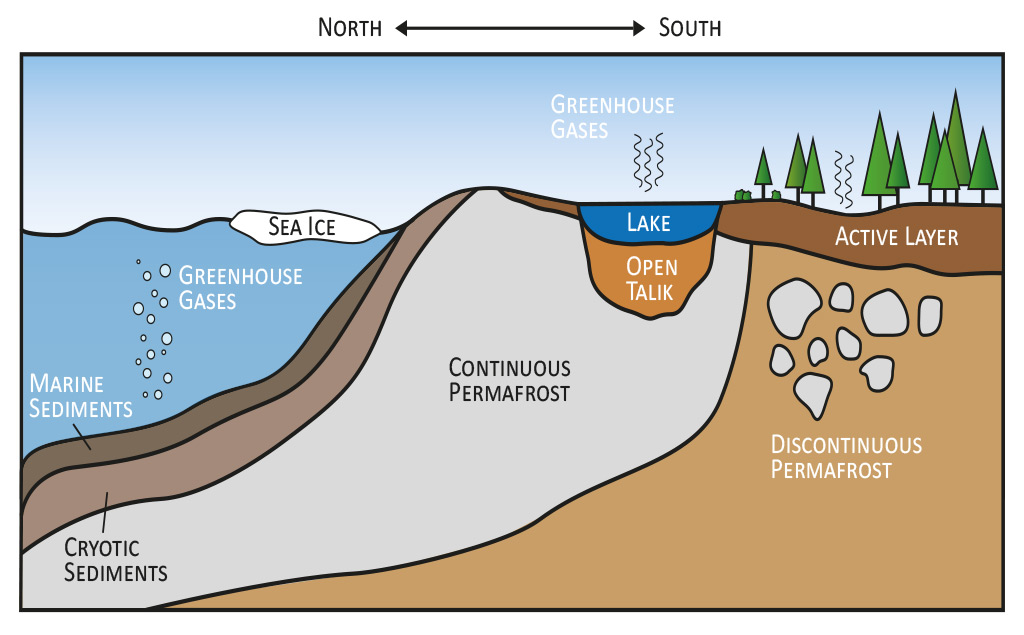
One of the most important features of cold environments is permafrost — ground that remains frozen at or below 0 degrees Celsius for at least two consecutive years. Permafrost underlies approximately 25% of the Northern Hemisphere's land surface, covering large parts of Siberia, Canada, and Alaska. Permafrost is not just frozen soil. It is a structural foundation for ecosystems, buildings, and infrastructure. It also stores enormous quantities of carbon in the form of frozen organic matter. When permafrost thaws, this carbon is released as carbon dioxide and methane — powerful greenhouse gases that accelerate climate change further. This creates what scientists call a positive feedback loop: warming thaws permafrost, which releases greenhouse gases, which causes more warming, which thaws more permafrost.
Alpine environments are found at high altitudes on mountain ranges around the world, such as the Himalayas, the Andes, the Alps, and the Rockies. They share many characteristics with polar environments: cold temperatures, thin air, high UV radiation, strong winds, and short growing seasons. The boundary above which trees cannot grow is called the treeline. Above it, vegetation is limited to low-growing grasses, mosses, and specialized flowering plants. Alpine environments are also home to glaciers — rivers of slowly moving ice that have shaped mountain landscapes and serve as critical freshwater stores for downstream populations. Many of the world's major rivers, including the Ganges and the Yellow River, depend on glacial meltwater.
A desert is any area that receives less than 250 mm of precipitation per year. Deserts are not always hot; cold deserts like the Gobi and the Antarctic interior exist, but the most recognizable deserts are the hot, sandy landscapes of the Sahara, the Arabian Desert, and the Australian Outback. Deserts cover approximately 33% of Earth's land surface, making them the most extensive land biome on the planet.
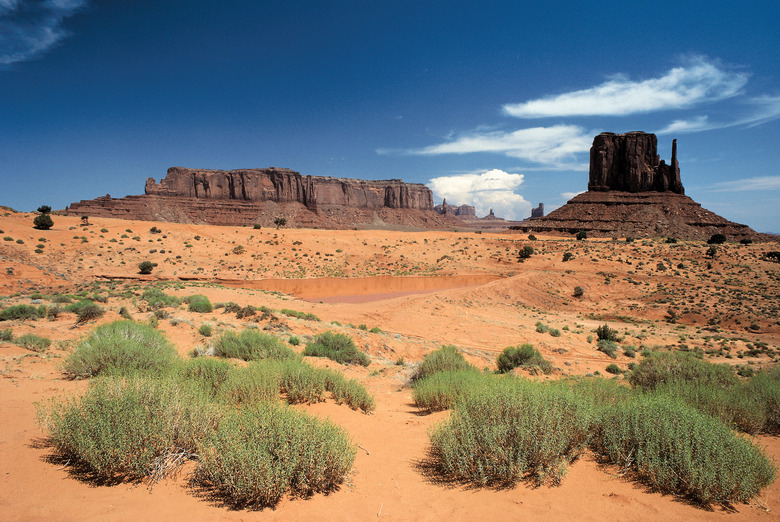
Deserts are shaped by two main forces: wind (aeolian processes) and occasional water (fluvial processes).
Dunes form when wind deposits sand against an obstacle. Barchan dunes are crescent-shaped, formed by wind blowing in one direction. Seif dunes are long parallel ridges formed by winds from two directions. Wind also creates deflation hollows and yardangs (streamlined rock ridges).
Rare but intense rainfall events create wadis (dry riverbeds that fill temporarily during storms) and deposit material in alluvial fans at the base of slopes.
In deserts, plants survive through deep root systems, thick waxy coatings, and water storage in stems and leaves (cacti). In cold environments, plants grow low to the ground, have small leaves, and complete their life cycle during the short summer.
Desert animals are often nocturnal, have large ears to radiate heat (fennec fox), or can tolerate dehydration (camel). Polar animals have thick fur, insulating fat (polar bear, Arctic fox), or huddle for warmth (penguins).
The Inuit built igloos that trap body heat, used layered animal-skin clothing, and maintained a high-fat diet. The Bedouin developed nomadic lifestyles, traditional tents, and loose layered clothing to manage desert heat, with accumulated knowledge of water sources and navigation.
Resource Extraction: Polar regions hold vast oil, natural gas, and minerals. The Arctic seabed holds ~13% of undiscovered oil and 30% of undiscovered gas. Deserts contain mineral wealth: the Atacama holds lithium, while the Sahara and Middle Eastern deserts sit above enormous oil and gas fields.
Tourism: Antarctica receives ~75,000 tourists per year. Desert tourism in the Sahara and UAE attracts millions annually, creating local economies but also environmental pressure.
Scientific Research: The Antarctic Treaty System (1959) designates Antarctica as a zone of peace and scientific cooperation. Ice cores from Antarctica and Greenland provide an 800,000-year record of atmospheric composition and climate history.
Climate Change: The Arctic is warming at two to three times the global average rate. Sea ice is declining, glaciers are retreating, and permafrost is thawing. If the West Antarctic Ice Sheet collapsed, global sea levels could rise by several meters. The Sahara has expanded southward into the Sahel through desertification.
Human Pressure: Resource extraction, tourism, and infrastructure development stress these environments. Oil spills in Arctic waters are difficult to clean due to cold temperatures. Construction on permafrost is challenging as thawing ground causes buildings to sink.
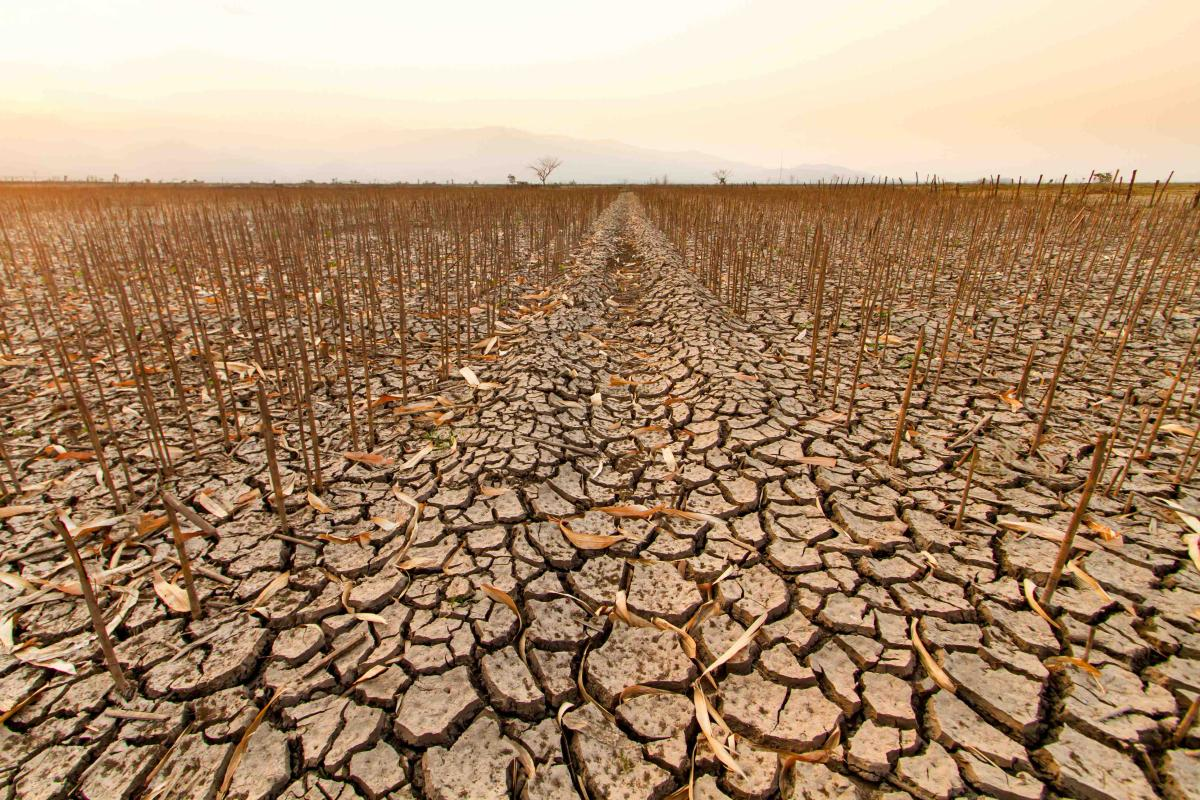
Desertification affects over 1.5 billion people globally and threatens livelihoods in the Sahel, Central Asia, and parts of South America. It is driven by overgrazing, vegetation removal, unsustainable irrigation (causing soil salinization), and climate change. The Great Green Wall initiative in Africa aims to plant an 8,000 km belt of trees across the Sahel from Senegal to Djibouti, restoring degraded land, sequestering carbon, and supporting rural communities.
Extreme environments sit at the edges of the habitable world. But what happens at those edges no longer stays there. Melting Arctic ice raises sea levels in Bangladesh. Thawing permafrost accelerates warming in Europe. Expanding deserts displace communities in the Sahel whose own carbon footprint is negligible. The connections between extreme environments and everyday life for billions of people far from any glacier or desert are real, measurable, and growing. For Geography students, this unit is ultimately about one thing: understanding that the most remote places on Earth are not separate from the human story. They are at the center of it.