

On this page:
Introduction What is Covalent Bonding? What are Valence Electrons? Lewis Structures and Sharing Electrons Types of Covalent Bonds Covalent Structures: Simple and Giant Covalent Bonds' Polarity Coordinate (Dative) Covalent Bonds Limitations of the Model of Covalent Bonds Properties of Covalent Compounds Importance of Covalent Bonding in Chemistry Covalent Bonding - The Bottom Line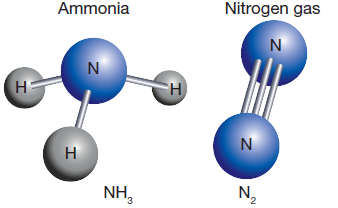
All matter is made of molecules. These include air, water, and living organisms, as well as the materials used in construction and manufacturing. Atoms do not usually exist on their own. Instead, they create bonds by sharing electrons. This process is called covalent bonding, which is how they achieve stability by completing their octet of valence electrons.
In Chemistry, the covalent model focuses on the theory of arrangements of electrons and how they connect and react. This is useful for explaining molecular structures and supports the theories of molecular polarity, bonding energy, and advanced concepts such as hydrogen bonding and electron delocalization.
A covalent bond is defined as the bond that forms when two atoms share one or more pairs of electrons.
Covalent bond example
In contrast to metallic and ionic bonds, covalent bonds are also responsible for the distinct characteristics of molecular compounds.
What is the bond formation behavior of an atom influenced by the electrons?
Electron sharing decreases energy and stabilizes atoms. In molecular chemistry, the concept of shared electrons is explained through the Pauli Exclusion Principle and Hund's rule, and is ultimately responsible for the energy of the bond and the stability of the molecule.
Lewis structures use dots and crosses to show the covalent bonds and valence electrons in a molecule.
For example, the H₂ molecule has 2 hydrogen atoms and each shares 1 electron, together completing their shells and forming a stable bond.
Although Lewis structures only show a simple model for the molecules, it provides the base for the understanding of molecular geometry and polarity.
1 shared pair of electrons
Examples: H₂, CH₄
2 shared pairs
Examples: O₂, CO₂
3 shared pairs
Example: N₂
The bond strength and length can be determined by the number of shared pairs, with more pairs creating a stronger and shorter bond (i.e., triple bonds are stronger and shorter than double bonds, and double bonds are stronger and shorter than single bonds). These relationships are important when looking at the reaction kinetics, bond dissociation energies, and molecular stability.
Structure
Electrons are not always equally shared; it can be unequal with a difference of polarity.
Non-polar covalent bond Bonding of equal electrons with no difference in polarity.
Polar covalent bond Bonding of unequal electrons. Polar bonds can have a degree of partial positive and negative charge (δ⁺ and δ⁻).
Water (H₂O) has an example of a polar covalent bond and is a polar molecule. It can also employ hydrogen bonding, which raises its boiling point and surface tension.
In Chemistry, polarity encompasses not only dipole moments and intermolecular forces of attraction but also the degree of polarity, which affects the boiling point, solubility, and the chemical activity of a substance.
Example: ammonium ion (NH₄⁺) → nitrogen gives pair to H⁺
In order to understand the formation of complex ions, Lewis structures in acid-base chemistry, and some functions in biological systems, it is important to understand dative bonds. This integrates the concepts of covalent bonds and chemical activity.
The simple model of covalent bonds does not sufficiently account for the following:
The covalent model is the basis from which most of the predictions of the geometry, polarity, and reactivity are made.
The physical properties are the following:
All of the above is a direct result of the type of bonds, the arrangement of the electrons, and the structure of the molecules.
Covalent bonding shows chemists the ability to:
The covalent model consolidates the Chemistry, integrating bonding, atomic structure, and molecular properties with the chemistry and physics phenomena that are observable.