

On this page:
Introduction Extent of Reaction (ξ) Limiting Reactant Percentage Yield Atom Economy Reaction Quotient and Equilibrium Factors Affecting Extent of Reaction Real-World Applications Key Concepts Summary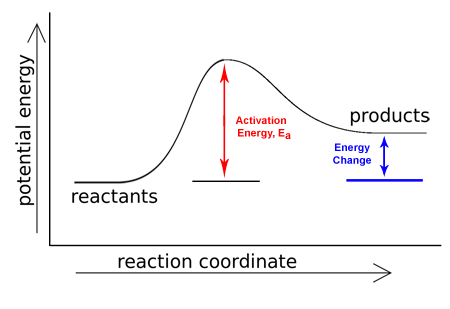
Have you ever wondered why the reaction between vinegar and baking soda seems to leave some reactants leftover? Or, why in some reactions, all of the reactants never get changed into products? If you have watched rust form on iron, you might have wondered why not all the iron rusts at the same time. Or, in the case of dissolving sugar in water, you might have wondered why some sugar disappears, but some of it always lingers at the bottom of the glass.
In chemistry, not all reactions go to completion. Some reactions reach what is called chemical equilibrium, where a reaction stops because a balance is reached between the forward and reverse reactions. Other reactions are limited because one reactant is used up before the others, or, because of the energy barriers, some molecules cannot react.
Understanding how far a reaction progresses is important to chemists in a number of different ways:
Chemists can, and should, safely improve efficiency and eco-friendliness of reactions, while knowing the boundaries of chemical change. It's not about the mix, it's about the reaction.
Extent of reaction is denoted as ξ, and is how chemists measure the amount of reaction that occurs, up to its limit.
This is a measure of the number of moles (amount of particles that reacted).
Formula:
ξ = (change in mole amount of reactant or product) / (stoichiometric coefficient)
Example: For the reaction:
If 1 mole of H₂ is reacted, then ξ = 0.5 mol because of the stoichiometric coefficient of H₂ being 2.
Important to note: ξ is a measure to eliminate guesswork in reactants and products.
Most lab or industrial reactions have one reactant that is fully consumed first. That is the limiting reactant.
The limiting reactant informs how far the reaction can go.
The other reactants in the reaction are termed excess reactants.
To identify it:
Example:
If 2 moles of N₂ react with 5 moles of H₂:
N₂ needs 6 moles of H₂ to fully react.
There are only 5 moles of H₂ → H₂ is limiting.
Identifying the limiting reactant also allows to calculate the predicted yields and how to predicted the products.
The reactions in the puzzles are real. The products are formed imperfectly and some products are lost due to side reactions. This is the reason behind using percentage yield.
Formula:
Percentage Yield = (Actual yield / Theoretical yield) × 100
Theoretical yield is based on the limiting reactant (perfect reaction).
Actual yield is what you measured in the lab.
Example:
Theoretical yield of NH₃ = 10 g.
Actual yield = 8 g.
Percentage yield = 80% → shows us that 20% was lost.
Important: In Industry, a high percentage yield helps to save money and resources.
Percentage yield only tells us how much product we obtain from the reaction. However, it doesn't tell us what the reaction's efficiency is in using the atoms that are available. This is where we need the Atom Economy.
Formula:
Atom Economy = (Molar mass of desired product) / (Sum of molar masses of all reactants) × 100
High atom economy means less waste, therefore, it means a greener chemistry.
Example: Making biodiesel as opposed to burning fossil fuels is an example of better atom economy.
Key idea: A reaction can have a high yield but, if a lot of waste is produced, it has a poor atom economy.
Many reactions do not go to completion because they reach equilibrium.
Forward and reverse reactions reach equilibrium when they occur at the same rate.
Reaction quotient (Q):
Q = [products]ᵖ / [reactants]ʳ
Compare Q with K_eq (equilibrium constant) to see the reaction's direction:
Example:
When the equilibrium is reached, some N₂O₄ and NO₂ exist together, therefore the reaction did not go to completion.
The extent of a reaction is a combination of several factors.
High concentration of reactants can push the reaction to occur.
Increasing the temperature can favor reactions that absorb heat (endothermic reactions).
Increasing the pressure favors the side with fewer gas moles, if there are gas moles present.
Catalysts decrease the time required to reach equilibrium but do not influence the extent of equilibrium.
For Instance, In the Haber process (NH₃ production):
Important concept: In addition to forming products, the reaction's extent informs chemists of the efficiency of the reaction.
The essence of this is that measuring "how far" a chemical change goes is not a matter of guess work. It is a combination of stoichiometry, reaction rates, and equilibrium and is focused to explain and improve how real chemical processes work.