

On this page:
Introduction What Are Models in Chemistry? Evolution of Atomic Theory The Periodic Table and Patterns Among the Elements Bonding and Material Structure From Structure to Materials The States of Matter and the Particle Model Advanced Materials and Technology The Connection Between Models and Properties Testing and Improving Materials Importance of Models in Chemistry Summary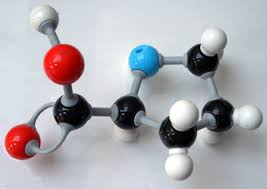
Your plastic water bottle and the steel beams of the bridge you drive over are made from materials composed of atoms and molecules, which are imperceptible to the human eye. Even though these particles are invisible, they determine how solid or flexible a material is, how it conducts heat or electricity, and its chemical reactivity. Chemists develop models to explain and predict the behavior of matter to help them create materials that are safe to use and are designed to operate efficiently.
In Chemistry, models are a vital structure that bridges the fundamental and applied sciences by linking the behavior of particles at the micro level to the properties of materials at the macro level.
Scientific models help explain things we cannot directly observe in real life. In chemistry, the models help us understand things at the atomic and molecular levels, visualize atomic and molecular structures, predict behaviors and reactions, communicate new and complex ideas, and develop new materials with specific and desirable attributes. Models help us communicate in chemistry. Models can be images, representation or computer models. They are not exact copies of reality but provide a framework for understanding reality.
With time and increased experimental evidence, new theories emerged to describe action of matter on a smaller level.
Each atomic model and theory helped to show the relationship and connection between atomic theory and the behavior and properties of matter in a chemical sense.
The periodic table neatly organizes elements in order of increasing atomic number. The table is arranged in such a way that chemical properties of elements repeat every so often, a behavior called periodicity.
The following key patterns emerge from the periodic table:
These patterns and trends help scientists forecast and predict the behavioral patterns of elements. The periodicity of the elements also allows for the selection of elements to create new materials and the ability to engineer new materials with specific desired properties.
Atoms combine through chemical bonds which determine structure and properties of a material. The three main types of bonding are:
The type of bonding dictates strength, hardness, flexibility, conductivity, and melting point of materials.
The arrangement of atoms and bonding give rise to materials with distinct properties:
strong, conductive, malleable, and shiny; used in building, making wires and machinery
Long molecular chains; flexible, lightweight; used in plastics, textiles, and packaging.
hard, heat-resistant, brittle; used in tiles, pottery, and electronics.
Combinations of materials. Optimized properties for aerospace, sports equipment, and automotive applications.
Understanding atomic structures and molecular explains the differences materials: why some are strong, some are flexible, and why some are conductive.
The particle model details the macroscopic states of matter.
Particles are tightly packed and have fixed positions and strong attractive forces and have a fixed shape
Particles are close and mobile and have a fixed volume but flow easily
Particles are far apart and move freely without a fixed shape or volume
The arrangement of particles contributes to matter's density, compressibility, and motion, linking its microscopic structure to its observable properties.
In modern chemistry, models are used to design new materials with improved properties.
Structures of extreme smallness, that have a higher strength-to-weight ratio, and that are used in electronics, medicine, and coatings
Change in response to certain environmental conditions (temp, pressure, light), and are used in sensors, self-healing surfaces, and adaptive devices
Of recyclable and/or biodegradable design to limit adverse environmental impact to support sustainable development
Models allow to predict behavior of materials before actual synthesis, saving time, money, and environmental resources.
The observable properties of materials are explained by chemical models.
By comprehending these microscopic bonds, scientists can design various materials for certain functions, like flexible polymers or metals, durable ceramics, or conductive metals.
To validate models, scientists test materials for:
These tests inform engineering and design decisions, leading to safer and more efficient materials for the industry and everyday life.
In Chemistry, models:
These models help facilitate reasoning, problem-solving and innovation
While modeling, students learn how to predict and test materials and processes, and refine them, in preparation for their contribution to science, technology, and sustainable development.
By bridging the gap between microscopic models and macroscopic materials, Chemistry sets the groundwork for the understanding of the material world. This understanding is what provides the guidance to develop innovative, safe, and sustainable technologies that are critical for modern living.