

Electron transfer reactions

Welcome to MindMentor!

Redox chemistry

DP Chemistry

Electron Transfer Reactions

Look around. Have you ever stopped to wonder about things like why does iron rust? Why does your battery die? How do you get energy from food? All of these have to do with minute particles (electrons) that move from one atom to another. This particular action is what chemists refer to as movement as transfer electron reactions. For many of the chemical processes that happen in our daily lives, whether it is in metabolism, generation of electricity, reactions of electron transfer is the common daily answer.

In Chemistry, the Electron transfer reactions are the most important as they explain all the processes that happen when the atoms gain or lose electrons to create new products and give out energy.
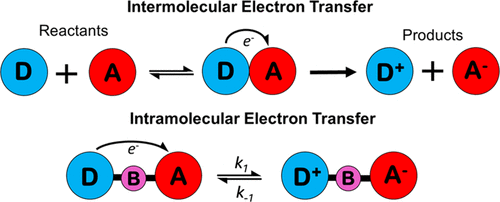
What are Reactions of Electron Transfer?

This is a chemical reaction or process where electron(s) move from one to another substance. Because these two processes happen at the same time, they are also termed as redox processes.

  • Oxidation is the loss of electrons
  • Reduction is the gain of electrons.

When zinc combines with copper sulfate, the following reaction takes place:

Zn (s) + Cu²⁺(aq) → Zn²⁺(aq) + Cu (s)
  • Zinc loses 2 electrons → oxidized
  • Copper ion gains 2 electrons → reduced

Notice: Oxidation and reduction always occur together. One substance cannot be reduced unless another is oxidized.

Oxidation Number

An oxidation number is a number assigned to an atom that shows the charge it would have if the electrons were completely transferred.

For example, elements in the pure state have an oxidation number of 0.

Example: O₂, H₂, Fe (s) → 0

An ion that is monatomic (single atom) has an oxidation number equal to its charge.

Example: Na⁺ → +1, Cl⁻ → −1

Oxygen usually has an oxidation number of -2 and hydrogen has an oxidation number of +1. (There are exceptions)

Oxidation numbers are a deciding factor in determining which atom is oxidized and which is reduced.

Oxidation and Reduction Agents

An oxidizing agent is the substance that causes another to become oxidized. It gains electrons and is reduced in the process.

A reducing agent is the substance that causes another to be reduced. It loses electrons and is oxidized in the process.

H₂ is combined with O₂ to make water, shown by the following reaction:

2H₂ + O₂ → 2H₂O
  • In this reaction, H₂ is oxidized (losing electrons) which means it's the reducing agent.
  • O₂ is reduced (gaining electrons) which means it's the oxidizing agent.

When one substance is oxidized, and one is reduced, we refer to this as a redox reaction.

Half-Equations

With redox reactions, we'll find it useful to write a separate half equation for each side.

Oxidation Half-Equation

This will show the loss of electrons:

Zn → Zn²⁺ + 2e⁻

Reduction Half-Equation

This will show the gain of electrons:

Cu²⁺ + 2e⁻ → Cu

These half-partial equations will show which direction the electrons are moving, and when put together, serve to show the overall redox reaction.

Balancing Redox Reactions

Regular equations will show how to balance redox reactions, and the first difference you'll find is that you have to balance the electrons as you balance the various.

How to Do It

  1. Determine the oxidation states of each element
  2. Identify which element is oxidized, and which one is reduced.
  3. Write 2 separate half equations
  4. Balance everything else as you do with general equations (except for H and O)
  5. In a basic solution or an acidic solution, you will find H₂O to balance the O side, and for the H side.
  6. Balance both parts with electrons
  7. Once you write these half equations, you will need to eliminate the electrons that have been balanced.

Example (acidic solution):

MnO₄⁻ + Fe²⁺ → Mn²⁺ + Fe³⁺
  • Oxidation: Fe²⁺ → Fe³⁺ + e⁻
  • Reduction: MnO₄⁻ + 8H⁺ + 5e⁻ → Mn²⁺ + 4H₂O
  • Multiply Fe equation by 5 to balance electrons → combine → final balanced equation

Everyday Examples

Reactions involving the loss of electrons happen everywhere:

Rust Formation: Iron (Fe) loses electrons, gets oxidized; oxygen gains electrons (reduced).
Batteries: Energy transformed from chemical to electrical through electron transfer.
Photosynthesis & respiration: Electrons move for energy storage.
Disinfectants (bleach): Chlorine attacks bacteria via redox.

Redox reactions explain the fundamentals of corrosion, energy storage, and industrial chemicals.

Electrochemical Cells

Redox reactions used to generate power produce electrochemical cells.

1. Galvanic (Voltaic) Cells

  • Spontaneous reactions generate electrical energy
  • Example: Daniell cell – Zn/Cu system
  • At the Anode, zinc is oxidized; electrons flow through external circuit to cathode, where Cu²⁺ is reduced.

2. Electrolytic Cells

  • Non-spontaneous reactions driven by electrical energy
  • Example: Electrolysis of water produces hydrogen gas and oxygen gas.

Key Terminology:

  • Anode: electrode where oxidation occurs
  • Cathode: electrode where reduction occurs
  • Electrolyte: a substance that conducts electricity by ion movement
  • Electron flow: anode to cathode in external circuit

Standard Electrode Potentials

Each half reaction has a Standard Electrode Potential (E°) which reflects the tendency of a species to be reduced.

  • As E° becomes more positive → stronger oxidizing agent.
  • As E° becomes more negative → stronger reducing agent.

Example

  • Cu²⁺ + 2e⁻ → Cu    E° = +0.34 V
  • Zn²⁺ + 2e⁻ → Zn    E° = -0.76 V

Therefore, Cu²⁺ is reduced (strong oxidizing agent). Zn is oxidized (strong reducing agent).

E°cell calculation

E°cell = E°cathode − E°anode

This predicts whether the reaction will occur spontaneously.

Summary

  • Redox reactions explain electron movement and energy transfer.
  • Oxidation: loss of electrons; Reduction: gain of electrons.
  • Oxidizing agent: causes oxidation and gets reduced.
  • Reducing agent: causes reduction and gets oxidized.
  • Half-equations: show separate oxidation and reduction.
  • Balancing redox: must balance electrons and atoms.
  • Everyday examples: rusting, batteries, metabolism, bleach.
  • Electrochemical cells: convert chemical energy ↔ electricity.
  • Electrode potentials: predict reaction direction and spontaneity.

Why does electron transfer matter?

  • Corrosion, energy generation, industrial chemical reactions
  • Battery, fuel cell, and electrolysis design
  • Chemistry, biology, and technology integration

Understanding electron transfer reactions is fundamental to chemistry and opens doors to countless practical applications.