

On this page:
1.1 Introduction to Operations Management The Transformation Process 1.2 Operations Methods 1.3 Lean Production and Quality Management 1.4 Location 1.5 Break-even Analysis 1.6 Production Planning 1.7 Crisis Management and Contingency Planning 1.8 Research and Development (R&D) 1.9 Management Information Systems (MIS) Case Study Activity SummaryThink about the phone you use, the food you eat in restaurants, or the clothes you wear. Before these products reach customers, they go through a complex process of planning, designing, producing, and delivering. The part of a business responsible for creating goods and services is called operations management.
Operations management is one of the core functions of every business. It focuses on how organizations transform resources such as labor, materials, information, and technology into finished goods and services that satisfy customer needs.
In simple words: Operations management = the process of planning, organizing, and controlling production activities.
For example:
In each case, operations management ensures the process runs efficiently, with high quality and minimal waste.
Operations managers must make decisions about production methods, capacity planning, quality control, supply chains, inventory management, location of facilities, and technology used in production. These decisions directly affect cost, efficiency, and customer satisfaction.
Businesses that manage operations effectively can produce better quality goods, reduce costs, deliver products faster, and compete successfully in global markets. Operations management is therefore a strategic function that strongly influences the success of a business.
Every operation follows a basic structure called the input–process–output model.
Inputs are the resources used in production. These include raw materials, labor (employees), capital (machines and equipment), information, and technology.
The process is the activity that converts inputs into outputs. This could involve manufacturing, assembling, cooking, transporting, or even providing a service.
Outputs are the final goods or services produced by the business.
Example: A pizza restaurant — Inputs: dough, cheese, vegetables, workers, ovens. Process: preparing and baking pizza. Output: pizza served to customers. Understanding this transformation process helps managers improve efficiency and reduce waste.
Different businesses use different methods of production depending on the type of product, demand, and level of customization required. These production methods are called operations methods. The three main types are job production, batch production, and flow (mass) production.
Producing one unique product at a time according to customer requirements. Each product is customized and often requires skilled labor. Examples: tailor-made clothing, custom furniture, wedding cakes, architectural projects.
Characteristics: High customization, skilled workers, small-scale production, higher cost per unit, longer production time.
Advantages: Meets specific customer needs, high-quality craftsmanship, flexibility in design.
Disadvantages: Expensive production costs, time-consuming, difficult to automate.
Producing groups of identical products together. After completing one batch, the production process switches to another batch. Examples: bakeries producing batches of bread, clothing factories producing seasonal collections, pharmaceutical companies producing medicine batches.
Characteristics: Products made in groups, equipment may need adjustment between batches, medium level of customization.
Advantages: More efficient than job production, allows variety of products, lower cost per unit compared to job production.
Disadvantages: Production delays during changeovers, storage costs for batches, planning complexity.
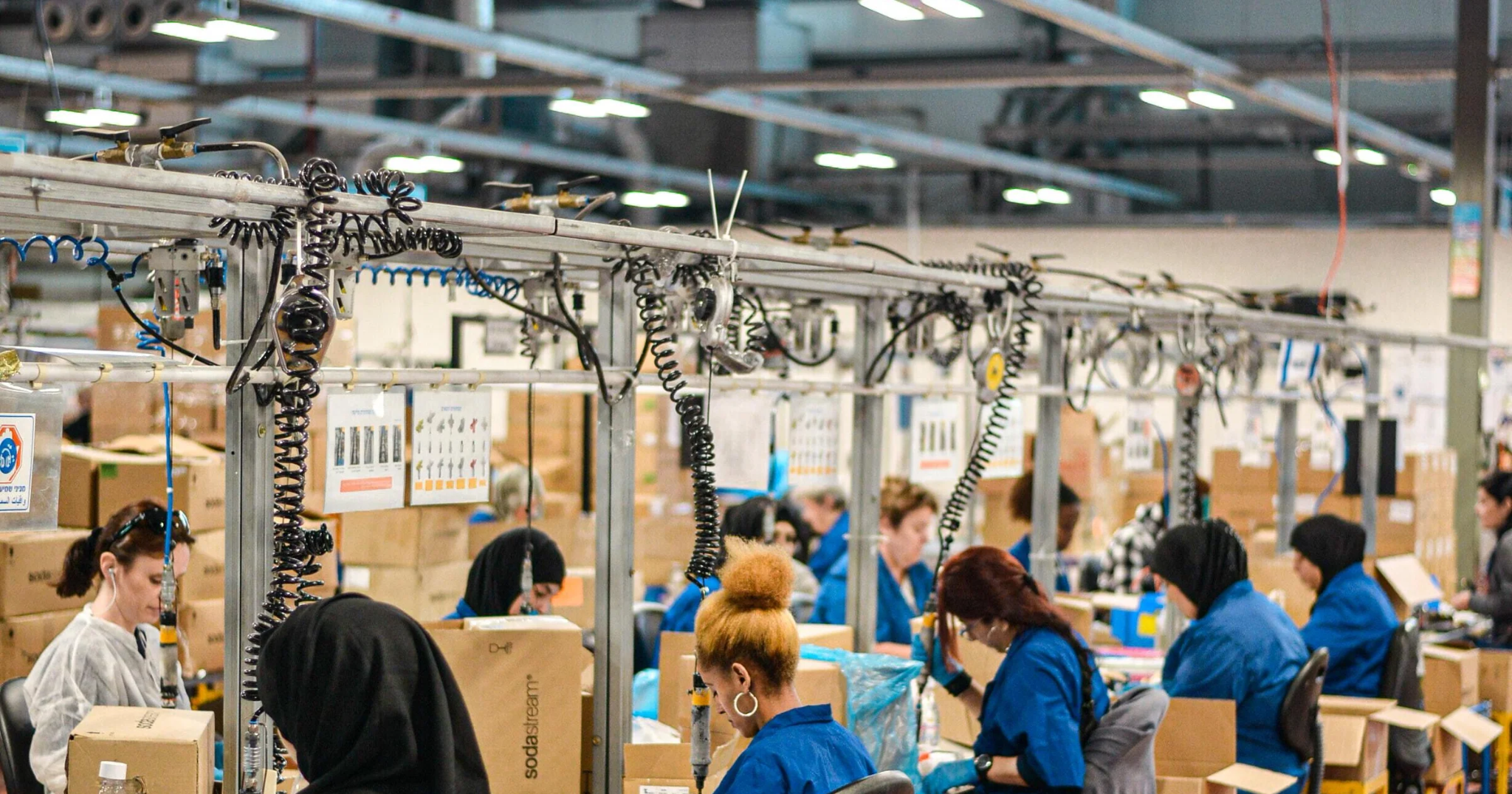
Producing large quantities of standardized products continuously. Products move along an assembly line where each worker performs a specific task. Examples: car manufacturing, electronics production, bottled beverages, fast food chains.
Characteristics: Continuous production process, high automation, standardized products, high capital investment.
Advantages: Very low cost per unit, high efficiency, large-scale output.
Disadvantages: Limited product variety, expensive machinery, difficult to change design.
Operations managers must choose the most suitable method depending on product type, demand level, and cost considerations.
Modern businesses aim to produce goods efficiently while maintaining high quality. Two important concepts that help achieve this are lean production and quality management. Lean production focuses on reducing waste, while quality management ensures products meet customer expectations.
A method of production that aims to eliminate waste and improve efficiency. The concept originated in Japanese manufacturing, especially in automobile production. Waste can include excess inventory, waiting time, overproduction, defects, unnecessary movement, and transportation delays.
Just-in-Time (JIT): Materials and components arrive exactly when needed in the production process. Reduces inventory costs and storage space. Advantages: lower storage costs, reduced waste, improved efficiency. Disadvantages: high dependency on suppliers, production stops if deliveries are delayed.
Kaizen (Continuous Improvement): Employees at all levels suggest small improvements in processes. Over time, these lead to major efficiency gains.
Flexible Workforce: Employees trained in multiple skills, allowing workers to perform different tasks when needed. Benefits include greater flexibility, better problem-solving, reduced production delays.
Ensuring products meet customer expectations and maintain consistent standards.
Quality Control: Inspecting products after production to identify defects. Defective products are removed before reaching customers. However, quality control identifies problems after they occur, which can be costly.
Quality Assurance: Preventing defects during production. Processes are designed to ensure errors do not occur. More efficient because it reduces waste and rework.
Total Quality Management (TQM): A business philosophy where all employees are responsible for maintaining quality. Key principles include customer focus, continuous improvement, employee involvement, and strong leadership.
Choosing the right location for a business operation is a critical decision. The location of factories, warehouses, or retail stores can significantly affect costs, efficiency, and profitability.
Break-even analysis helps businesses determine the level of sales required to cover all costs. It identifies the point where total revenue equals total cost, meaning the business is making no profit and no loss — the break-even point.
Fixed Costs: Expenses that do not change with production level (rent, salaries, insurance, machinery depreciation). Even if production stops, these costs still exist.
Variable Costs: Costs that change depending on how much is produced (raw materials, packaging, direct labor wages, electricity). If production increases, variable costs also increase.
Revenue = Selling Price × Quantity Sold
Break-even Formula: Break-even quantity = Fixed Costs ÷ (Selling Price – Variable Cost per Unit)
Contribution per unit = Selling price – Variable cost per unit — how much each unit sold contributes toward covering fixed costs and generating profit.
Importance: Plan production levels, set appropriate prices, understand cost structures, evaluate business risks, make investment decisions.
Limitations: Assumes costs remain constant; assumes all goods produced are sold; does not consider market changes; simplifies real business situations.
Production planning refers to the process of organizing resources, schedules, and workflows to ensure efficient production. It ensures goods are produced at the right time, in the right quantity, and at the lowest possible cost.
Maximum output a business can produce in a given period. Strategies: Lead strategy (increase capacity before demand rises), Lag strategy (increase capacity after demand increases), Match strategy (capacity increases gradually as demand grows).
Managing stock of raw materials, work-in-progress goods, and finished products. Too much inventory leads to higher storage costs; too little inventory may stop production. JIT helps minimize inventory levels.
Determines when tasks should be completed in the production process. Proper scheduling improves efficiency and ensures deadlines are met.
Businesses operate in uncertain environments. Unexpected events such as natural disasters, economic crises, technological failures, or supply chain disruptions can affect operations.
Strategies and actions taken by a business to deal with unexpected events that threaten operations, reputation, or financial stability. Examples: product failures, cyberattacks, supply chain disruptions, workplace accidents, public relations scandals.
Steps: Risk Identification → Crisis Planning → Communication → Recovery. Organizations that prepare for crises can reduce damage and recover faster.
Activity: Crisis Management Simulation — A smartphone company faces a crisis because one of its batteries explodes during use. In groups, design a crisis management plan including immediate response, communication with customers, product recall strategy, and long-term recovery actions.
Preparing alternative plans in case something goes wrong. It answers: "What will we do if our main plan fails?" Examples: backup suppliers, emergency funds, data backup systems, alternative transportation routes.
Contingency planning improves organizational resilience and helps businesses continue operating even during disruptions.
Innovation is essential for business growth. Research and Development (R&D) refers to activities that focus on creating new products, improving existing products, and developing new production processes.
Focuses on gaining new scientific knowledge without immediate commercial application. Aims to expand understanding and may lead to future technological breakthroughs.
Focuses on solving practical problems and developing specific products.
Importance of R&D: Encourages innovation, improves product quality, creates competitive advantage, helps businesses adapt to technological changes, opens new market opportunities. However, R&D involves risks because research projects may fail or take years to generate profits.
A Management Information System (MIS) is a system that collects, processes, stores, and distributes information needed for decision-making. MIS integrates technology, data, processes, and people to provide useful business information.
Imagine a company called EcoBike, which produces environmentally friendly bicycles. The company recently experienced rapid growth in demand due to increasing interest in sustainable transportation. EcoBike must now make several important operational decisions: expanding production capacity, implementing lean production techniques, selecting a new factory location, and increasing investment in research and development.
Activity Questions
Discuss these questions with classmates and analyze how operational decisions affect the long-term success of a business.
Operations management is a crucial function that focuses on transforming resources into goods and services efficiently.
Throughout this lesson, we explored several key concepts, including:
Understanding these concepts allows businesses to operate efficiently, respond to challenges, and deliver value to customers. Operations management is not just about producing goods; it is about creating systems that deliver quality, efficiency, and innovation in a competitive business environment.