

Look around you. Think about the clothes you wear, the phone you use, the food you buy, or the apps you download. Why do you choose one brand over another? Why do certain advertisements attract your attention? Why are some products successful while others disappear quickly from the market?
These questions are answered through marketing.
Marketing is one of the most important functions of a business. It focuses on understanding customer needs and creating products or services that satisfy those needs better than competitors.
In simple words, marketing is the process of identifying customer needs, creating value, and delivering products or services that satisfy those needs profitably.
Businesses cannot survive if they produce goods that customers do not want. Marketing helps companies understand their target customers and design products that match their preferences.
Marketing connects the business with its customers. It helps organizations understand what customers want, how much they are willing to pay, and how they prefer to purchase products.
Effective marketing helps businesses to:
For example, if a company launches a new smartphone, marketing helps determine the features customers want, the price they are willing to pay, and the best way to advertise the phone. Without marketing, businesses would simply produce products without knowing whether people actually want them.
Focuses on producing large quantities of goods at low cost. Assumes customers will buy products that are widely available and affordable. Common during early industrial periods when demand exceeded supply.
Focuses on improving product quality and innovation. Believes customers will prefer high-quality products with advanced features. Focusing only on product improvement without understanding customer needs can lead to failure.
Focuses heavily on advertising and selling. Goal is to persuade customers to buy existing products. Common in industries where competition is intense.
Places customer needs at the center of all decisions. Conducts market research and adapts products according to customer preferences. Most successful modern businesses follow this approach because it builds long-term customer relationships.
Marketing activities do not happen randomly. Businesses must carefully plan their marketing strategies to achieve their goals. This structured approach is known as marketing planning.
Marketing planning involves analyzing the market, setting marketing objectives, and developing strategies to achieve those objectives.
Marketing planning helps businesses:
Without a clear marketing plan, businesses may waste resources on ineffective strategies.
Steps in Marketing Planning
Businesses must estimate how much they expect to sell in the future. This estimation is called sales forecasting.
Sales forecasting is the process of predicting future sales based on past data, market trends, and economic conditions.
Accurate sales forecasts are extremely important because they influence production planning, staffing decisions, and financial planning.
Sales forecasts help businesses to:
If a company overestimates demand, it may produce too many goods and face unsold inventory. If it underestimates demand, it may lose potential customers due to product shortages. Therefore, accurate forecasting helps maintain balance between supply and demand.
Methods of Sales Forecasting
Although forecasting methods improve accuracy, predictions are never completely certain because market conditions can change unexpectedly.
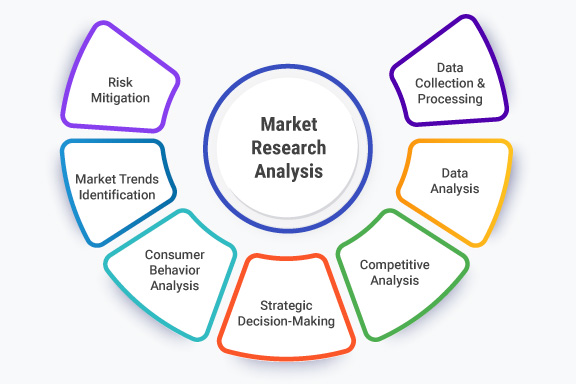
Marketing decisions should be based on reliable information rather than assumptions. The process of collecting and analyzing information about customers, competitors, and market trends is known as market research.
Market research helps businesses understand customer behavior and make informed decisions.
Market research helps businesses:
For example, before launching a new beverage, a company may conduct research to determine customer taste preferences and preferred packaging.
Collecting original data directly from customers. Methods include surveys and questionnaires, interviews, focus groups, and observation. Provides specific information tailored to the business's needs.
Using existing information collected by other organizations. Sources include government reports, market research publications, industry statistics, and online databases. Faster and cheaper but may not always provide precise information.
Focuses on opinions, attitudes, and motivations. Explores why customers behave in certain ways. Methods include focus groups and interviews.
Focuses on numerical data such as sales figures or survey results. Provides measurable information that can be analyzed statistically.
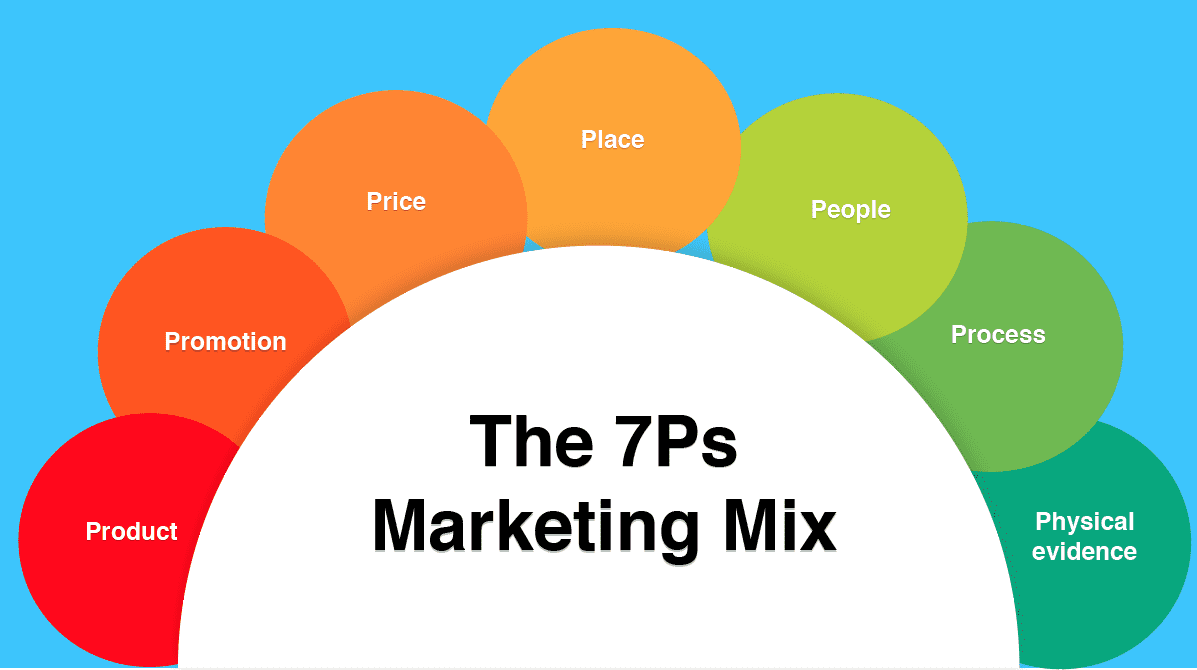
To implement marketing strategies successfully, businesses use a framework known as the marketing mix. The marketing mix refers to the set of marketing tools a business uses to satisfy customers and achieve marketing objectives.
Traditionally, marketing focused on four elements known as the 4 Ps: Product, Price, Place, Promotion. In service industries, three additional elements are included, creating the 7 Ps of the marketing mix.
The goods or services offered to satisfy customer needs. Decisions include design and features, quality and durability, branding and packaging, and product variety.
The amount customers must pay. Decisions depend on production costs, competitor prices, customer demand, and business objectives. Strategies include premium pricing, competitive pricing, and penetration pricing.
How products are distributed and made available to customers. Decisions include retail stores, online platforms, wholesalers, and distributors.
Communication activities used to inform and persuade customers. Tools include advertising, sales promotions, public relations, personal selling, and digital marketing.
Employees who interact with customers. In service industries, employee behavior and professionalism strongly influence customer satisfaction.
Procedures and systems used to deliver products or services. Efficient processes improve service quality and customer experience.
Tangible elements that influence customer perception — store design, packaging, website design, staff uniforms. These help create a positive brand image and increase customer trust.
The seven Ps together create a balanced marketing strategy that satisfies customer expectations.
As businesses grow and become more successful in their domestic markets, many begin to explore opportunities beyond national borders. Selling products in other countries is known as international marketing.
International marketing involves planning and implementing marketing strategies in more than one country. It requires businesses to understand global markets, cultural differences, international competition, and different economic conditions.
Challenges of International Marketing
Global Standardization: Using the same marketing strategy in multiple countries. Products, advertising messages, and branding remain largely unchanged. Reduces costs and maintains consistent global brand image.
Localization (Adaptation): Adapting marketing strategies to suit local cultures and preferences. Product features, packaging, pricing, and advertising may change depending on the target market. Improves customer acceptance but may increase marketing costs.
Many global brands combine both strategies by maintaining consistent brand identity while adapting certain elements to local markets.
Case Study: FreshSip Beverage Company — FreshSip produces natural fruit drinks. After strong domestic sales, the company expands internationally. Market research reveals regional taste preferences (sweeter drinks vs natural flavours). FreshSip adjusts its marketing mix: different packaging sizes, varied pricing strategies, promotional campaigns highlighting health benefits, and distribution partnerships with local retailers. Challenges include import regulations and currency fluctuations, but the company gradually builds brand recognition internationally.
In recent years, digital technologies have transformed marketing practices around the world. Businesses now use online platforms such as websites, social media, and e-commerce stores to reach global audiences.
Digital marketing offers several advantages:
Companies analyze online customer behavior using data analytics to improve marketing strategies. For example, businesses can track website visits, customer preferences, and purchase patterns to design more effective campaigns.
Digital marketing, therefore, plays a crucial role in both domestic and international marketing strategies.
Marketing is one of the most dynamic and essential functions within any organization. It connects businesses with customers and ensures that products or services provide real value in the marketplace.
Throughout this lesson, several key marketing concepts have been explored:
By applying these marketing principles, organizations can better understand their customers, compete successfully in dynamic markets, and achieve long-term business success.