

Walk into any successful organization, and you will see technology, buildings, machines, and products. However, none of these resources would function without people. Employees design products, operate machines, serve customers, manage finances, and make strategic decisions. This is why many business experts say that people are the most valuable asset of any organization.
Managing these people effectively is the role of Human Resource Management (HRM).
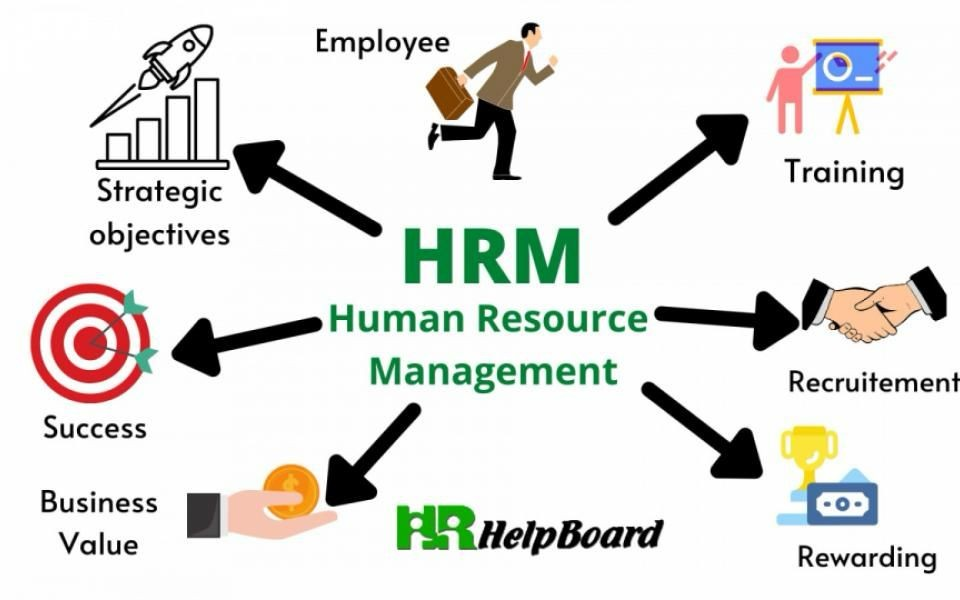
Human Resource Management refers to the process of recruiting, selecting, training, developing, and managing employees so that organizational goals can be achieved efficiently and effectively. HRM focuses on ensuring that the organization has the right number of employees, with the right skills, working in the right roles.
In the past, HR departments mainly handled administrative tasks such as payroll and hiring. Today, HRM has become a strategic function that contributes directly to the success of a business. HR managers work closely with senior leadership to develop policies that improve productivity, motivation, and employee satisfaction.
For example, imagine a large international airline. Thousands of employees work as pilots, engineers, flight attendants, customer service staff, and managers. If these employees are not properly trained, scheduled, or motivated, the airline could face serious problems such as delayed flights, safety issues, and unhappy customers.
Therefore, HRM ensures that employees are recruited carefully, trained properly, and supported throughout their careers.
HRM has several important objectives that support both the organization and its employees.
Functions of HRM
Short Activity: Think about a company that you know well, such as a supermarket, bank, or technology company. What types of employees work there? What HR activities might be necessary to manage these employees effectively? Reflecting on real businesses helps us understand the importance of HRM in everyday operations.
As businesses grow, managing all tasks becomes increasingly complex. A single individual cannot handle every responsibility. Therefore, organizations divide work among employees and establish clear reporting relationships. This arrangement is known as the organizational structure.
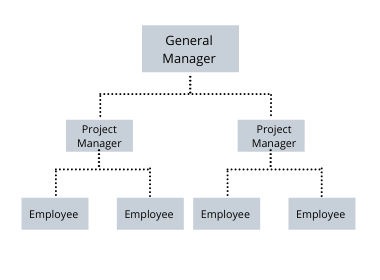
An organizational structure defines how tasks are divided, who is responsible for each task, and how employees report to one another.
Organizations often represent their structure using an organizational chart, which visually displays the hierarchy and relationships between different roles.
Traditional structure with multiple layers of management. Authority flows from senior executives to lower-level employees. Advantages include clear authority and defined roles. Disadvantages: communication can be slow, and decision-making may take longer.
Employees are grouped based on their specialized functions, such as marketing, finance, operations, or human resources. Allows employees to develop expertise in specific areas but may create communication barriers between departments.
Employees report to more than one manager, usually a functional manager and a project manager. Encourages collaboration across departments but may create confusion regarding authority.
Fewer levels of management. Employees have greater independence and decision-making power. Encourages innovation and faster communication, but managers may find it difficult to supervise many employees.
Activity: Imagine you are starting a small bakery business. Create a simple organizational structure, including roles such as Owner, Baker, Sales staff, Marketing manager. How would these roles report to each other?
In business studies, leadership and management are closely related concepts, but they are not identical.
Management involves planning, organizing, and controlling resources to achieve organizational objectives.
Leadership focuses on inspiring and guiding people toward achieving those objectives.
Managers ensure that tasks are completed correctly and efficiently. Leaders motivate employees and encourage them to perform at their best.
Differences Between Leadership and Management
Managers typically focus on maintaining stability and ensuring that procedures are followed. Leaders focus on innovation, inspiration, and long-term vision. For example, a manager may ensure that employees meet daily production targets, while a leader may inspire employees to develop new ideas that improve productivity. In practice, successful business professionals often combine both leadership and management skills.
Leaders make decisions independently and expect employees to follow instructions. Useful in situations that require quick decision-making. However, employees may feel less involved.
Democratic leaders encourage employee participation in decision-making. Often increases motivation and creativity, as employees feel valued and respected.
Allows employees significant freedom in decision-making. Effective when employees are highly skilled and self-motivated. May lead to confusion if employees require guidance.
Some leaders adapt their style depending on the situation. For example, they may use an autocratic style during a crisis but adopt a democratic approach during team discussions.
Reflection Activity: Think about a leader you admire, such as a teacher, coach, or community leader. What leadership style do they use? How does their leadership influence the people around them?
Motivation is one of the most important factors affecting employee performance.
Motivation refers to the internal and external forces that influence people to behave in certain ways and achieve specific goals.
When employees are motivated, they work harder, show creativity, and contribute positively to the organization.
Demotivation occurs when employees feel dissatisfied, unappreciated, or discouraged at work.
Comes from within an individual. Employees feel motivated because they enjoy their work or find it meaningful. For example, an artist may enjoy designing creative products because it provides personal satisfaction.
Comes from external rewards such as salary increases, bonuses, or promotions. Many organizations use financial incentives to motivate employees.
Maslow's Hierarchy of Needs: Maslow proposed that human needs are arranged in a hierarchy: 1. Physiological needs (food, water, shelter); 2. Safety needs (security, stable employment); 3. Social needs (friendship, belonging); 4. Esteem needs (recognition, respect); 5. Self-actualization (personal growth). Individuals focus on higher-level needs only after lower-level needs are satisfied.
Herzberg's Two Factor Theory: Hygiene factors (salary, working conditions, company policies) lead to dissatisfaction if poor. Motivators (achievement, recognition, opportunities for growth) increase job satisfaction.
McGregor's Theory X and Theory Y: Theory X assumes employees dislike work and require strict supervision. Theory Y assumes employees enjoy work and are capable of self-direction. Managers who adopt Theory Y tend to create more supportive and empowering work environments.
Causes of Demotivation
Managers must identify these factors and address them effectively.
Short Activity: Imagine you work for a company where employees receive no feedback or recognition. How might this affect your motivation? What strategies could managers implement to improve employee motivation?
Every organization develops a unique environment that influences how employees behave and interact. This environment is known as organizational culture.
Organizational culture refers to the shared values, beliefs, traditions, and behaviors that shape how work is performed within a company. Culture influences employee attitudes, decision-making, and workplace relationships.
Decision-making authority is concentrated among a small group of leaders.
Employees have clearly defined roles and responsibilities within a structured hierarchy.
Teams are formed to complete specific projects or solve particular problems.
The organization exists primarily to support the needs of its members.
Importance of Organizational Culture
A strong positive culture can provide several benefits: increased employee commitment, improved teamwork, greater innovation, higher productivity, and stronger organizational reputation. However, a negative culture may lead to low morale, conflicts, and high employee turnover.
Reflection Activity: Consider two workplaces: Workplace A encourages teamwork, creativity, and open communication. Workplace B has strict rules, limited communication, and little employee recognition. Which workplace would you prefer to work in? Why?
Communication is the process of transmitting information, ideas, and feedback between individuals or groups.
Effective communication ensures that employees understand their roles, collaborate with colleagues, and work toward common goals. Poor communication can lead to misunderstandings, errors, and reduced productivity.
Occurs within the organization between managers and employees. Examples include meetings, emails, reports, and internal messaging systems.
Occurs between the organization and outside stakeholders such as customers, suppliers, investors, and government agencies.
Communication Channels & Barriers
Organizations use various communication channels such as email, telephone, meetings, video conferences, reports, and instant messaging platforms. Selecting the appropriate communication channel is important for effective information sharing.
Barriers to Communication: Language differences, cultural misunderstandings, poor listening skills, information overload, lack of clarity. Managers must work to reduce these barriers by encouraging open communication and providing clear instructions.
Activity: Think about a group project you recently completed. What communication methods helped your team succeed? What challenges did you face?
Industrial relations refer to the relationship between employees, employers, and organizations that represent workers, such as trade unions. Positive industrial relations help maintain workplace harmony and productivity.
A trade union is an organization that represents employees and protects their rights. Trade unions negotiate with employers to improve working conditions, wages, and job security.
Collective bargaining is the negotiation process between employers and trade unions to determine employment conditions. Agreements reached during collective bargaining may include salary increases, working hours, workplace safety standards, and employee benefits.
Conflicts may arise between employees and employers due to disagreements about working conditions or compensation.
Managers must maintain fair policies, encourage communication, and respect employee rights.
A large retail company noticed that employee turnover had increased significantly over the past year. Many employees were leaving their jobs because they felt underappreciated and overworked.
Management decided to conduct employee surveys to identify the causes of dissatisfaction. The results showed that employees wanted better recognition, improved work-life balance, and clearer communication with managers.
In response, the company introduced several initiatives. These included flexible working hours, employee recognition programs, and regular team meetings where employees could share feedback.
Within six months, employee satisfaction increased, and productivity improved.
Discussion Questions
Human Resource Management plays a critical role in the success of modern organizations. By carefully recruiting employees, developing their skills, motivating them effectively, and maintaining positive workplace relationships, businesses can achieve long-term success.
Organizations that invest in their employees often experience higher productivity, stronger innovation, and better customer satisfaction. For this reason, HRM is considered one of the most important functions in business management.