

On this page:
Introduction What Are Mutations? Types of Mutations Causes of Mutations Effects of Mutations Detecting Mutations Gene Editing CRISPR-Cas9 Base Editing (BE) Prime Editing (PE) Gene Therapy Ethical Considerations SummaryDNA is the blueprint of all the living things on this planet, including us, and it is passed on from one generation to another during reproduction. DNA is responsible for defining the characteristics of living things and controlling the functioning of the cells.
Mutations, or changes in the DNA sequence of a gene, can occur in a single nucleotide of a gene or in a large section of a chromosome. A mutation can be harmless or harmful. There are mutations that can benefit the organism.
Biologists study mutations to understand biological processes. Knowledge of mutations assists in the understanding of diseases, the improvement of crops, and the discovery of new therapies.
Biologists understand changes in the DNA sequence of a gene to be mutations. There are internal and external factors that can cause mutations in an organism. These changes can be permanent, and if the mutation occurs in the gametes, the mutation can be passed to the next generation.
Mutations can occur:
There are many ways to categorize mutations, but here are some common examples.
A point mutation involves a change in a single DNA base pair. There are three main types of point mutations:
These mutations occur when one or more nucleotides are added or lost in the DNA sequence. This causes the entire reading frame of the gene to shift.
Example: If one nucleotide is deleted, the amino acids that come after this deletion are changed.
These types of mutations are typically the most harmful, as they can alter the function of the entire protein.
These types of mutations impact larger structures in the chromosomes, often including many genes:
There are a number of both internal and external reasons as to why a mutation may occur.
The effects of a mutation can be classified into three categories:
Detecting the presence of a mutation can be done using several modern techniques in molecular biology:
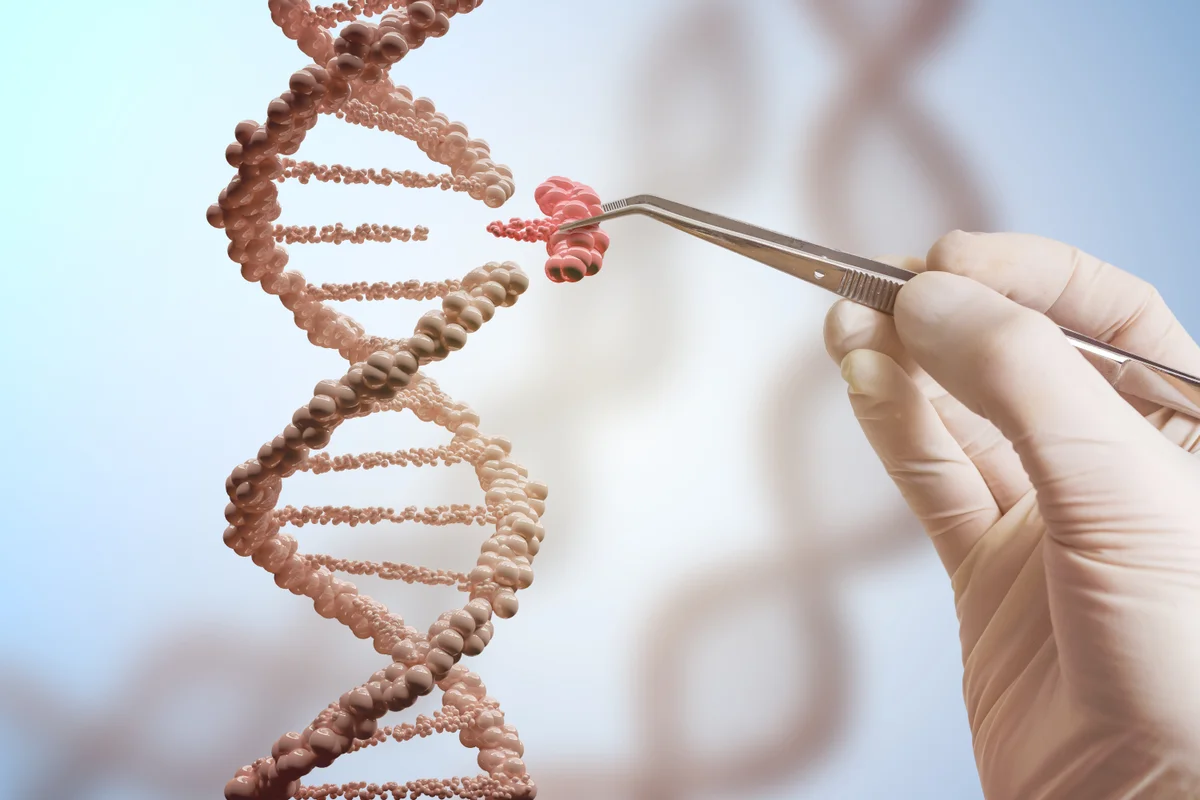
Gene editing is the modern and more precise technique of altering DNA sequences to either study the DNA or to enhance certain DNA traits. This gene editing technique is a lot more precise and faster than traditional techniques like selective breeding.
CRISPR-Cas9 is a game-changing gene-editing technique in that it allows the cutting of pre-determined locations on DNA so that certain DNA sequences can be added, removed, or changed. This technique has its origins in the bacterial defense system.
CRISPR is made up of several parts:
Repairing the break in DNA is done via the cell's DNA repair mechanisms. Two different cellular DNA repair mechanisms will repair the breaks:
CRISPR can be used/ is used to:
Base Editing (BE) is a more refined version of the gene editing technologies, and in fact, Base Editing is more precise than CRISPR. Instead of cutting DNA, it converts one nucleotide base into another.
Example: To change a 'C' to a 'T' (without breaking the DNA strand) is possible with base editing. This improves precision in editing and reduces the unwanted modifications that are often seen with CRISPR. It is useful for point mutations (changes in DNA sequence that correspond to a single nucleotide base pair) that cause ill health/disease, and for correcting genetic disorders.
Prime Editing (PE) is a newer and more advanced gene editing technology that is currently available. It is used to insert or delete or both, change the sequence of DNA, and do so without causing double-strand breaks.
This is done using a specific type of guide RNA known as the prime editing guide RNA (pegRNA) to specify which part of DNA is to be changed.
Incredible as it may be, the Top End Guide (TEG) RNA and the Reverse Transcriptase (RT) enzyme are used to write a new sequence of DNA.
In comparison to CRISPR, this technology is more precise and less damaging than CRISPR and is therefore better to use for gene therapy.
Gene therapy is a technique that treats genetic diseases by putting healthy genes into a patient's cells.
Gene therapy can be somatic, meaning it's a body cell change that will not be passed down, or germline, which alters egg/sperm genes and can be passed down.
Some of the methods gene therapy can be done by include:
Example: The addition of a functional gene into a patient's immune cells in the treatment of severe combined immunodeficiency (SCID).
Gene editing brings a lot of ethical questions, including:
Scientists have to be very cautious in following the restrictions, particularly where the edits could be passed down.
The rapid nature of DNA can be seen through the lens of mutation and gene editing. While mutations can be seen as a driving force of evolution, gene editing can be seen as humanity's first attempt to improve or alter DNA intentionally. Both concepts are foundational to understanding life at a molecular level. Furthermore, both concepts serve as a basis for the further advancement of medicine, agriculture, and biotechnology.