

On this page:
Introduction What is Integration? Homeostasis - Integration's Building Block The Nervous System - Quick control The Endocrine System - Control of Sustained Actions Nervous System and Endocrine System Interaction The Circulatory System Circulatory and Respiratory System Digestive and Circulatory System The Excretory System and Water Balance The Immune System Muscle and Skeletal System Integration Feedback Systems Integration When Exercising Integration and Illness Important Ideas Conclusion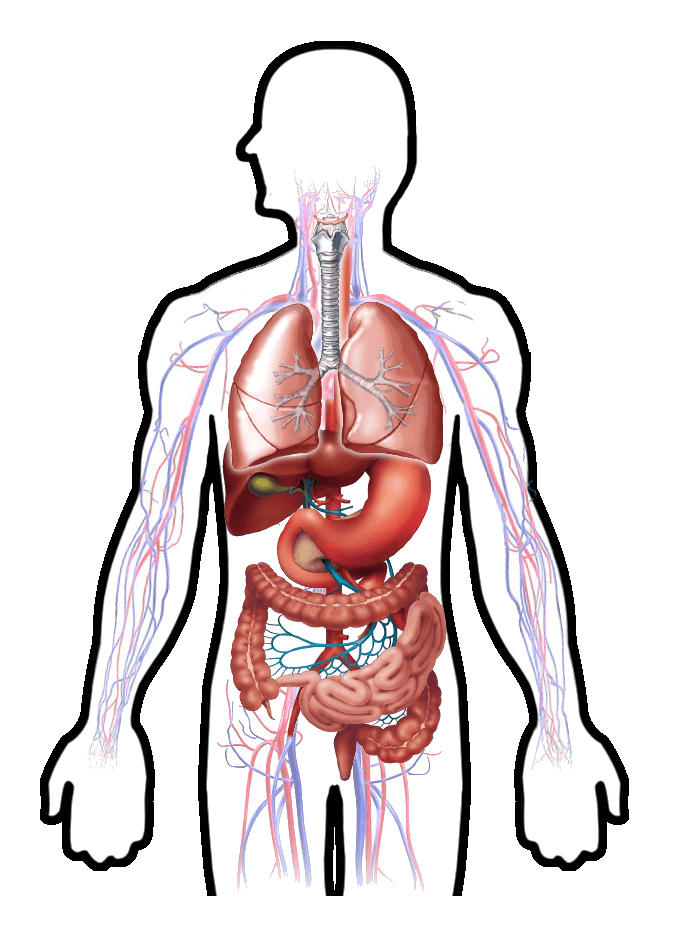
You can breathe, think, move your hands, digest food, and even fight infections all at the same time.
Have you ever asked yourself how your body can conduct all of these functions at the same time, and never get confused?
The answer is your body system's ability to integrate.
When you Integrate system of body, you describe body systems in terms of individual organs and how organs, and systems, communicate to control your blood pressure, body temperature, and even the concentration of body fluids at any given time. This ability of your body to control and stabilize the internal environment is known as homeostasis, without homeostasis, the ability to live would not be possible.
Integration is when all your body organs systems work together collaboratively to ensure the body functions as one complete unit.
You might be shocked to realize that in your body there are one hundred billion brain cells (neurons), One blood cells (in milliliters of blood), One germ cells in your body, One milligrams of blood in your body, and 2.2 bucks in your body.
Take running as an example
You run, and your muscles need more oxygen. Therefore your lungs will realize that and will increase your breathing rate. It is the same with your heart – it will start to pump faster and blood vessels will widen. Your body will release some hormones to adjust the energy release.
All those changes happen simultaneously in seconds.
That's Integration!
Homeostasis is how an organism adjusts its internal environment, so all systems can function effectively, regardless of the environment's changes.
For example, the following conditions are constantly monitored and adjusted through homeostasis:
Homeostasis is controlled by the nervous and endocrine systems of the body.
The nervous and endocrine systems of the body work together to accomplish the control of all the systems of the body.
The nervous system is able control the body on the order of changes that may occur, rather than control on the level of consequences, of the changes.
This control is done through the use of electrical impulses that are generated and propagated by a nerve cell or neuron. In the brain and spinal cord lie the central control.
Integration or splitting the systems is largely on the control of the hypothalamus, which is the main system responsible for integration.
The various functions of the nervous system as relates to integration are:
Scenario
If a surface is hot, and a body part, say a hand, is making physical contact with the surface:
This rapid reflex action is to avoid more serious injury to that part of the body.
The endocrine system is able to exert control more slowly, but this control will last for a greater time.
With the secretion of chemical substances called hormones into the blood stream, this is made possible.
Key endocrine glands are:
An example of hormonal integration is blood glucose regulation. The pancreas releases insulin when glucose is high and glucagon when glucose is low. These hormones primarily act on the liver and muscles. This is an example of negative feedback.
The endocrine and nervous systems are intertwined. The hypothalamus senses changes and tells the pituitary gland. During stress, the hypothalamus activates the adrenal glands. Adrenaline is released, causing the heart to pump faster, more blood glucose is released, and breathing speeds up.
This is the fight or flight response. It demonstrates how swiftly the systems work together to address threats.
Integration would not be possible without the transport function of the circulatory system. It connects all systems in the body by transporting:
The heart pushes blood through arteries, veins, and capillaries. For example, hormones released by endocrine glands travel through blood to reach target organs. Without circulation, communication would fail.
The circulatory and respiratory system work together.
In the lungs:
Breathing, heart rate, and blood flow to the muscles increase during exercise. This integration is to get more oxygen during cellular respiration.
Cellular respiration takes place in the mitochondria, and it makes ATP, which is the energy everyone uses. Therefore, the respiratory, circulatory, and muscles systems work together to give movement.
The digestive system breaks food down into small nutrients:
These nutrients get into blood in the small intestine.
The liver has an integrating, central role. It can:
The Center of the liver and the small intestine is the Hepatic portal Vein. It makes sure to adjust the metabolism before the substances enter the blood.
The kidneys adjust and control the blood:
The water that is going to be excreted as urine is controlled by the hormone in the kidneys called ADH.
If blood is more concentrated:
It makes sure to control the balance of water in it.
The body's Immune System is what keeps all pathogens at bay. Pathogens are cells in the body that can cause disease and infections. Blood and lymph cells are what white blood cells use. When there is an infection, the body undergoes several changes, including the following:
The development of a fever is controlled by the hypothalamus. This demonstrates the interaction between the nervous and immune systems. The lymphatic system returns the fluid of the tissue to the blood. This demonstrates the link between the immune and circulatory system.
The integration of the systems that are involved in movement is the following:
The system of the motor neuron is responsible for the stimulation of muscle fiber. In order for muscles to contract, a number of things are necessary. These include:
The bones in the body also provide structure in addition to creating blood cells in the bone marrow. This means that the metabolic, structural and transport systems of the body all work together to enable movement.
Integration is based on feedback loops. The two main types of feedback loops are the following:
The body functions are controlled and feedback loops ensure that. Most homeostatic mechanisms use negative feedback to maintain balance.
Less common, but amplifies a response. Example: Oxytocin release during childbirth.
The best example of integration in the body is in exercise. This involves the following body functions:
The control of all of these changes are done automatically.
If a system is compromised, performance drops.
When integration is unsuccessful, illness occurs.
For instance, Diabetes mellitus is a condition that is characterized by poor glucose blood levels due to issues with insulin.
Impacts the:
This means that the imbalance in one system can affect many others, demonstrating how interrelated the body truly is.
This illustrates how interconnected the body truly is.
When you're studying integration, the IB core ideas that you should keep in mind include:
Topics that are easier to study with a firm grasp of integration include:
The human body is not merely a system with disparate parts. It is all intricately connected.
Integration is what guarantees the body can Adapt, remain stable, and survive.
In Biology, to understand integration is to understand life, a complex but beautifully ordered system, in which every component supports the whole.