

On this page:
Introduction What is Biodiversity? Why Classify Organisms? Binomial Nomenclature Classification Hierarchy The Three Domains The Four Kingdoms of Eukarya Evolution & Classification Homologous vs Analogous Speciation & Biodiversity Why Biodiversity Matters Modern Classification Conclusion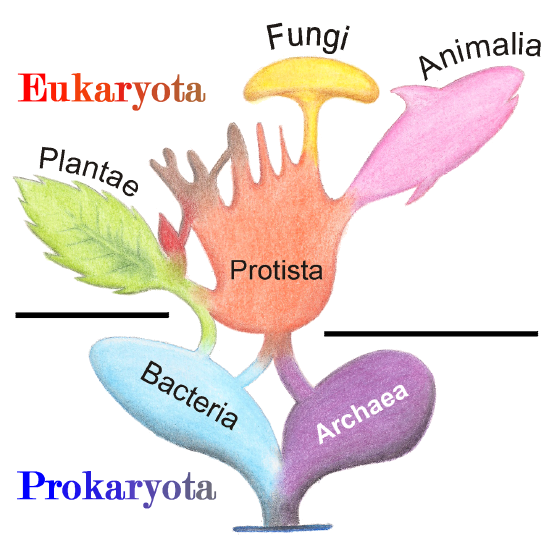
Life is everywhere. Look at the trees, insects, birds, bacteria, and even people. Life can come in all forms and shapes. There can be organisms that are small and can only be seen with the use of a microscope. Some organisms are as big as a blue whale. There are organisms that can be found in the ocean and organisms that can be found in the desert. Some organisms can be found in other organisms.
Have you asked yourself how scientists discover the variety of those different organisms?
It is not as simple as head knowledge. They group organisms based on different characteristics they share and based on their evolutionary relationships.
In Biology, analyzing the diversity of organisms enables us to appreciate the other branches of science like evolution, ecology, genetics, and conservation.
The variety of different forms of life and living things is called biological diversity or biodiversity. It is classified into three levels:
In this lesson, we will focus mainly on species diversity and the classification of life forms.
Imagine a library where the books are not categorized and are scrambled together. Finding a specific book would be almost impossible.
The same would happen without classification. The study of life would be complex and inefficient.
The classification of organisms enables us to:
Taxonomy is the branch of biology that involves the classification and naming of organisms.
The naming of organisms is based on the system developed by Carl Linnaeus. This is called binomial nomenclature.
Every living organism has a scientific name that consists of the following:
Genus name + species name.
For example, humans are called Homo sapiens.
Noting that common names can differ across languages and locations, this system reduces ambiguity.
Organisms are classified from the largest category to the smallest, and are arranged into the following groups:
As we descend the levels of the classification system, there is a greater number of shared attributes among the organisms that are classified.
For instance, humans are classified as:
This classification system shows the evolutionary connections.
Three domains are recognized by contemporary classification. It was Carl Woese who proposed this system based on molecular studies, and more specifically, on ribosomal RNA sequences.
These are organisms that are classified as prokaryotes. They do not have a nucleus, nor do they have membrane-bound organelles. The majority of bacteria have cell walls that are made of peptidoglycan, and they reproduce by a process known as binary fission.
Bacteria are extremely diverse. Some are beneficial and are used in the production of certain foods, and in the process of nitrogen fixation. Other bacteria are pathogenic and cause disease.
While Archaea, like Bacteria, are prokaryotic, they differ in the composition of the cell walls, as well as the membrane structures. The majority of known archaea are found in extremely harsh or unusual conditions, such as very high or low temperatures, or in very high salinity, such as in hot springs, salt lakes, or at the bottom of the ocean. Such organisms are referred to as extremophiles.
Eukarya is made up of living things that have eukaryotic cells. Noted differences of eukaryotic cells from prokaryotic ones include eukaryotic cells having a defined nucleus and organelles like mitochondria and chloroplasts.
This domain can be separated into four major categories known as kingdoms.
The protista kingdom has examples of microorganisms. Most of them are single eukaryotic cells, but some may be multicellular. Protists can be classified as either unicellular or multicellular. These organisms can be rather complex; include algae as examples of autotrophic protists and protozoa as heterotrophs.
The major reason why Protists are grouped is that they do not belong in any of the other existing kingdoms of organisms. They are too diverse to be a singular monophyletic group.
Eukaryotic organisms that absorb nutrients in a process known as absorption have cell walls that are constructed from chitin. The most common examples of organisms in this kingdom are molds, fungi, and mushrooms. They are exceptional decomposers, which means they contribute to the recycling of nutrients in an ecosystem by decomposing and recycling dead organic matter.
The cells of all organisms in this kingdom have cell walls that are made of cellulose. The major component of the cell walls of chloroplasts is a green pigment called chlorophyll. Because of this pigment, all organisms in this kingdom can carry out the process of photosynthesis. The organisms in this kingdom are also classified as autotrophs.
Major classifications of plants in this kingdom include:
No organisms in this kingdom have cell walls or walls of any other kind. Most of the members of this kingdom can move at some stage in their lives.
All organisms in this kingdom are classified as multicellular, heterotrophic eukaryotes.
Animals are classified into two main groups:
The animal kingdom is further classified into more than 30 phyla. Some of these include:
Modern evolutionary biology uses phylogenetic relationships to explain animal classification.
Animals that are classified together share a recent common ancestor; this is shown using phylogenetic trees.
A phylogenetic tree is a diagram that represents evolutionary history, which is a sequence of changes over time, and documents changes between generations. Each branch or point on the diagram represents a common ancestor, and the more closely related two species or ends of a branch are, the closer they are to one another on the tree.
The most commonly used evidence when constructing phylogenetic trees includes:
The study of relationships among living organisms has improved significantly with molecular biology, or the study of the structure, function, and interactions of the molecular components of cells.
Components that are considered to have a common evolutionary ancestry, even if they have different functions and exist in different species.
Example: The forelimbs of mammals – even though they perform different functions, they all share the same underlying bone structure.
Components that share functions but have different evolutionary pathways.
Example: The wings of birds and the wings of insects – even though both structures allow flight, they have evolved independently.
These distinctions are important factors for scientists when clarifying evolutionary constructions.
New species are formed through a process called speciation, which is the result of a population becoming reproductively isolated.
Isolation occurs in two primary ways:
Speciation, occurring over several million years, has led to the huge amount of life we see on Earth today.
It is important to note that the Earth's life is not endlessly increasing, as extinction opposes speciation. Earth has seen five mass extinction events. Currently, the activities of humans contribute to a stark and alarming decrease in the variation of life on Earth.
Stable ecosystems are a result of the variety of life within them. Each species performs a unique function within the system:
The more different species there are in an ecosystem, the more capable and resilient it is, and the quicker it is to recover from any harmful disturbances.
The loss of biodiversity is an economic, as well as an ecological, concern. The genetic resources in biodiversity are the sources of many modern medicines, as well as the medicines we have yet to discover.
Taxonomy has been able to apply the new molecular genetics for classification. This is in stark contrast to previous methods, in which scientists relied upon indirect comparisons of genetic material. The newer methods are vastly superior, as they are able to directly compare the genetic material of the organisms in question.
Cladistics classifies organisms based on shared derived traits. The system of clades is a classification that holds an ancestor, as well as all of its descendants.
Older systems based purely on phylogenetics can not capture relationships accurately.
Diversity is a hallmark feature of life. From simple bacteria to advanced multicellular organisms like us, there is so much life on Earth, and its variety is astonishing.
Using molecular data, coupled with evolutionary theory and taxonomy, scientists craft the organization of life.
Diversity is much more than a list of names. It is a means of understanding life, the mechanisms of an ecosystem, and the importance of conserving life for the sake of the planet's future.