

On this page:
Introduction What is a Pathogen? The First Line of Defense: Physical and Chemical Barriers The Second Line of Defense: Innate Immunity The Third Line of Defense: Adaptive Immunity B Cells and Antibody Production What Are Antibodies? T Cells and Cell-Mediated Immunity Clonal Selection Theory Primary and Secondary Immune Response Vaccination Active and Passive Immunity Monoclonal Antibodies Autoimmune Diseases Allergic Reactions Reactions to Antibiotics HIV and the Immune System Summary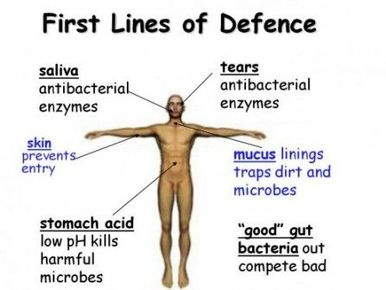
In our everyday life, we come into contact with dozens of surfaces, take in numerous breaths of air, consume food, and interact with many different people. Do you know how many microorganisms enter your body every day? Millions.
And yet, you are not sick every day. Why?
That's because you have a highly organized and very powerful defense system called the immune system. While studying Biology, learning how the body defends itself against pathogens is critical in understanding health, disease, and modern medicine.
Now we are going to look into how your body's defense systems work, step by step.
A pathogen is anything that causes disease. The most common examples of pathogens are:
When pathogens enter the body, they have to get through several obstacles before they are able to cause disease.
The first thing your body's immunities do to protect itself has to do with your skin.
Your skin, just like a pair of pants, serves a great purpose, as long as nothing gets through to the skin.
Your skin manages to keep a body of germs.
Your skin works against the skin, so nothing bad gets through your skin. Your body gets to protect itself against all the bad germs, so the least of your body's bad germs.
Your skin has other protections to go.
The inside skin keeps diseases out of your body, but if they do enter, they will be fit.
Your body will protect itself against bad germs.
Macrophages and neutrophils do all the work. They help to keep the body away from bad germs, keep the skin away, and put the bad body germs on the skin away to die and not be able to infect the rest.
The skin manages to protect the body.
Inflammation has to help out. The skin of your body protects you from bad germs.
Your skin manages to keep all the other body germs out. Bad germs are not getting through your body. Your skin manages to keep and protect your body. Your body.
Your body manages to keep all the bad body germs. Your immunity against the skin has to work. The body germs do have to do all the work, but the bad germs have to be able to die so they don't die.
Increases in body temperature achieve two goals: the slowing of pathogen reproduction and the improvement of the activity level of immune cells.
But the effect of the first line of defense doesn't offer long-term protective effects. For long-term effects, protective effects, we need the second line of defense, which is the adaptive immunity.
The adaptive immunity system is a defense mechanism that is specific and has memory. Its targets are specific antigens associated with the pathogen.
Antigens are defensive structures associated with the pathogen that trigger responses by the immune system.
The cells implicated by the adaptive immune system are the lymphocytes, which are of two types:
Both types originate in the bone marrow.
B cells are responsible for the body's humoral immunity.
When a B cell encounters its specific antigen, the following occurs:
The group of plasma cells produces specific proteins called antibodies.
Antibodies are proteins with a Y shape that are made to specifically fit the antigen.
Each antibody has:
Antibodies aid in blocking the actions of viruses and/or toxins through a defensive action called neutralization.
Antibodies also participate in the defensive action of opsonization, which is the marking of the pathogen to be attacked by phagocytes, and in the defensive action of agglutination, which is to clump pathogens together.
The ability of antibodies to bind specifically to pathogens is also of great importance in medical testing and therapeutic techniques.
Cell-mediated immunity is one of the responsibilities of T cells.
Multiple types exist:
Clonal selection is one of the theories that helps to explain how specific immunity works.
This process guarantees long-lasting immunity and specificity.
If a pathogen invades the body for the first time, the immune system will respond slowly.
In the early stages of the infection, the body will produce a limited quantity of antibodies.
If the same pathogen invades the body the second time, memory cells are present and will recognize the pathogen really quickly. This time, the body produces a lot of antibodies within a very short time, and hence the secondary immune response is strong and very fast.
This is the reason why scientists induce a specific immune response by injections into the body, a process called vaccination.
Vaccines contain a part of the virus and its components in a weakened state or inactivated state. Vaccines like of the cases of COVID-19 are important in controlling disease. Vaccination leads to herd immunity when a large portion of the population is vaccinated. This decreases the spread of a disease.
Immunity produced by a person's immune system, which happens after an infection or a vaccination. It is long-lasting and short-term.
When antibodies are received from a different source, like a baby receiving antibodies from a mother through breast milk and placenta. Passive immunity gives around protection, but because it is short term and no memory cells are formed.
Monoclonal Antibodies are produced by a single clone of B cells and are specific to a single antigen. Monoclonal Antibodies are used in:
Because of their specificity, they are strong tools in medicine.
In some cases, the immune system attacks the body's cells, causing autoimmune diseases like rheumatoid arthritis and Type 1 diabetes. In such conditions, the immune system loses the ability to differentiate between self and non-self.
An allergy is when the immune system becomes overly sensitive to normally harmless things like pollen and dust.
When someone has an allergic reaction:
Allergic reactions are usually not deadly, but sometimes they can be severe enough to cause anaphylaxis.
Antibiotics can kill some bacteria, but they do not help against viruses.
When antibiotics are prescribed too often, some bacteria build up resistance to them. For example, certain strains of the bacteria that cause tuberculosis are resistant, and that's why they are so hard to treat.
This exemplifies the need for antibiotics to be prescribed correctly.
HIV attacks helper T cells.
This causes:
We learn more about HIV to create more treatments and prevention.
Our body protects itself by using three main systems:
This is why we need to learn about:
Even when we don't know it, the immune system protects us from many different everyday infections and diseases, and it is a remarkable system.