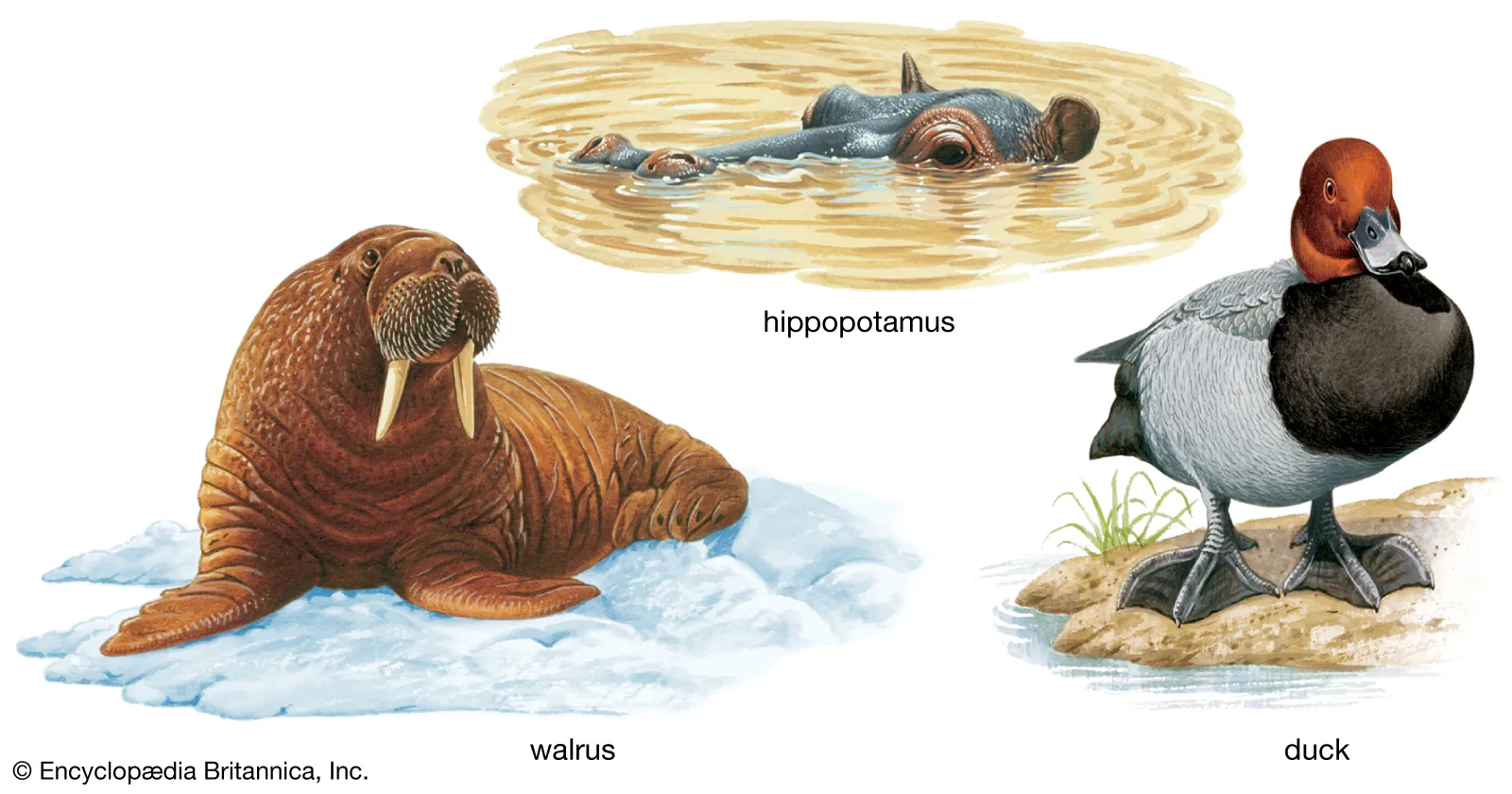
Adaptation to Environment
Think about the world around you. Why are camels able to survive in the desert? Why are polar bears able to thrive in the Arctic? Why are some desert plants able to survive with little to no water? The answer to these questions is adaptation.
In Biology, adaptation is defined as the process through which organisms adjust to their environment in a manner that will increase their chances of survival and reproduction. Each organism has certain characteristics that will enable it to deal sufficiently with its environment. The large variety of organisms that can be found on our planet is a result of the process of adaptation.
What Is Adaptation?
Adaptation can be best described as a trait or a habit that promotes the survival of an organism in a given environment. Adaptations may be:
- Structural (Morphological): These are the physical attributes of the organism.
- Physiological (Functional): These speak to the internal processes that enable an organism to survive.
- Behavioral: These are the practices or the daily routines of an organism that aid its survival.
For example:
- A camel's ability to store fat in its hump is structural, its ability to conserve water is a physiological adaptation, and its behavioral adaptation is that it rests during the hottest part of the day.
- An arctic fox's blood contains antifreeze, which means they have thick blood, they hunt at night, and they've got thick blood that acts like antifreeze. They also have blood proteins that.
Structural Adaptations
Structural adaptations consist of a set of mechanisms that an animal's body uses.
Desert Plants
- The thick, fleshy part of a cactus stem is used to store water.
- The cactus's leaves have been reduced to spines to minimize water loss.
- The roots of a cactus spread wide so that they can get as much rain as possible.
Aquatic Animals
- Dolphins have bodies that are streamlined in order to have reduced resistance when they are swimming.
- Dolphins' fins also provide a reduction in resistance when they are swimming in water.
Arctic Animals
- The polar bear's fur is white so that they have camouflage in the snow.
- There are also thick layers of fat that provide insulation.
Key point: Structural adaptations are generally visible features that can be observed directly.
Physiological Adaptations
Physiological adaptations involve processes that occur internally that operate to enhance the likelihood that the organism survives.
Examples
Thermoregulation
- High body temperatures can be tolerated by camels, which in turn means that they can conserve water.
- Desert kangaroo rats produce urine that is thick and concentrated in order to cut down on water loss.
Osmoregulation
- The fish that inhabit fresh water actively excrete water so as to maintain their salt balance.
- In contrast, the fish that inhabit marine water excrete salt through their gills when they are in seawater.
Metabolic Adaptations
- Hibernating animals, like bears, undergo a metabolism that is low in order to survive winter when the food is less abundant.
- Some plants that inhabit deserts perform CAM photosynthesis, which means that the stomata that they have open at night so that they can reduce water loss.
Point of Interest: Physiological adaptations are internal processes rather than physical features.
Behavioral Adaptations
Behavioral adaptations are actions or patterns of activity that assist organisms in surviving.
Examples:
Migration
Birds such as swallows migrate south in winter to elude the extreme cold and a scarcity of sustenance.
Hibernation and Estivation
- Bears hibernate in the winter to preserve energy.
- In periods of extreme heat and drought, desert animals will estivate.
Social Behavior
- Meerkats are colony animals that protect each other as a group.
- Dancing bees are social insects that communicate to tell others where to find food.
Point of Interest: Behavioral adaptations are actions that can be learned or instinctive and usually, but not always, enhance the chances of survival or reproductive success.
Adaptation to Varying Environments
Different organisms have different adaptations in different environments, such as:
Deserts
In an environment where water is scarce and temperatures reach extremes, organisms require the ability to conserve water.
- Structural: Develop thick cuticles and small leaves.
- Physiological: Adapt to produce more concentrated urine and to sweat less.
- Behavioral: Shift their activity to a nocturnal schedule and engage in burrowing.
Polar Regions
In cold, icy habitats, organisms require additional insulation provided by:
- Structural: Develop thick fur and additional layers of insulating fat.
- Physiological: Produce antifreeze proteins in their blood and possess the ability to reduce heat loss from their bodies.
- Behavioral: Migrate to warmer areas and engage in huddling to conserve warmth.
Aquatic Habitats
Organisms in aquatic habitats experience water resistance, varied buoyancy, and limited availability of oxygen. Because of this, adaptations occur in the following areas:
- Structural: Have a streamlined body, as well as gills and fins.
- Physiological: Adapt to better retain water and to carry oxygen more efficiently in their blood.
- Behavioral: Form schools and engage in specific patterns of diving.
Forests and Grasslands
In forests and grassland habitats, competition for light, food, and mates drives the following adaptations:
- Structural: Develop tree trunks that are taller and leaves that are broader for improved capture of sunlight.
- Physiological: Seasonal leaf drop, efficiency in photosynthesis.
- Behavioral: Territoriality, Camouflage.
Natural Selection and Adaptation
Natural selection and evolution in biology are fundamental concepts over a number of generations.
- A population contains variation.
- Those that are best suited to the environment live to reproduce.
- The population will increase in the number and frequency of the beneficial trait.
Example: A longer neck provides an advantage to a giraffe as it allows access to a greater number of food sources and will increase the number of offspring that the giraffe produces that carry the long neck trait.
Take Home Message: Adaptation is the result of the evolutionary process of natural selection.
Convergent and Divergent Evolution
Evolutionary patterns are a result of the adaptive process.
Convergent Evolution
Similar adaptive traits are seen in different species in the same conditions.
Example: Streamlined bodies of both a Dolphin (a mammal) and a Shark (a fish).
Divergent Evolution
Different species that have a common ancestor will adapt to different conditions.
Example: The different beak shapes in Darwin's Finches are a result of the different food sources available.
Take Home Message: Similar conditions have the potential to produce the same adaptations in different species.
Adaptation in Plants and Animals
Plants
- Xerophytes (plants from the desert) exhibit adaptive traits to the desert environment.
- Hydrophytes have air pockets in the leaves for easier floating.
- Epiphytes are adapted to limited access to soil.
Animals
- Camels, kangaroo rats, and desert reptiles are adapted to arid conditions.
- Penguins and seals have adaptations for the polar cold conditions.
- Bats and owls have adaptations that help them hunt at night.
Structural, Physiological, and Behavioral Adaptation
| Adaptation type |
Summary |
Example |
Key feature |
| Structural |
Physical feature of the organism |
The thick fur of a polar bear |
Visible adaptation |
| Physiological |
An internal process that helps an organism survive |
CAM photosynthesis |
Internal process |
| Behavioral |
An action/habit that an organism has for survival |
Bird migration |
Observable action |
Importance of Adaptation
Adaptation is essential for:
- Survival of organisms: Adaptation helps organisms cope with challenges presented by the environment.
- Reproduction: Adaptation helps organisms increase the chances of passing their genes to the next generation.
- Biodiversity: Adaptation can result in a variety of life forms and creatures that can survive in various kinds of environments.
- Stability of an ecosystem: Adaptation helps certain organisms to stabilize their ecosystem.
Organisms that fail to adapt will not survive.
Summary
- Adaptation helps organisms survive in a particular environment and also helps in reproduction.
- Adaptation is a unifying idea in biology.
- Structural, behavioral, and physiological adaptations complement each other.
- Different adaptations are formed due to the different environments, such as forests, polar areas, oceans, and deserts.
- Adaptation is a result of natural selection over a period of time.
- Adaptation helps us understand the evolution of organisms, their biodiversity, and the relationships within their ecosystems.
- Adaptation is a problem-solving phenomenon of nature. Every feature and behavior of the largest polar bear to the smallest desert moss is meaningful. Adaptation is the reason life exists in every corner of the planet.